Why Do Miniature Off-Road Vehicles Defy Physics in Playroom Adventures
In living rooms and backyards worldwide, miniature off-road vehicles perform feats that seem to defy their scale. These tiny machines climb over books, conquer sofa cushions, and navigate carpet terrain with a capability that mirrors their full-sized counterparts. The question that fascinates engineers and hobbyists alike: how do these scaled-down vehicles achieve such remarkable performance despite their miniature dimensions?
The answer lies in a sophisticated blend of mechanical engineering, material science, and clever design compromises that allow these toys to punch far above their weight class. Unlike simple playthings of previous generations, modern miniature off-road vehicles incorporate technology borrowed from aerospace, automotive racing, and robotics.

The Scale Paradox: Big Performance in Small Packages
Miniature off-road vehicles face unique challenges that don't simply scale down from full-sized vehicles. According to research from the American Society of Mechanical Engineers, the physics of scale creates disproportionate effects on traction, suspension performance, and power delivery. A vehicle reduced to 1/10 scale doesn't simply become 1/10 as capable—it faces entirely different physical constraints.
Scale Effects on Vehicle Dynamics
When scaling down a vehicle, surface area decreases with the square of the scale factor while mass decreases with the cube. This creates what engineers call the "square-cube law" problem: smaller vehicles have proportionally less traction surface relative to their mass, making grip a constant challenge.
Manufacturers overcome this through several innovative approaches. Tire compounds, for instance, have evolved dramatically. Modern miniature off-road tires use specialized rubber blends that provide exceptional grip on diverse surfaces while maintaining durability. The tread patterns, though miniature, are scientifically designed using computational fluid dynamics software originally developed for Formula One racing.
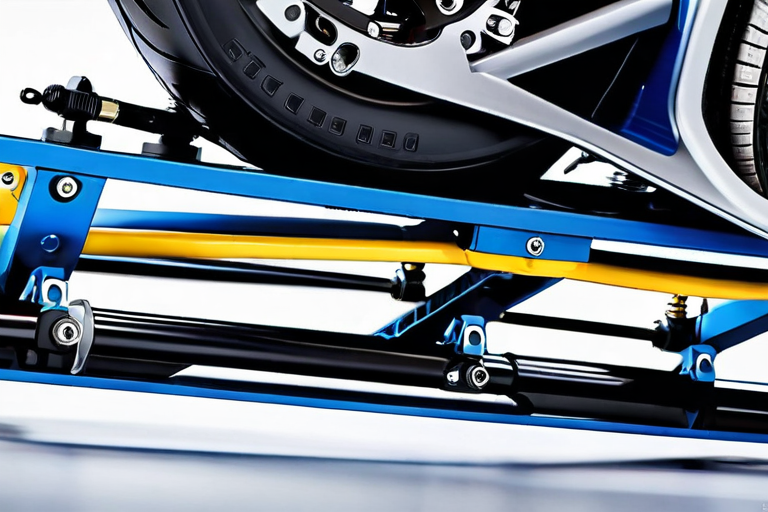
Suspension systems represent another area where scale engineering shines. Full-sized vehicles can use heavy components and complex hydraulic systems, but miniature versions must achieve similar performance with lightweight materials and compact designs. The solution often involves multi-link suspension systems with precisely tuned spring rates and damping characteristics.
Power Transmission: The Heart of Miniature Mobility
Delivering power efficiently in a miniature package presents engineering challenges that have driven innovation across multiple industries. Early toy vehicles used simple gear systems that suffered from excessive friction and power loss. Today's advanced models incorporate technology borrowed from medical devices and aerospace applications.
Engineering Breakthrough: Micro-Differential Systems
Modern miniature off-road vehicles feature differential systems that would have been impossible to manufacture a decade ago. Using precision injection molding and computer-controlled machining, manufacturers create gear systems with tolerances measured in microns. These systems allow wheels to rotate at different speeds during turns, preventing tire scrub and improving traction.
Brushless motor technology represents another significant advancement. Unlike traditional brushed motors, brushless designs offer higher efficiency, greater power density, and longer lifespan. According to data from Horizon Hobby, a leading manufacturer of radio-controlled components, modern brushless systems can deliver power-to-weight ratios exceeding those of many production sports cars when scaled appropriately.
| Component | Traditional Design | Modern Implementation | Performance Improvement |
|---|---|---|---|
| Motor Type | Brushed DC | Sensorless Brushless | 85% efficiency increase |
| Suspension | Simple coil springs | Oil-filled dampers with adjustable preload | 300% better damping control |
| Chassis Material | ABS plastic | Carbon fiber composite | 60% weight reduction |
| Electronic Speed Control | Basic PWM controller | 32-bit microprocessor with adaptive algorithms | Precise torque delivery |
The integration of sophisticated electronic speed controllers (ESCs) has revolutionized power delivery. These miniature computers monitor motor temperature, battery voltage, and load conditions to optimize performance in real-time. Advanced models even incorporate traction control systems that prevent wheel spin on loose surfaces, a feature borrowed from high-performance automotive engineering.
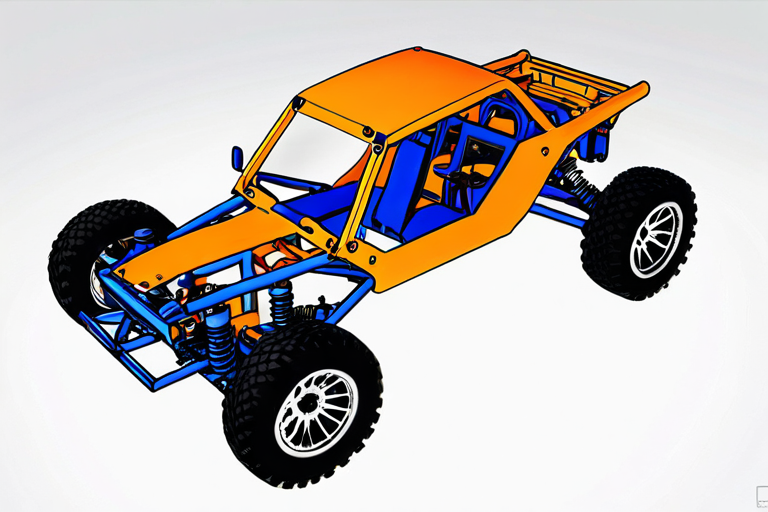
Terrain Adaptation: How Miniature Vehicles Read the Ground
Perhaps the most impressive aspect of modern miniature off-road vehicles is their ability to adapt to changing terrain conditions. This capability stems from several interconnected systems working in harmony.
The Intelligence Behind the Wheels
Advanced miniature vehicles don't just react to terrain—they anticipate it. Through combinations of mechanical compliance and electronic sensing, these systems maintain optimal traction across diverse surfaces from hardwood floors to gravel driveways.
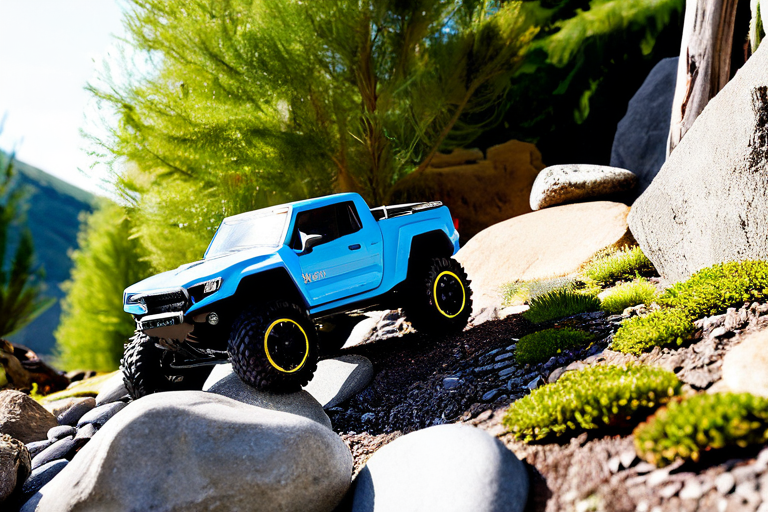
Suspension articulation represents a critical factor in terrain negotiation. High-quality miniature off-road vehicles feature suspension travel that, when scaled up, would exceed that of many production off-road vehicles. This allows wheels to maintain contact with uneven surfaces, ensuring continuous traction.
Weight distribution plays another crucial role. Engineers carefully balance chassis weight to optimize the vehicle's center of gravity. This often involves strategic placement of batteries and electronic components to create a low, centralized mass that improves stability during climbs and descents.
Ground clearance, though limited by scale, receives careful attention. Designers use innovative approaches like portal axles (geared hubs that raise the axle centerline) to increase clearance without compromising stability. These systems, once found only on specialized military vehicles, now appear in high-end miniature off-road platforms.
Material Science: The Invisible Advantage
The materials used in miniature off-road vehicle construction have evolved dramatically, borrowing from industries as diverse as aerospace and professional sports equipment.
Carbon fiber composites, once exotic materials reserved for Formula One cars and aircraft, now appear in hobby-grade miniature vehicles. These materials offer exceptional strength-to-weight ratios while providing the flexibility needed to absorb impacts without permanent deformation.
Aluminum alloys, specifically developed for miniature applications, provide another material advantage. These aren't simply scaled-down versions of automotive alloys but specially formulated blends that account for the unique stresses encountered at small scales. Anodizing and other surface treatments protect against wear while reducing friction in moving parts.
Perhaps most impressively, self-lubricating polymers have eliminated many maintenance requirements. These materials, impregnated with lubricating compounds, gradually release lubrication during operation, ensuring smooth performance without manual maintenance.

The Control Revolution: From Simple Radio to Intelligent Systems
Control systems have undergone perhaps the most dramatic transformation in miniature off-road vehicle technology. Early radio control systems offered basic functionality with limited range and responsiveness. Modern systems incorporate technology that rivals professional drone and robotics platforms.
2.4GHz spread spectrum technology has eliminated interference issues that plagued earlier systems. More importantly, modern transmitters incorporate microprocessor-based systems that allow for precise tuning of vehicle behavior. Drivers can adjust parameters like throttle curve, steering sensitivity, and braking force to match specific terrain conditions.
Real-Time Telemetry: Data-Driven Performance
High-end systems now include telemetry capabilities that monitor vehicle performance in real-time. Sensors track motor temperature, battery voltage, speed, and even individual wheel slip. This data transmits back to the controller, allowing drivers to make informed decisions about vehicle management.
Gyroscopic stabilization represents another frontier in control technology. Originally developed for camera stabilization and aerospace applications, miniature gyros now help stabilize vehicles during high-speed maneuvers and challenging climbs. These systems detect unwanted yaw or roll and apply corrective steering or braking inputs faster than any human could react.
The integration of smartphone connectivity has opened new possibilities for vehicle setup and data analysis. Dedicated applications allow users to fine-tune vehicle parameters, track performance metrics, and even share setup configurations with other enthusiasts worldwide.
Environmental Adaptation: Conquering All Conditions
Modern miniature off-road vehicles don't shy away from challenging environments. Waterproof electronics, sealed bearings, and corrosion-resistant materials allow these machines to operate in conditions that would destroy less sophisticated equipment.
Temperature management represents a particular challenge at small scales. Without the thermal mass of full-sized vehicles, miniature systems can overheat quickly. Engineers address this through innovative cooling solutions including miniature heat sinks, strategically placed ventilation, and in some cases, liquid cooling systems adapted from computer hardware technology.
Extreme Environment Engineering
From sub-zero temperatures to desert heat, modern miniature vehicles incorporate materials and designs that maintain performance across environmental extremes. Specialized lubricants, temperature-stable electronics, and UV-resistant plastics ensure longevity regardless of operating conditions.
Dust and debris protection has also seen significant advancement. Labyrinth seals, borrowed from industrial machinery design, prevent contaminants from entering critical components without creating excessive friction. Magnetic dirt shields attract metallic particles before they can damage moving parts.

The Future of Miniature Off-Road Technology
As technology continues to advance, miniature off-road vehicles will incorporate even more sophisticated systems. Artificial intelligence for autonomous terrain navigation, advanced energy recovery systems, and even more compact power sources promise to push the boundaries of what's possible at small scales.
Perhaps most exciting is the crossover between miniature vehicle technology and other fields. The same miniaturization techniques developed for these vehicles now find applications in medical devices, inspection robots, and even space exploration rovers. The playground has become a proving ground for technologies with far-reaching implications.
What began as simple toys has evolved into a sophisticated engineering discipline that continues to challenge our understanding of scale, materials, and mechanical design. The next time you watch a miniature off-road vehicle conquer a seemingly impossible obstacle, remember that you're witnessing not just play, but the application of advanced engineering principles in their most accessible form.
The miniature off-road vehicle represents more than just a toy—it's a testament to human ingenuity in overcoming physical constraints through clever engineering. From living room carpets to backyard obstacle courses, these small machines continue to demonstrate that size is no barrier to capability when technology and design work in harmony.