What Hidden Engineering Makes Toy Off-Roaders Conquer Backyard Terrain
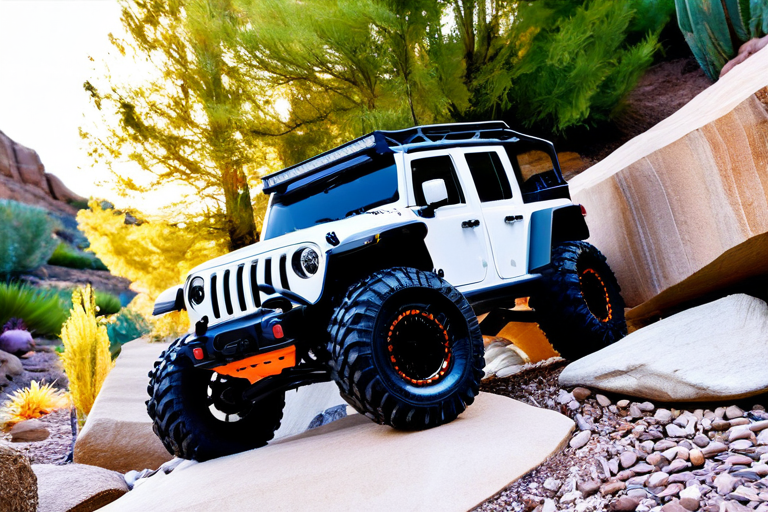
Miniature off-road vehicles have evolved from simple push toys to sophisticated machines that replicate real-world 4x4 capabilities in astonishing detail. While casual observers might see them as mere playthings, engineers and hobbyists recognize the complex systems working beneath their colorful plastic shells. These scaled-down conquerors employ principles borrowed from aerospace, automotive racing, and robotics to achieve performance that often defies expectations.
The journey from basic toy cars to today's technical marvels spans decades of innovation. According to research from the Society of Automotive Engineers, miniature vehicle development has accelerated dramatically since the 1990s, with technological advancements occurring at a pace that sometimes exceeds full-scale automotive innovation. This rapid evolution stems from cross-pollination between hobbyist communities, professional engineers, and materials scientists.
Suspension Systems: The Foundation of Terrain Mastery
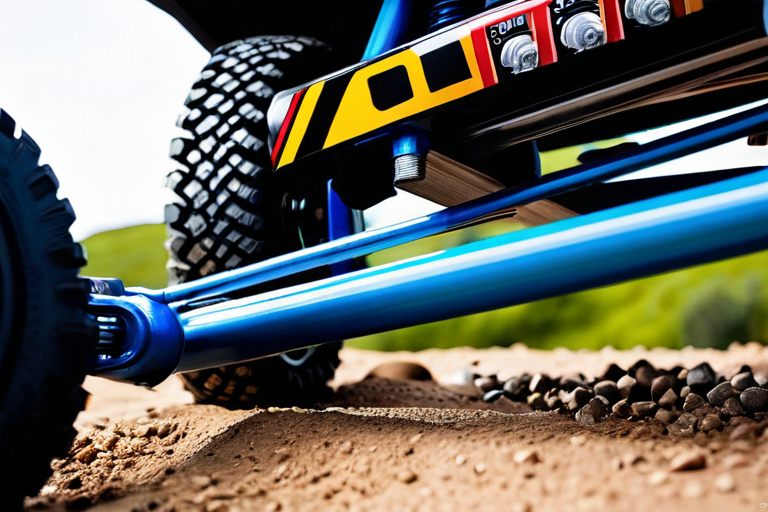
At the heart of every capable miniature off-roader lies its suspension system. Unlike static toy cars, serious off-road models feature fully articulated suspensions that absorb impacts while maintaining tire contact with uneven surfaces. These systems often incorporate multiple shock absorbers, progressive spring rates, and sophisticated geometry that mimics full-scale designs.
Key Suspension Innovations
Modern miniature suspensions employ several critical innovations: oil-filled dampers with adjustable compression and rebound settings, multi-link configurations that maintain optimal camber angles during articulation, and progressive rate springs that provide soft initial travel for small bumps while stiffening for larger impacts. These features work together to create a suspension that's both compliant and controlled.
The RC Groups technical forums document how hobbyists have pushed suspension development forward through experimentation. Many current production designs incorporate features first pioneered by competition enthusiasts, including cantilever shock mounting, anti-squat geometry for acceleration stability, and anti-dive characteristics for controlled braking.
Drivetrain Technologies: Power Delivery Precision
Power transmission in miniature off-roaders has undergone a revolution parallel to suspension development. Early models used simple direct-drive systems with limited torque and no differential action. Today's advanced models feature sophisticated drivetrains with multiple differential types, gear reduction systems, and electronic controls that manage power distribution with precision.
| Drivetrain Component | Evolution | Modern Implementation |
|---|---|---|
| Differentials | Fixed axle → Open differential | Limited-slip, locking, and torque-vectoring differentials |
| Transmission | Single-speed direct drive | Multi-speed gearboxes with electronic shifting |
| Power Source | Disposable batteries → NiMH packs | High-discharge LiPo batteries with battery management systems |
| Motor Technology | Brushed DC motors | Brushless motors with sensor feedback and electronic speed controls |
Brushless motor technology, adapted from industrial and aerospace applications, represents a particular breakthrough. These motors offer higher efficiency, greater power density, and improved thermal characteristics compared to traditional brushed designs. When paired with modern electronic speed controllers that provide smooth throttle response and regenerative braking, they create drivetrains that rival their full-scale counterparts in sophistication.
Chassis Design and Materials Science
Structural engineering plays a crucial role in miniature off-road performance. Modern chassis designs balance rigidity for precise handling with flexibility to absorb impacts without breaking. This delicate balance requires careful material selection and structural optimization that considers both static loads and dynamic stresses.
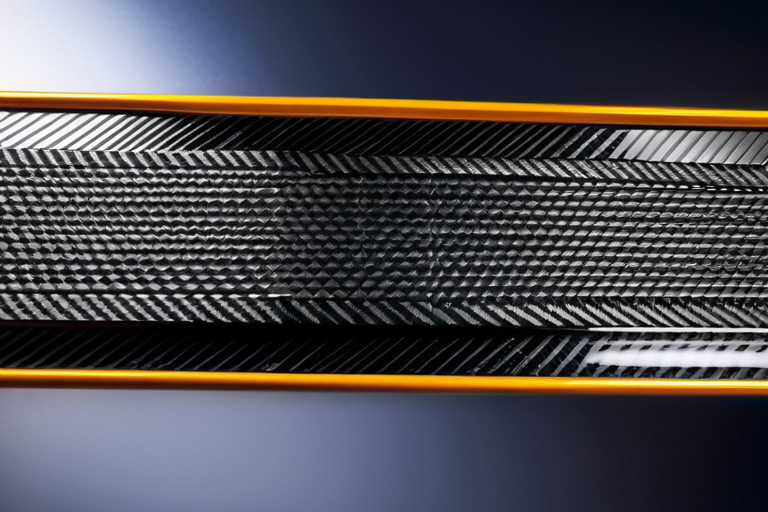
Composite materials have revolutionized chassis construction. Carbon fiber, fiberglass, and advanced polymers offer strength-to-weight ratios that were unimaginable in earlier generations. According to materials testing data from Engineering Toolbox, modern miniature vehicle composites can withstand impacts that would destroy traditional plastic components while weighing significantly less.
Modular chassis designs represent another significant advancement. These systems allow enthusiasts to adjust wheelbase, track width, and weight distribution to optimize performance for specific terrain types. Competition vehicles often feature dozens of configuration options, enabling fine-tuning that would be impractical in full-scale vehicles.
Electronic Control Systems: The Digital Nervous System
Modern miniature off-roaders are essentially robots with specialized locomotion systems. Their electronic control systems manage everything from basic steering and throttle functions to advanced stability control, traction management, and even autonomous operation in some experimental platforms.
Electronic Advancements
Contemporary control systems incorporate gyroscopes for stability enhancement, accelerometers for impact detection and response, and sophisticated algorithms that adjust power delivery based on traction conditions. Some high-end models even feature terrain-sensing systems that automatically adjust suspension and drivetrain settings.
Radio control technology has progressed from simple analog systems to digital spread-spectrum technology with minimal latency and interference resistance. Modern 2.4GHz systems offer response times measured in milliseconds, with some competition-grade systems achieving latencies under 5ms. This instantaneous control allows drivers to make precise adjustments during high-speed maneuvers.
The integration of telemetry systems represents another frontier. These systems provide real-time feedback on motor temperature, battery voltage, speed, and other critical parameters. As noted in technical documentation from Spektrum RC, this data enables both immediate adjustments during operation and post-run analysis for continuous improvement.
Tire Technology and Terrain Adaptation
While often overlooked, tire design represents one of the most critical aspects of off-road performance. Miniature tires must balance multiple conflicting requirements: they need to be soft enough to conform to terrain features for maximum traction, yet durable enough to withstand abrasive surfaces. They must provide lateral stability during cornering while maintaining low rolling resistance for straight-line speed.
Modern miniature off-road tires employ compound technologies borrowed from full-scale racing. Different rubber formulations offer varying levels of grip, wear resistance, and temperature characteristics. Foam inserts provide sidewall support while maintaining compliance, and specialized tread patterns optimize performance for specific surfaces from loose dirt to packed clay.
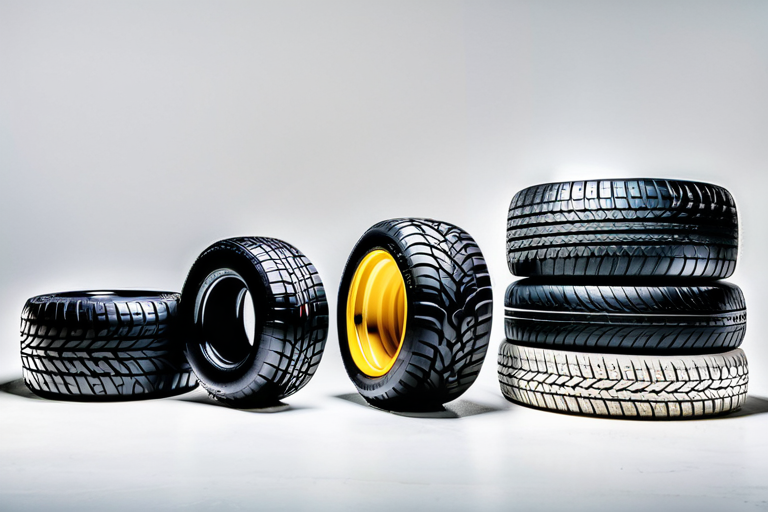
According to testing conducted by Pro-Line Racing, the optimal tire for a given condition can improve lap times by 15% or more compared to a generic design. This performance delta has driven extensive research and development in miniature tire technology, with manufacturers offering dozens of specialized options for different conditions.
The Hobbyist Influence: Community-Driven Innovation
Unlike many technological fields dominated by corporate research and development, miniature off-road vehicle innovation has been significantly driven by hobbyist communities. Enthusiasts modify, experiment, and share findings through online forums, local clubs, and competition events. This grassroots innovation has accelerated technical progress in ways that traditional corporate development cycles cannot match.
The open-source nature of much hobbyist innovation means that successful modifications often find their way into production vehicles within surprisingly short timeframes. Manufacturers actively monitor enthusiast forums and competition results to identify promising innovations for incorporation into future designs.
Future Directions and Emerging Technologies
The evolution of miniature off-road vehicles shows no signs of slowing. Several emerging technologies promise to further enhance capabilities in coming years. These include advanced battery chemistries offering greater energy density, artificial intelligence systems for autonomous terrain navigation, and additive manufacturing techniques enabling custom component production.
Miniature vehicles are increasingly serving as testbeds for full-scale automotive technologies. Their relatively low cost and rapid development cycles make them ideal platforms for experimenting with new suspension geometries, drivetrain configurations, and control algorithms before scaling up to passenger vehicles.
Technical References and Further Reading
This analysis draws from multiple authoritative sources in both hobbyist and professional engineering communities:
- Society of Automotive Engineers - Technical papers on scale vehicle dynamics
- RC Groups Technical Forums - Community-driven innovation documentation
- Horizon Hobby Engineering Publications - Manufacturer technical insights
- Pro-Line Racing Testing Data - Tire and suspension performance metrics
- Engineering Toolbox Material Properties - Composite material characteristics
The technical sophistication of modern miniature off-road vehicles represents a convergence of multiple engineering disciplines. From advanced materials science to precision electronics, these scaled-down machines incorporate technologies that would have seemed like science fiction just a generation ago. As development continues, they will likely become even more capable, further blurring the line between toys and serious engineering platforms.
What began as simple playthings have evolved into complex systems that challenge our understanding of scale mechanics. The next time you see a miniature vehicle navigating challenging terrain, remember that beneath its colorful exterior lies a concentration of engineering innovation that represents some of the most creative thinking in modern mechanical design.