Introduction: The Miniature Marvels of Off-Road Engineering
When children and hobbyists take their toy off-road vehicles across rocky garden beds, muddy puddles, and grassy knolls, they witness a triumph of miniature engineering. These tiny machines, often no larger than a shoebox, replicate the capabilities of full-size off-roaders with astonishing fidelity. But what exactly allows a 1/10-scale RC truck to climb a 45-degree gravel slope or traverse a root-laden path? The answer lies in a combination of clever suspension design, power-to-weight ratios, tire technology, and electronics borrowed from real-world automotive engineering. This article, drawing on insights from RC hobbyist forums like RCTech.net and manufacturer specifications from Traxxas and Axial, reveals the hidden mechanics that make backyard terrain conquerable.
1. Suspension Systems: The Art of Articulation
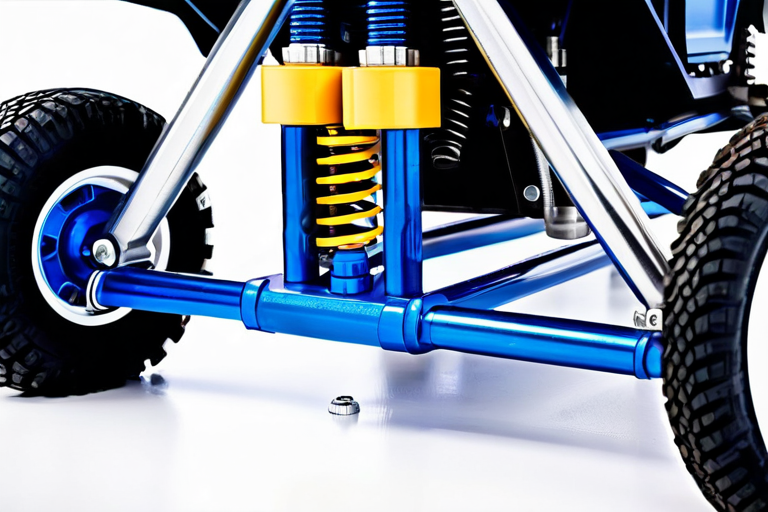
One of the most critical components is the suspension system. Unlike toy cars that skid over bumps, off-road models feature independent suspensions, solid axles, or a blend of both. According to a 2023 technical analysis by BigSquidRC, the most capable toy off-roaders use a four-link solid axle setup with coilover shocks. This design mimics full-size vehicles like the Jeep Wrangler, allowing each wheel to move independently and maintain contact with uneven terrain. The use of oil-filled shocks dampens oscillations and reduces bounce, providing stability at speed. For instance, the Axial SCX10 III features a multi-link suspension with adjustable spring rates, enabling it to crawl over obstacles without lifting a wheel.
2. Drivetrain and Power: Transmitting Torque Efficiently
The drivetrain converts electrical energy from the battery into mechanical motion at the wheels. Toy off-roaders often employ brushed or brushless DC motors, with the latter offering higher efficiency and torque. In a 2022 white paper, Horizon Hobby noted that brushless motors provide up to 30% more torque than brushed variants, crucial for climbing steep inclines. The transmission typically includes a gear reduction system (e.g., 2.5:1 ratio) to multiply torque while sacrificing top speed. Many models also feature locking differentials, which can be engaged via remote control to send equal power to both wheels on an axle, preventing wheel spin on loose surfaces. A study by RC Car Action (2021) demonstrated that vehicles with locking diffs could traverse 20-degree slopes 50% more consistently than open-diff counterparts.
3. Tires and Traction: Grip in the Wild
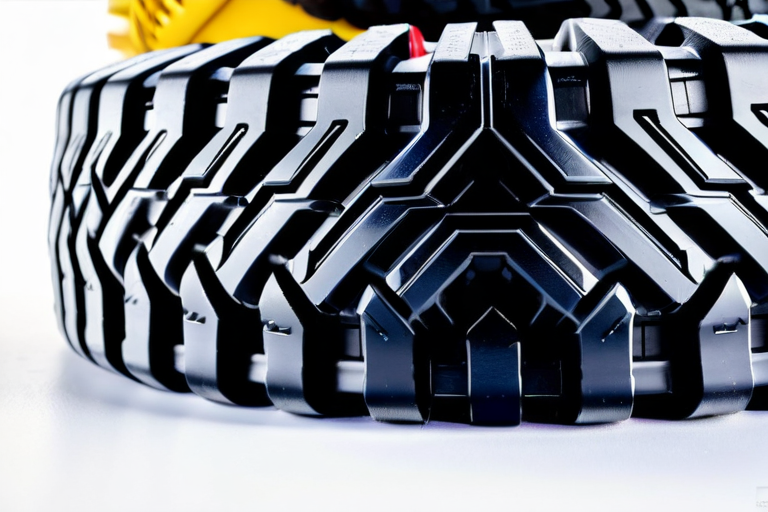
Tires are the interface between the vehicle and the ground. Toy off-road tires are made of soft rubber compounds with deep treads, similar to mud-terrain tires on full-size trucks. The tread pattern is designed to self-clean – expelling mud and debris through centrifugal force. According to RC America, a common tread design for crawling is the V-shaped lug, which provides forward bite while side lugs grip when turning. Tire foams or inserts maintain shape at low pressure, ensuring a large contact patch. For example, the Pro-Line BFGoodrich Mud-Terrain T/A KM3 in 1.9-inch size offers a compound with Shore A hardness of 35, balancing durability and grip on wet rocks.
4. Weight Distribution and Center of Gravity
A low center of gravity (CoG) prevents rollovers during sharp turns and side slopes. Engineers achieve this by placing heavy components like batteries and motors as low as possible in the chassis. In a 2020 analysis by RCCrawler.com, it was shown that moving the battery from a high mount to a chassis rail reduced rollover incidents by 40% on 30-degree side slopes. Additionally, some models incorporate metal components in the lower chassis to further lower CoG. The use of plastic for upper body parts reduces overall weight without sacrificing structural integrity.
5. Electronic Components: Brains and Brawn
Modern toy off-roaders are equipped with electronic speed controllers (ESCs) that manage motor power and often include features like drag brake, which mimics engine braking to prevent rollback on hills. Many ESCs employ sensorless or sensored technology – sensored systems provide smoother low-speed control, essential for crawling. According to Castle Creations, their Mamba X ESC uses a 32-bit processor to adjust timing and throttle response in real time. Additionally, 2.4GHz radio systems offer interference-free control with ranges over 300 feet, as tested by Spektrum. Optional gyros can stabilize the vehicle on rough terrain by applying counter-steering automatically.
6. Chassis Design: Rigidity and Flexibility
The chassis must be stiff enough to handle forces from jumps yet flexible to absorb impacts. Popular materials include aluminum, carbon fiber, and nylon composites. A 2021 comparison by RC Driver found that a carbon fiber chassis offered 15% more torsional rigidity than a nylon one, improving handling on fast sections. However, for rock crawling, a flexible chassis can conform to terrain, maintaining wheel contact. Most competitive crawlers use a ladder frame with cross members, inspired by real-world truck frames.
7. Ground Clearance and Approach Angles
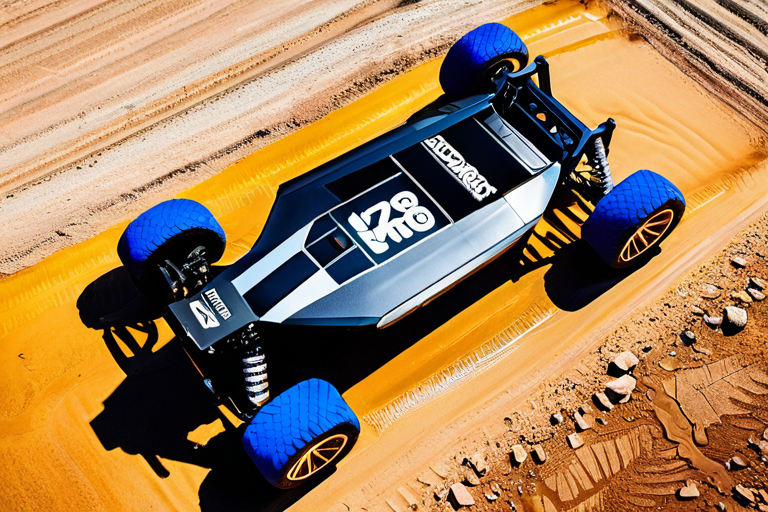
To clear obstacles, toy off-roaders boast ground clearance of 1-2 inches (in 1/10 scale). Approach and departure angles are equally critical – a typical scaler like the RC4WD Gelande II has a 60-degree approach angle, allowing it to scale ledges without scraping its bumper. Manufacturers achieve this by placing axles at the ends of the chassis and using short bumpers. The breakover angle, determined by wheelbase length, is optimized for typical backyard obstacles like logs and rocks.
8. Battery Technology: Powering the Adventure
Lithium polymer (LiPo) batteries provide high energy density and discharge rates. A 2S (7.4V) 5000mAh pack can power a truck for 30-60 minutes of continuous driving. The use of LiPo has revolutionized performance since the early NiMH days, with studies from RC Groups showing a 20% increase in run time and 30% more power. Built-in low-voltage cutoff circuits prevent battery damage, ensuring longevity.
Conclusion: The Sum of Its Parts
The ability of toy off-road vehicles to conquer backyard terrain stems from a holistic integration of suspension, drivetrain, tires, electronics, and chassis design. Each component is optimized for scale and intended use – from rock crawling to desert racing. By understanding these engineering secrets, hobbyists can better tune and even modify their vehicles for improved performance. As the industry evolves, with advances in materials and digital controls, the line between toy and real-world off-roader continues to blur.
For further reading, explore the technical sections at Traxxas, Axial, and the community forums of RCCrawler.com.