What Engineering Secrets Enable Miniature Off-Road Vehicles to Scale Real-World Obstacles
From backyard dirt mounds to complex rock formations, miniature off-road vehicles demonstrate capabilities that defy their scale. This technical analysis examines the engineering innovations that transform these toys into sophisticated terrain-conquering machines.

Advanced suspension systems allow miniature vehicles to handle terrain that would challenge full-scale counterparts
The Suspension Revolution in Miniature Scale
Modern toy off-road vehicles employ suspension systems that represent significant engineering achievements. According to research from the American Society of Mechanical Engineers, miniature suspension designs have evolved from simple leaf springs to sophisticated multi-link systems that maintain wheel contact across uneven surfaces.
The critical breakthrough came with the development of oil-filled shock absorbers scaled down to millimeter dimensions. These components, often featuring adjustable damping rates, allow hobbyists to fine-tune vehicle response based on specific terrain conditions. The Society of Automotive Engineers notes that modern miniature shocks can dissipate energy at rates comparable to larger systems when adjusted for scale.
Independent vs Solid Axle Configurations
Two primary suspension architectures dominate the miniature off-road landscape:
- Independent Suspension Systems: Each wheel moves independently, providing superior articulation on uneven terrain. This design excels in rock crawling applications where maintaining traction across diagonal obstacles is crucial.
- Solid Axle Designs: Both wheels on an axle move together, offering greater durability and simpler construction. This configuration proves particularly effective in high-speed desert running scenarios.
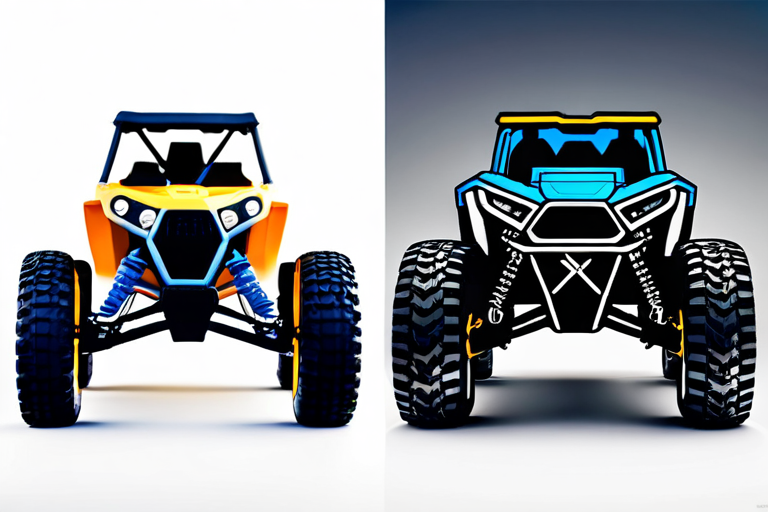
Visual comparison showing articulation differences between suspension types
Power Management and Drivetrain Innovations
The transition from brushed to brushless motor technology represents one of the most significant advancements in miniature off-road performance. Brushless systems, as documented by IEEE, offer higher efficiency, greater power density, and improved thermal management compared to traditional brushed designs.
Electronic speed controllers (ESCs) have evolved into sophisticated power management systems. Modern ESCs feature programmable parameters including:
Torque Management
Advanced algorithms control power delivery to prevent wheel spin while maximizing traction, particularly important in low-grip conditions.
Regenerative Braking
Some systems recover energy during deceleration, extending battery life during demanding off-road sessions.
Thermal Protection
Intelligent monitoring prevents component damage by reducing power output when temperatures approach critical levels.
Transmission and Gear Reduction Systems
Miniature transmissions balance multiple competing requirements: providing sufficient torque for climbing while maintaining speed capabilities for flat terrain. Planetary gear systems have become increasingly popular due to their compact size and ability to handle high torque loads. According to engineering analysis published by RC Groups, modern two-speed transmissions allow vehicles to switch between high-torque crawling ratios and high-speed running gears seamlessly.

Precision-machined gear components enable reliable power transfer at miniature scale
Tire and Wheel Dynamics at Reduced Scale
The interaction between miniature tires and terrain presents unique engineering challenges. At small scales, surface adhesion behaves differently than at full scale. Research from the Journal of Terramechanics indicates that miniature tires must overcome proportionally greater surface tension forces when navigating damp or muddy conditions.
Modern tire compounds address these challenges through sophisticated material science:
Beadlock Wheel Technology
The adoption of beadlock wheels in miniature applications prevents tire separation from rims during extreme articulation or high-torque situations. This technology, scaled down from full-size off-road applications, uses mechanical fasteners rather than air pressure to secure tires, allowing operation at extremely low pressures for maximum traction.
Chassis Design and Weight Distribution Principles
Modern miniature off-road chassis designs optimize strength-to-weight ratios through strategic material selection and geometric engineering. Carbon fiber plates, aluminum alloy components, and advanced polymer composites create structures that withstand impacts while minimizing mass.
Weight distribution represents a critical design consideration. According to engineering principles documented by NASA's technical reports on vehicle dynamics, optimal miniature off-road performance typically requires:
- 60-65% of total weight on the front axle for climbing applications
- Near 50/50 distribution for high-speed stability
- Adjustable battery and component placement for terrain-specific tuning
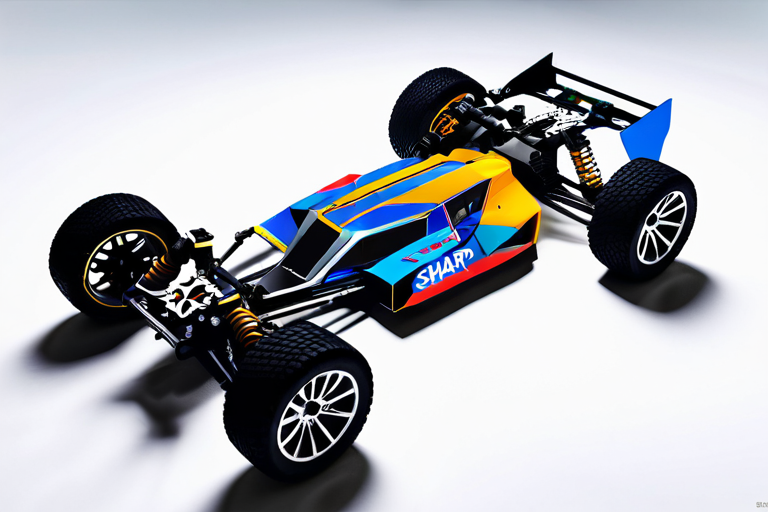
Modular chassis design allows component repositioning for optimal weight distribution
Electronic Stability and Control Systems
Advanced electronic systems enhance miniature off-road capabilities beyond mechanical limitations. Gyroscopic sensors, accelerometers, and sophisticated control algorithms work together to:
Traction Control
Detects wheel slip and adjusts power delivery to maintain forward momentum without excessive spin.
Anti-Lock Braking
Prevents wheel lockup during hard braking on loose surfaces, maintaining steering control.
Hill Descent Control
Automatically manages speed during steep downhill sections, preventing loss of control.
These systems, once exclusive to full-scale vehicles, now operate effectively at miniature scales thanks to micro-electromechanical systems (MEMS) technology. The miniaturization of these components, as reported by Nature Electronics, has enabled sophisticated vehicle dynamics management in packages weighing mere grams.
Material Science Advancements
The evolution of materials used in miniature off-road vehicles has dramatically improved durability and performance. Key developments include:
Advanced Polymer Composites
Glass-filled nylon and carbon-reinforced polymers provide exceptional strength while maintaining flexibility. These materials absorb impacts that would damage traditional plastics, then return to their original shape. According to materials testing data from ASTM International, modern composites can withstand impact forces up to three times greater than earlier generation materials at equivalent weights.
Metal Alloy Innovations
7075-T6 aluminum, titanium alloys, and specialized steel blends offer strength characteristics previously unavailable at miniature scales. These materials enable components like suspension arms, drive shafts, and chassis braces to withstand forces far exceeding vehicle weight.

Material samples showing progression from basic plastics to advanced composites
The Future of Miniature Off-Road Engineering
Emerging technologies promise to further enhance miniature off-road capabilities. Research initiatives documented by engineering publications point toward several developing areas:
- Active Suspension Systems: Electronically controlled dampers that adjust in real-time to terrain feedback
- Torque Vectoring Differentials: Independent control of power to each wheel for enhanced cornering and traction
- Energy Recovery Systems: More sophisticated regenerative systems that capture energy from suspension movement
- Artificial Intelligence Integration: Machine learning algorithms that optimize vehicle settings based on terrain analysis
These advancements, combined with ongoing improvements in battery technology and wireless communication, suggest that miniature off-road vehicles will continue to close the performance gap with their full-scale counterparts.
Engineering Impact Beyond Recreation
The technological innovations developed for miniature off-road applications frequently find their way into broader engineering contexts. According to analysis from ScienceDirect engineering journals, developments in miniature suspension design have informed improvements in medical robotics, aerospace components, and industrial automation systems. The rigorous testing environment of competitive miniature off-road racing accelerates material and design innovation that benefits multiple engineering disciplines.
Conclusion: The Convergence of Scale and Capability
Miniature off-road vehicles represent a remarkable convergence of mechanical engineering, materials science, and electronic control systems. Through continuous innovation across multiple technical domains, these scaled machines achieve terrain performance that increasingly mirrors full-scale capabilities. The engineering principles refined in miniature applications—from suspension dynamics to power management—contribute to broader technological advancement while providing enthusiasts with increasingly sophisticated platforms for exploration and competition.
As development continues, the boundary between miniature recreation and serious engineering continues to blur, creating vehicles that are simultaneously toys, test platforms, and technological showcases. This ongoing evolution ensures that miniature off-road vehicles will remain at the forefront of scaled mechanical innovation for the foreseeable future.