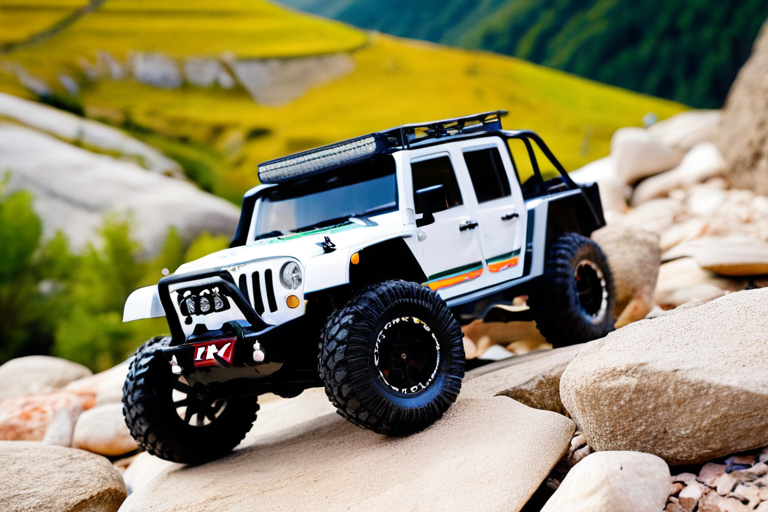
The landscape of toy off-road vehicles has undergone a radical transformation over the past decade, evolving from simple playthings to sophisticated miniature machines that mirror their full-scale counterparts in both form and function. This evolution isn't merely cosmetic—it represents a convergence of materials science, electronic miniaturization, and mechanical engineering that has elevated these toys into legitimate technical platforms.
Materials Revolution: Beyond Plastic Playthings
Early toy off-road vehicles relied heavily on injection-molded plastics with limited durability and performance characteristics. Contemporary models incorporate advanced composites and alloys that fundamentally alter their capabilities. Carbon fiber reinforced polymers, once exclusive to aerospace and automotive racing, now appear in chassis construction for high-end toy vehicles. According to research from the Society of Automotive Engineers, these materials offer strength-to-weight ratios that enable more aggressive suspension tuning and improved impact resistance.
Aluminum alloys, particularly 6061 and 7075 grades, have become standard for critical components like suspension arms and drive shafts. These materials offer corrosion resistance while maintaining structural integrity under stress. The transition from zinc die-cast to machined aluminum represents more than just material substitution—it enables precision engineering tolerances previously unattainable in toy manufacturing.
Electronic Control Systems: The Digital Nervous System
Modern toy off-road vehicles feature electronic control systems that rival professional robotics platforms. Brushless electric motors, controlled by sophisticated electronic speed controllers (ESCs), deliver precise power modulation across varying terrain conditions. These systems incorporate multiple sensors that monitor temperature, current draw, and rotational speed, enabling adaptive performance characteristics.
Motor Technology Evolution
Brushed DC motors → Coreless brushed motors → Sensorless brushless motors → Sensored brushless motors with closed-loop control
Control System Features
Proportional steering, exponential throttle curves, gyroscopic stabilization, telemetry data transmission, programmable failsafes
Power Management
Lithium polymer batteries with balancing circuits, smart charging systems, voltage monitoring, thermal protection
The integration of 2.4GHz spread spectrum radio technology has eliminated interference issues that plagued earlier 27MHz and 49MHz systems. This advancement enables multiple vehicles to operate simultaneously without signal conflict, a critical development for organized racing events. Modern transmitters offer programmable mixing, dual-rate adjustments, and endpoint calibration—features once exclusive to professional radio control systems.
Technical Insight: Contemporary electronic speed controllers utilize field-oriented control algorithms that optimize torque delivery across the entire RPM range. This technology, adapted from industrial motor control systems, enables smooth low-speed control while maintaining explosive acceleration capabilities.
Suspension Engineering: Miniature Terrain Mastery
Suspension systems in toy off-road vehicles have evolved from simple spring-based designs to sophisticated multi-link arrangements with oil-filled dampers. These systems replicate the kinematic principles of full-scale vehicles, including anti-squat geometry, roll center placement, and camber gain through suspension travel.
| Suspension Type | Technical Features | Performance Characteristics |
|---|---|---|
| Solid Axle | Simple construction, limited articulation | Maximum durability, predictable handling |
| Independent Front Suspension | Unequal length A-arms, oil-filled shocks | Improved ride quality, better high-speed stability |
| Multi-Link Rear | Four-link or five-link arrangements, adjustable geometry | Optimal traction control, tunable handling balance |
| Portal Axles | Gear reduction at wheel hubs, increased ground clearance | Superior obstacle clearance, reduced drivetrain stress |
Oil-filled shock absorbers represent a significant advancement over friction-based damping systems. These units feature adjustable preload, rebound damping, and in some cases, separate compression adjustment. The viscosity of shock oil, measured in centistokes, can be tailored to specific terrain conditions—lighter oils for high-speed racing, heavier oils for technical crawling applications.

Drivetrain Innovations: Power Delivery Refinement
Drivetrain technology has progressed from simple gear reduction systems to sophisticated arrangements featuring multiple gear ranges, locking differentials, and torque vectoring capabilities. The introduction of helical cut gears has significantly reduced operational noise while improving power transmission efficiency. According to gear manufacturing specialists, helical gears offer up to 30% greater load capacity compared to spur gears of equivalent size.
Electronic differential systems represent a particularly notable innovation. These systems monitor wheel speed differences and apply braking or torque reduction to slipping wheels, mimicking the behavior of limited-slip or locking differentials in full-scale vehicles. Some advanced systems even offer programmable lockup percentages, allowing users to tailor traction characteristics to specific surfaces.
Technical Development: The shift from mechanical speed controllers to electronic systems enabled the implementation of drag brake functions, which maintain vehicle position on inclines. This feature, essential for rock crawling applications, demonstrates how electronic control has expanded functional capabilities beyond basic locomotion.
Terrain Adaptation Systems: Context-Aware Performance
Modern toy off-road vehicles increasingly incorporate systems that adapt to terrain conditions in real-time. These include traction control algorithms that modulate power delivery based on detected wheel slip, suspension preload adjustment mechanisms, and even active aerodynamic elements that alter downforce characteristics.
Some premium models feature terrain response systems similar to those found in luxury off-road vehicles. These systems adjust multiple vehicle parameters—including throttle response, braking sensitivity, and differential behavior—based on user-selectable terrain modes. The technical implementation involves coordinated control across multiple electronic subsystems, representing a significant integration challenge at miniature scales.
Adaptive Systems
Electronic stability control, hill descent control, launch control programming, temperature-based power limiting, moisture detection circuits
Sensor Integration
Inertial measurement units, wheel speed sensors, motor temperature monitoring, battery voltage tracking, signal strength indicators
User Interface
Programmable multi-function controllers, smartphone app integration, telemetry data displays, firmware update capabilities
Manufacturing Precision: From Mass Production to Custom Fabrication
The manufacturing processes behind toy off-road vehicles have evolved alongside their technical capabilities. Computer numerical control (CNC) machining enables production of components with tolerances measured in thousandths of an inch. This precision facilitates proper gear mesh alignment, bearing fitment, and suspension geometry consistency—all critical for optimal performance.
Additive manufacturing technologies, particularly selective laser sintering and stereolithography, have revolutionized prototyping and small-batch production. These methods allow for complex geometries impossible with traditional molding techniques, including integrated cooling channels, lattice structures for weight reduction, and organic shapes that optimize airflow or structural efficiency.

Performance Validation: Testing and Development Protocols
The development process for modern toy off-road vehicles incorporates rigorous testing methodologies borrowed from automotive engineering. These include durability testing on specialized rigs that simulate thousands of hours of operation, thermal testing in environmental chambers, and performance validation across diverse terrain types.
Data acquisition systems monitor parameters including motor temperature, current consumption, suspension travel, and chassis flex during testing. This empirical data informs iterative design improvements, creating a feedback loop that drives continuous technical refinement. The professionalization of testing protocols represents a fundamental shift from the trial-and-error approaches that characterized earlier generations of toy development.
Development Insight: Modern toy vehicle development cycles increasingly incorporate computational fluid dynamics simulations for aerodynamic optimization, finite element analysis for structural validation, and multi-body dynamics modeling for suspension tuning—tools once reserved for automotive and aerospace engineering.
Future Trajectories: Emerging Technologies and Applications
The technical evolution of toy off-road vehicles shows no signs of slowing. Emerging technologies including artificial intelligence-based autonomous operation, advanced materials like graphene-enhanced composites, and energy recovery systems promise to further blur the line between toy and tool.
Wireless charging systems, currently in experimental stages, could eliminate battery swapping entirely. Computer vision systems might enable true autonomous navigation through complex terrain. The integration of these technologies will likely create new categories of toy vehicles that serve as platforms for STEM education, research prototyping, and even practical applications in inspection and surveillance.
As these miniature machines continue their technical progression, they serve not only as entertainment devices but as tangible demonstrations of engineering principles in action. Their evolution reflects broader trends in miniaturization, materials science, and electronic integration—making them fascinating case studies in technical development at scale.
The ongoing technical evolution of toy off-road vehicles demonstrates how play and engineering increasingly intersect. These miniature platforms continue to push boundaries, incorporating technologies that enhance both their entertainment value and their utility as educational tools. As manufacturing techniques advance and electronic systems become more sophisticated, the distinction between toy and technical instrument will likely continue to diminish, creating new possibilities for both recreation and practical application.