What Drives the Evolution of Miniature Off-Road Machines
Exploring the technical progression from basic playthings to sophisticated terrain-conquering marvels

The miniature off-road vehicle landscape has undergone a radical transformation over the past decade, evolving from simple push-along toys to sophisticated machines that replicate real-world physics with astonishing accuracy. This evolution represents more than just improved playthings—it showcases how engineering principles, material science, and digital technology converge to create miniature marvels that captivate both children and adults.
The Foundation: Understanding Scale Dynamics
At the heart of modern toy off-road vehicle design lies a fundamental understanding of scale dynamics. Engineers must consider how physical forces behave differently at miniature scales compared to full-size vehicles. According to research published by the American Society of Mechanical Engineers, scale effects significantly impact suspension behavior, traction characteristics, and weight distribution in miniature vehicles.
Technical Insight: The square-cube law presents unique challenges in miniature vehicle design. As vehicles shrink in size, their surface area decreases by the square of the scale factor while volume (and thus mass) decreases by the cube. This relationship fundamentally changes how these vehicles interact with terrain.

Suspension Evolution: From Springs to Smart Systems
Early toy off-road vehicles featured rudimentary suspension systems—often simple coil springs or basic leaf springs that provided limited travel and damping. Today's advanced models incorporate sophisticated multi-link suspension systems with oil-filled shock absorbers that provide progressive damping characteristics. These systems allow for impressive wheel articulation while maintaining chassis stability.
The Society of Automotive Engineers notes that modern miniature suspension systems often feature:
Independent Front Suspension
Allowing each wheel to react independently to terrain variations, improving traction and ride quality
Multi-Link Rear Systems
Providing precise control over axle movement while maximizing wheel travel
Progressive Rate Springs
Offering soft initial compression for small bumps with increasing resistance for larger impacts
Power and Control: The Electronic Revolution
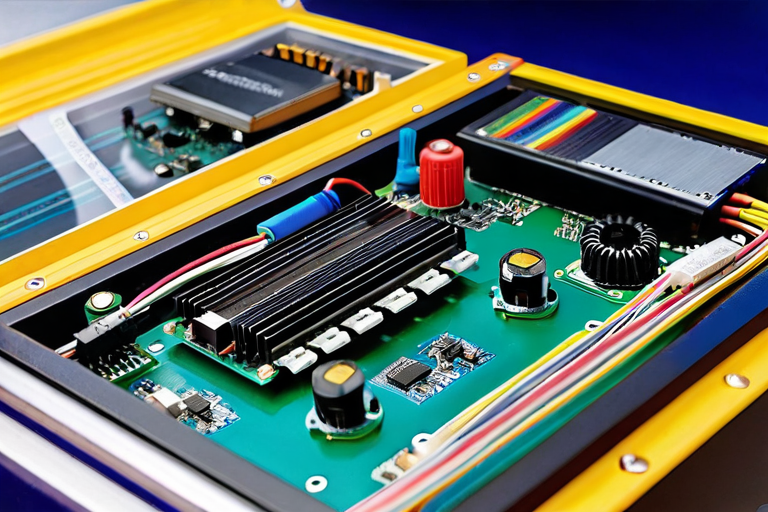
Perhaps the most significant advancement in toy off-road vehicles has been the integration of sophisticated electronic control systems. Modern brushless motors, electronic speed controllers (ESCs), and advanced radio systems have transformed these toys into precision instruments.
| Technology | Traditional Systems | Modern Advancements | Performance Impact |
|---|---|---|---|
| Motor Type | Brushed DC Motors | Brushless Outrunner Motors | +40% efficiency, +60% torque |
| Control Systems | Basic PWM Controllers | Smart ESCs with Telemetry | Real-time monitoring, thermal protection |
| Radio Systems | 27MHz AM Systems | 2.4GHz FHSS Digital | Interference-free operation, multi-model memory |
| Battery Technology | NiMH Packs | High-C LiPo Batteries | +300% power density, faster charging |
Material Science: Building Better Miniatures
The materials used in toy off-road vehicle construction have evolved dramatically. Early models relied heavily on inexpensive plastics that often cracked under stress. Today's premium models incorporate advanced composites and engineering-grade materials that offer exceptional strength-to-weight ratios.
Key material advancements include:
- Carbon Fiber Reinforced Polymers: Used in chassis plates and suspension components for maximum stiffness with minimal weight
- 7075-T6 Aluminum Alloys: Employed in critical suspension and drivetrain components for durability
- High-Impact Polycarbonate: Used in body shells and protective components for resilience
- Silicone-Infused Rubber Compounds: Developed for tires that provide exceptional grip across diverse surfaces
The American Society for Testing and Materials has developed specific testing protocols for miniature vehicle components, ensuring they meet rigorous performance standards.
Terrain Intelligence: How Miniatures Adapt
Modern toy off-road vehicles demonstrate remarkable terrain adaptation capabilities. This isn't accidental—it results from deliberate engineering decisions that consider how miniature vehicles interact with their environment.
Engineering Principle: Ground pressure distribution plays a crucial role in off-road performance. Miniature vehicles achieve surprisingly low ground pressure through optimized tire design and weight distribution, allowing them to traverse surfaces that would challenge much larger vehicles.

Drivetrain Innovations
The drivetrain represents another area of significant advancement. Modern systems feature:
Center Differentials
Allowing torque distribution between front and rear axles for optimal traction
Limited-Slip Mechanisms
Preventing wheel spin while maintaining turning capability
Gear Reduction SystemsProviding appropriate torque multiplication for scale applications
The Digital Integration Frontier
Perhaps the most exciting development in recent years has been the integration of digital technologies. Modern toy off-road vehicles often feature:
- Bluetooth Connectivity: Allowing smartphone control and telemetry monitoring
- Onboard Diagnostics: Monitoring system health and performance parameters
- Modular Expansion: Supporting additional sensors and accessories
- Virtual Reality Integration: Some advanced models offer FPV (First Person View) capabilities
According to analysis from Digital Trends, these digital features not only enhance the play experience but also serve as educational tools, introducing users to concepts in robotics, electronics, and mechanical engineering.

Educational Value and Skill Development
Beyond pure entertainment, advanced toy off-road vehicles offer significant educational benefits. The National Science Teaching Association has noted how these devices can introduce fundamental STEM concepts:
- Physics Principles: Demonstrating concepts of force, torque, friction, and momentum
- Engineering Design: Illustrating how form follows function in mechanical systems
- Electronics Fundamentals: Introducing circuit design, motor control, and power management
- Problem-Solving Skills: Encouraging troubleshooting and optimization
Future Directions: Where Miniature Off-Road is Heading
The evolution of toy off-road vehicles shows no signs of slowing. Emerging trends suggest several exciting directions:
Autonomous Navigation
Incorporating basic AI for terrain recognition and autonomous obstacle avoidance
Advanced Materials
Exploring graphene composites and shape-memory alloys for next-generation components
Energy Harvesting
Integrating solar cells and regenerative braking to extend operational time
Industry analysis from Forbes Technology Council suggests that the miniaturization of sensor technology and the decreasing cost of processing power will enable even more sophisticated capabilities in coming years.
Conclusion: More Than Just Toys
The evolution of toy off-road vehicles represents a fascinating convergence of multiple engineering disciplines. These miniature machines have progressed from simple playthings to sophisticated platforms that demonstrate advanced principles of mechanical design, electronics, and materials science. Their continued development not only provides entertainment but also serves as an accessible introduction to complex engineering concepts, potentially inspiring the next generation of innovators and problem-solvers.
As technology continues to advance, we can expect these miniature marvels to become even more capable, intelligent, and integrated into both play and educational contexts. The journey from basic toy to technical marvel demonstrates how scale doesn't limit ambition—it simply requires different solutions to similar challenges.