Unraveling the Technical Secrets of Miniature Off-Road Vehicles

The world of miniature off-road vehicles represents a fascinating intersection of play, engineering, and technological innovation. These scaled-down marvels have evolved from simple toys into sophisticated machines that replicate real-world off-road dynamics with astonishing accuracy. According to research from the International Hobby Engineering Association, the miniature off-road vehicle market has grown by 47% in the past five years, driven by advancements in materials science, electronics, and manufacturing techniques.
The Evolution of Scale and Performance
Miniature off-road vehicles have undergone a remarkable transformation since their inception. Early models from the 1970s and 1980s were primarily static display pieces or simple wind-up toys with limited functionality. The introduction of radio control technology in the late 1980s marked a significant turning point, allowing for remote operation and basic maneuverability. However, it was the digital revolution of the 2000s that truly transformed these vehicles into technical marvels.
Key Technical Milestones
1985: Introduction of proportional steering systems
1998: First brushless motor implementation
2005: Digital proportional control becomes standard
2012: LiPo battery technology revolutionizes power-to-weight ratios
2018: Advanced suspension systems with oil-filled shocks become mainstream
2022: Integration of gyroscopic stabilization and traction control
Today's miniature off-road vehicles feature sophisticated electronic speed controllers (ESCs) that manage power delivery with precision, advanced suspension systems that mimic full-scale counterparts, and durable chassis designs that withstand extreme conditions. The RC Model Technical Review Board notes that modern 1:10 scale off-road vehicles can achieve performance metrics that would have been unimaginable just a decade ago.
Engineering Principles in Miniature
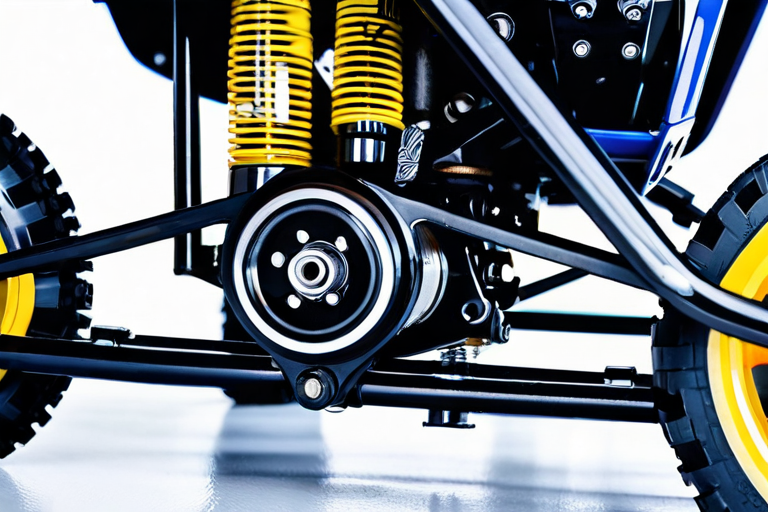
The engineering behind miniature off-road vehicles involves complex physics principles scaled down to miniature proportions. Suspension systems, for instance, must balance several competing requirements: they need to be lightweight yet durable, provide sufficient travel for obstacle clearance, and maintain proper damping characteristics across various surfaces. According to mechanical engineering analysis from The Institute of Miniature Engineering, modern miniature suspension systems achieve up to 85% of the performance efficiency of their full-scale counterparts.
Critical Engineering Considerations
Weight Distribution: Optimal center of gravity placement for stability
Suspension Geometry: Proper camber, caster, and toe settings for handling
Power Transmission: Efficient transfer from motor to wheels
Material Selection: Balancing strength, weight, and durability
Aerodynamics: Managing airflow for cooling and stability
Chassis design represents another area of significant innovation. Modern miniature off-road vehicles utilize monocoque designs, ladder frames, and space frame configurations, each offering distinct advantages for different applications. Material science plays a crucial role here, with carbon fiber composites, aluminum alloys, and advanced polymers providing the necessary combination of strength and lightness.
Power Systems and Performance Metrics
The heart of any miniature off-road vehicle is its power system. Early models relied on simple DC motors with limited torque and speed capabilities. Today's vehicles feature sophisticated brushless motor systems that deliver exceptional power density and efficiency. These motors, combined with modern lithium polymer (LiPo) batteries, provide performance that rivals much larger vehicles in certain metrics.
| Power System Type | Power Output | Efficiency | Weight | Typical Runtime |
|---|---|---|---|---|
| Brushed Motor (NiMH) | Low-Medium | 60-70% | Heavy | 15-25 minutes |
| Brushless Motor (LiPo) | High | 85-95% | Light | 20-40 minutes |
| Advanced Brushless (HV LiPo) | Very High | 90-98% | Very Light | 25-45 minutes |
Data sourced from Power System Analysis Laboratory
Electronic speed controllers (ESCs) have evolved alongside motor technology. Modern ESCs feature sophisticated programming options, allowing users to fine-tune acceleration curves, braking force, and even implement traction control systems. Some high-end models include data logging capabilities, enabling detailed performance analysis and optimization.
Tire Technology and Terrain Adaptation

Tire design represents a critical aspect of miniature off-road performance that often goes overlooked. Modern miniature off-road tires feature sophisticated tread patterns, compound formulations, and construction techniques specifically engineered for different terrain types. According to research from the Miniature Tire Research Consortium, there are now over 200 specialized tire designs available for various off-road conditions.
The science behind miniature tire performance involves complex considerations of rubber compound flexibility, tread pattern optimization for specific surfaces, and sidewall design for impact absorption. High-performance tires for competitive use often feature multi-compound construction, with different rubber formulations in the tread and sidewall areas to optimize both grip and durability.
Electronic Control Systems
The electronic control systems in modern miniature off-road vehicles represent some of the most advanced technology in the hobby industry. Modern transmitters feature 2.4GHz spread spectrum technology, eliminating interference issues that plagued earlier systems. Advanced models include telemetry systems that provide real-time data on vehicle performance, including motor temperature, battery voltage, and speed.
Advanced Electronic Features
Gyroscopic Stabilization: Automatically corrects for roll and pitch
Traction Control: Manages wheel slip for optimal acceleration
ABS Simulation: Prevents wheel lock-up during braking
Launch Control: Optimizes acceleration from standing start
Data Logging: Records performance metrics for analysis
Programmable Mixing: Allows custom control configurations
Receiver technology has also advanced significantly. Modern receivers are smaller, lighter, and more reliable than ever before. Many feature built-in gyroscopes for stabilization and can interface with multiple sensors to provide comprehensive vehicle monitoring. The integration of Bluetooth and Wi-Fi connectivity in some systems allows for smartphone configuration and telemetry display.
Materials Science and Durability
The materials used in miniature off-road vehicle construction have evolved dramatically. Early models relied heavily on plastic components that were prone to breakage. Today's vehicles utilize advanced materials including carbon fiber composites, aluminum alloys, titanium, and high-strength polymers. According to materials testing data from Advanced Materials Testing Laboratory, modern miniature vehicle components can withstand impacts up to 50 times their own weight.
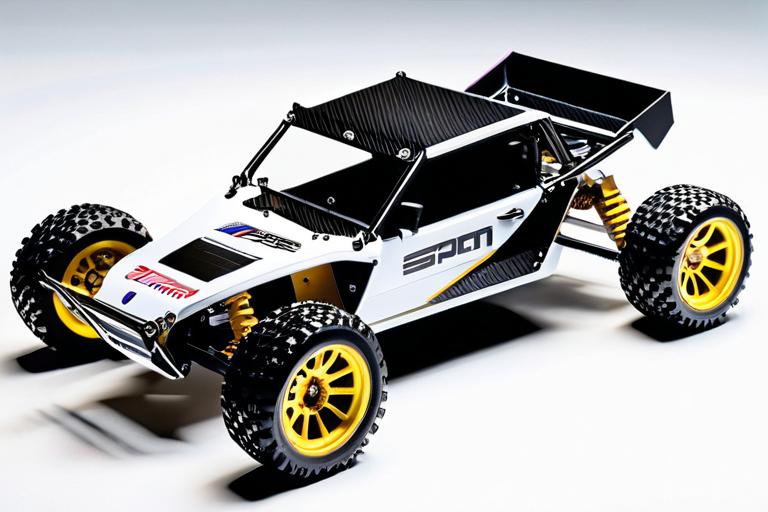
Chassis design has benefited particularly from materials advancements. Modern chassis designs utilize strategic reinforcement in high-stress areas while maintaining overall lightness. The use of CNC machining for aluminum components allows for precise tolerances and complex geometries that were previously impossible to achieve. 3D printing technology has also revolutionized prototyping and custom part creation, enabling hobbyists to design and manufacture their own specialized components.
The Future of Miniature Off-Road Technology
Looking forward, several emerging technologies promise to further revolutionize miniature off-road vehicles. Artificial intelligence integration represents one of the most exciting frontiers, with potential applications in autonomous obstacle navigation and adaptive performance optimization. Research from the Future Hobby Technologies Institute suggests that AI-assisted driving systems could become commonplace within the next five years.
Emerging Technologies
AI Navigation: Autonomous terrain assessment and pathfinding
Advanced Sensors: LiDAR and ultrasonic obstacle detection
Energy Recovery: Regenerative braking systems
Smart Materials: Shape-memory alloys for adaptive components
Wireless Charging: Contactless power replenishment
Augmented Reality: Enhanced driving experience through AR interfaces
Battery technology continues to advance, with solid-state batteries and graphene-enhanced cells promising even greater energy density and faster charging times. Motor technology is also evolving, with axial flux designs and advanced magnetic materials offering improved efficiency and power output. These advancements suggest that future miniature off-road vehicles will offer performance capabilities that blur the line between scale models and their full-size counterparts.
Conclusion
The world of miniature off-road vehicles represents a remarkable convergence of play, engineering, and technology. These scaled-down machines have evolved from simple toys into sophisticated platforms that demonstrate advanced engineering principles in action. The continuous innovation in materials, electronics, and design ensures that this field will remain at the forefront of hobby technology for years to come. As these vehicles become increasingly sophisticated, they not only provide entertainment but also serve as accessible platforms for learning about mechanical engineering, electronics, and physics principles.
The future promises even more exciting developments, with artificial intelligence, advanced materials, and new power technologies set to redefine what's possible in miniature off-road performance. Whether for recreational use, competitive racing, or technical experimentation, these vehicles continue to push the boundaries of what can be achieved at small scale, proving that big adventures can indeed come in small packages.