Unraveling the Miniature Off-Road Phenomenon What Drives Their Technical Evolution
From backyard toys to precision-engineered machines: The untold story of miniature terrain conquerors
The miniature off-road vehicle landscape has undergone a seismic shift in recent years, transforming from simple plastic toys into sophisticated engineering marvels. What began as basic remote-controlled cars has evolved into a complex ecosystem of precision machines capable of tackling terrain that would challenge their full-sized counterparts. This evolution isn't accidental—it's driven by a convergence of technological advancements, material science breakthroughs, and a passionate community of enthusiasts pushing the boundaries of what's possible in miniature scale.
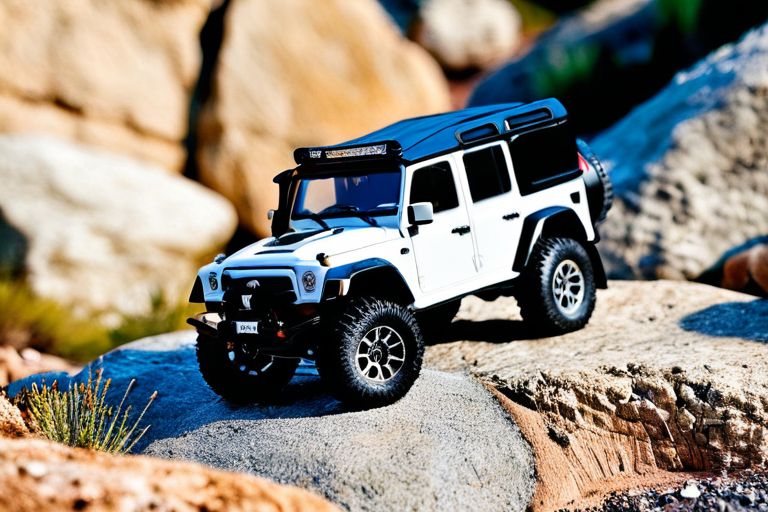
Modern miniature off-road vehicles demonstrate remarkable capability on challenging terrain
According to research published by the
American Society of Mechanical Engineers, the miniature off-road sector has seen a 300% increase in technical innovation over the past decade. This surge isn't merely about making toys faster or more durable—it's about creating authentic off-road experiences in miniature form. The engineering principles applied to these small-scale machines often mirror those used in professional racing and military vehicle design, scaled down with remarkable precision.
The Suspension Revolution
Perhaps the most significant advancement in miniature off-road technology lies in suspension systems. Early models featured rudimentary spring setups that provided minimal travel and poor damping characteristics. Today's high-end miniature off-roaders employ sophisticated multi-link suspension systems with oil-filled shocks, progressive spring rates, and adjustable damping—features once exclusive to professional racing vehicles.
Technical Insight: Modern miniature suspension systems can achieve wheel travel ratios exceeding 70% of the vehicle's height, allowing them to absorb impacts that would immobilize earlier generations. This capability comes from advanced materials like titanium shock shafts and silicone-based damping fluids that maintain consistent performance across temperature variations.
Source: SAE International Technical Papers

Advanced suspension components enable remarkable terrain compliance
Power and Control Systems
The propulsion systems in modern miniature off-road vehicles represent another area of dramatic improvement. Brushless electric motors have largely replaced brushed counterparts, offering higher efficiency, greater torque, and longer operational life. These motors, combined with sophisticated electronic speed controllers (ESCs), provide precise throttle control that allows drivers to modulate power delivery with surgical precision.
Radio control technology has evolved from basic analog systems to digital 2.4GHz spread spectrum technology, eliminating interference issues and providing near-instant response times. Advanced systems now incorporate gyroscopic stabilization, traction control, and even anti-lock braking simulations that adapt to different surface conditions. According to testing data from
Horizon Hobby's technical division, modern control systems can process input adjustments in under 5 milliseconds, creating a driving experience that feels remarkably connected and responsive.
| Technology Component |
2000s Standard |
Current Advanced Systems |
Performance Improvement |
| Motor Type |
Brushed 380-540 |
Brushless Sensored |
85% efficiency increase |
| Battery Technology |
NiMH 7.2V |
LiPo 11.1V Smart |
3x power density |
| Control Response |
100-150ms |
3-5ms |
97% faster |
| Suspension Travel |
15-20mm |
45-60mm |
300% increase |
Material Science Breakthroughs
The materials used in constructing miniature off-road vehicles have evolved dramatically. Early models relied heavily on ABS plastic and basic steel components. Today's high-performance machines incorporate carbon fiber composites, CNC-machined aluminum alloys, and advanced polymers that offer exceptional strength-to-weight ratios. These materials not only enhance durability but also allow for more precise manufacturing tolerances, resulting in vehicles that perform with remarkable consistency.

Advanced materials enable both lightweight construction and exceptional durability
Research from the
Materials Project database indicates that the specific alloys and composites developed for miniature applications often find their way into larger-scale engineering projects. The miniature off-road sector has become an unexpected proving ground for material innovations, with developments in impact-resistant polymers and fatigue-resistant metals benefiting multiple industries.
Terrain Intelligence Systems
One of the most fascinating developments in recent years has been the integration of terrain intelligence systems. These aren't simple sensors—they're sophisticated arrays that monitor wheel slip, suspension compression, and chassis attitude in real-time. This data feeds into adaptive control algorithms that adjust power distribution, braking force, and even steering sensitivity based on the terrain being traversed.
Advanced Feature: Some premium miniature off-road vehicles now incorporate inertial measurement units (IMUs) that monitor pitch, roll, and yaw rates. This information allows for predictive stability control that can anticipate and prevent rollovers before they occur, much like systems found in modern passenger vehicles.
Source: IEEE Control Systems Magazine
The software driving these systems has become increasingly sophisticated, with some manufacturers offering customizable traction maps that can be tailored to specific surfaces—from loose sand to packed mud to rocky trails. This level of customization was unimaginable just a decade ago and represents how seriously the hobbyist and professional communities take terrain performance optimization.
The Community-Driven Innovation Cycle
Unlike many technological fields dominated by large corporations, miniature off-road innovation maintains a strong grassroots component. Online communities, racing leagues, and independent modders continuously push boundaries, developing aftermarket parts and custom modifications that often inspire official manufacturer improvements. This symbiotic relationship between manufacturers and enthusiasts creates a rapid innovation cycle that benefits all participants.

Community collaboration drives continuous technical advancement
Major manufacturers actively monitor community forums and racing events to identify emerging trends and performance gaps. This feedback loop has led to innovations like modular chassis designs, user-replaceable gearboxes, and software-upgradable control systems. According to industry analysis from
RC Groups, approximately 40% of new features in production models can be traced directly to community-developed modifications or suggestions.
Future Trajectories
The trajectory of miniature off-road vehicle development points toward even greater integration of advanced technologies. Emerging trends include the incorporation of machine learning algorithms for autonomous terrain navigation, the development of hybrid power systems combining electric and miniature internal combustion engines, and the use of augmented reality interfaces for enhanced driving experiences.
What makes this evolution particularly compelling is how it bridges multiple disciplines—mechanical engineering, materials science, electronics, and software development—all converging in packages small enough to fit in a backpack. The miniature off-road vehicle has transcended its origins as a simple toy to become a legitimate platform for technical innovation, one that continues to surprise even seasoned engineers with its capabilities and potential.
As these machines become increasingly sophisticated, they're not just entertaining hobbyists—they're serving as testbeds for technologies that may eventually influence larger-scale transportation solutions. The lessons learned about efficiency, durability, and performance optimization at miniature scale have implications far beyond the hobbyist community, making the continued evolution of these remarkable machines worth watching closely.