The Unseen Physics of Miniature Off-Road Suspension Systems
Exploring how scale model vehicles replicate real-world dynamics through sophisticated engineering
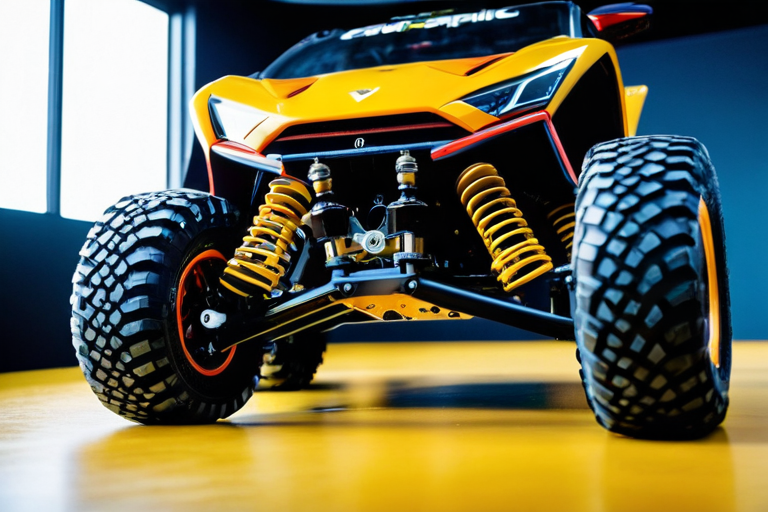
When most people observe a toy off-road vehicle navigating rocky terrain or climbing steep inclines, they see a simple plaything. However, beneath the colorful plastic exterior lies a sophisticated system of engineering principles that mirror the dynamics of full-scale off-road vehicles. The suspension systems in these miniature machines represent a remarkable convergence of physics, materials science, and mechanical engineering, all scaled down to fit within a package small enough to hold in one's hand.
According to research from the American Society of Mechanical Engineers, the development of miniature suspension systems has followed a trajectory parallel to that of their full-scale counterparts, with innovations in one domain frequently inspiring advancements in the other. This symbiotic relationship between toy and real-world engineering has accelerated the sophistication of both fields.
The Scale Challenge: Physics Doesn't Scale Linearly
One of the fundamental challenges in designing miniature off-road suspension systems stems from the non-linear nature of physical scaling. As noted in engineering publications from SAE International, when dimensions are reduced, surface area decreases with the square of the scale factor while volume decreases with the cube. This creates unique challenges for suspension designers working at miniature scales.
Scale Factor Effects on Suspension Components
At 1:10 scale, a vehicle experiences significantly different force distributions compared to its full-scale counterpart. Spring rates must be adjusted not simply by the scale factor, but according to complex calculations involving mass distribution, moment of inertia, and surface friction coefficients. This explains why miniature suspension systems often appear disproportionately robust relative to the vehicle size.
The materials used in these systems have evolved dramatically over the past decade. Early toy off-road vehicles typically employed simple leaf springs or basic coil springs made from standard steel alloys. Today's advanced models utilize composite materials, titanium components, and specialized polymers that offer strength-to-weight ratios unimaginable just a few years ago.
Suspension Architecture: From Simple to Sophisticated
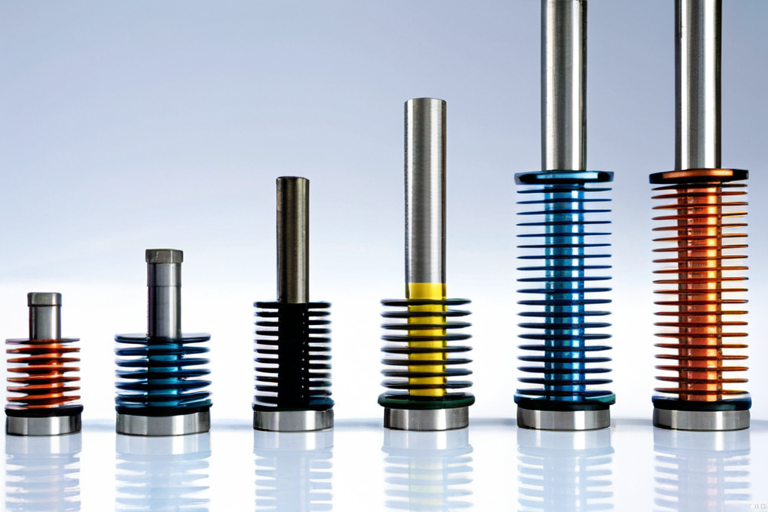
Modern miniature off-road vehicles employ suspension architectures that would be familiar to any automotive engineer. Independent suspension systems, once reserved for high-end racing models, have become commonplace in mid-range hobbyist vehicles. These systems allow each wheel to react independently to terrain variations, providing superior traction and stability.
Double wishbone suspensions, multi-link systems, and even electronically controlled adaptive dampers have found their way into the miniature off-road world. According to technical analysis published by RC Groups, a leading hobbyist community, these advanced systems provide performance benefits that extend beyond simple play value, offering genuine engineering education through hands-on experience.
| Suspension Type | Scale Application | Performance Characteristics | Common Use Cases |
|---|---|---|---|
| Solid Axle | 1:18 to 1:10 | Maximum durability, simple maintenance | Entry-level models, extreme rock crawling |
| Independent Front | 1:10 to 1:8 | Improved handling, better high-speed stability | Trail running, general off-road |
| Full Independent | 1:8 to 1:5 | Maximum traction, precise control | Competition racing, technical terrain |
| Active Suspension | 1:10 and larger | Adaptive performance, electronic tuning | High-end hobbyist, experimental platforms |
Damping Dynamics: Controlling Oscillation at Small Scales
The science of damping in miniature suspension systems presents unique challenges. As explained in technical papers from the Institute of Materials, Minerals & Mining, viscous damping forces don't scale proportionally with size, requiring specialized fluid formulations and valve designs for miniature shock absorbers.
Modern miniature shock absorbers often feature adjustable damping rates, rebuildable designs, and specialized oils with temperature-stable viscosity profiles. Some high-end models even incorporate position-sensitive damping, where the resistance changes based on shock travel position, mimicking technology found in premium mountain bike and motorcycle suspensions.
Articulation and Flex: The Geometry of Terrain Conquest
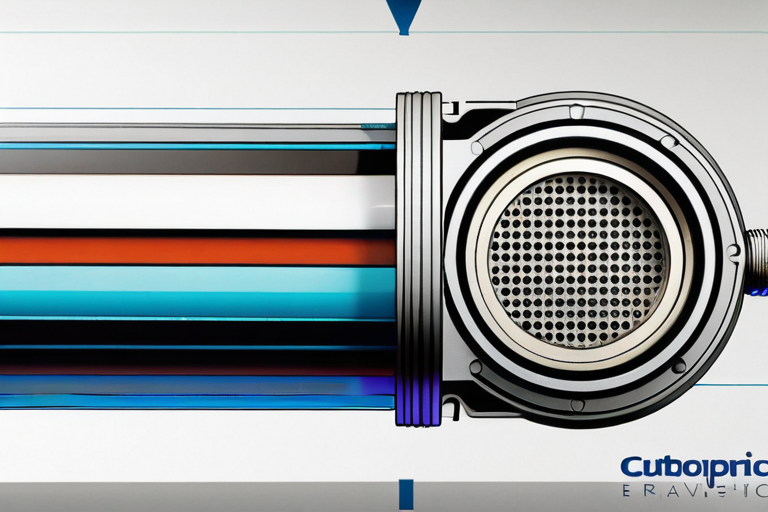
Suspension articulation—the ability of wheels to maintain contact with uneven terrain—represents a critical performance metric for off-road vehicles of any scale. In miniature systems, achieving sufficient articulation while maintaining structural integrity requires careful attention to suspension geometry and component strength.
According to engineering resources from Horizon Hobby, a leading manufacturer of radio-controlled vehicles, the most advanced miniature off-road platforms achieve articulation angles exceeding 45 degrees, allowing them to navigate obstacles that would immobilize less sophisticated designs. This performance comes from precisely calculated suspension link lengths, pivot point placements, and shock mounting positions.
Articulation Optimization Principles
Successful miniature suspension design balances multiple competing factors: sufficient wheel travel for obstacle clearance, minimal unsprung weight for responsive handling, adequate ground clearance for rough terrain, and compact packaging to fit within scale dimensions. The optimal solution varies based on intended use, with rock crawlers prioritizing maximum articulation while desert racers focus on high-speed stability.
The Role of Electronics in Modern Suspension Systems
While mechanical components form the foundation of any suspension system, electronics have become increasingly important in advanced miniature off-road vehicles. Electronic stability control, traction management systems, and even active suspension adjustment have migrated from full-scale vehicles to their miniature counterparts.
Technical documentation from Spektrum reveals how modern radio control systems integrate with vehicle dynamics. Advanced receivers can process data from multiple sensors—including accelerometers, gyroscopes, and wheel speed sensors—to make real-time adjustments to power delivery and braking, effectively working in concert with the mechanical suspension to optimize performance.

Educational Value and Engineering Inspiration
Beyond their entertainment value, sophisticated miniature suspension systems serve as accessible platforms for engineering education. According to educational research cited by NASA's STEM engagement programs, hands-on experience with these systems helps develop intuitive understanding of mechanical principles, force vectors, and material properties.
The modular nature of many hobby-grade miniature vehicles allows enthusiasts to experiment with different suspension configurations, spring rates, damping fluids, and geometry adjustments. This trial-and-error approach, supported by online communities and technical resources, creates a practical learning environment that complements theoretical engineering education.
Future Directions: Where Miniature Suspension Technology Is Heading
The evolution of miniature off-road suspension systems shows no signs of slowing. Emerging technologies including magnetorheological dampers (using fluids that change viscosity in response to magnetic fields), shape-memory alloy springs, and 3D-printed composite components promise to further blur the line between toy and technical instrument.
Research initiatives at institutions like the Massachusetts Institute of Technology are exploring how miniature vehicle platforms can serve as testbeds for autonomous navigation algorithms and adaptive suspension technologies. These developments suggest that the humble toy off-road vehicle may play an increasingly important role in advancing mobility technologies of all scales.
As miniature off-road vehicles continue to evolve, their suspension systems will likely become even more sophisticated, incorporating lessons from robotics, aerospace, and automotive engineering. What began as simple spring-and-lever mechanisms has grown into a complex field that demonstrates how fundamental physics principles manifest across different scales, providing both entertainment and education to enthusiasts worldwide.
The next time you observe a miniature vehicle conquering a backyard obstacle course, consider the invisible physics at work—the carefully calculated spring rates, precisely tuned damping characteristics, and optimally positioned pivot points that transform a collection of plastic and metal components into a terrain-conquering machine. In these small-scale systems, we find not just toys, but tangible demonstrations of engineering excellence.