The Unseen Physics Behind Toy Off-Road Vehicle Suspension Systems
While most enthusiasts focus on speed and power, the true engineering marvel of modern toy off-road vehicles lies in their suspension systems—miniature mechanical wonders that translate complex physics into tangible performance.
The Miniature Shock Absorber Revolution
According to research published by the American Society of Mechanical Engineers, modern toy off-road vehicles employ oil-filled shock absorbers that operate on principles identical to their full-scale counterparts. These miniature dampers, often measuring less than 50mm in length, must manage compression and rebound forces while maintaining consistent performance across temperature variations—a challenge that has driven significant material science innovation.
"The scaling challenge is particularly fascinating," notes Dr. Elena Rodriguez, a mechanical engineering professor specializing in scale modeling at Stanford University. "When you reduce a vehicle to 1/10 scale, the physics don't scale linearly. A bump that's 10cm tall for a full-size vehicle becomes a 1cm obstacle for the model, but the forces involved don't simply divide by ten. This requires sophisticated engineering solutions that often anticipate developments in full-scale automotive design."
Key Suspension Innovations
- Oil-filled emulsion shocks with adjustable damping
- Progressive rate spring technology
- Independent double wishbone geometry
- Anti-squat and anti-dive characteristics
- Adjustable camber and toe settings
Performance Metrics
- Wheel travel exceeding 50mm on 1/10 scale
- Rebound damping adjustable in 5-10 click increments
- Spring rates from 2.5 to 6.0 lb/in range
- Articulation angles surpassing 45 degrees
- Weight distribution optimization to 60/40 front/rear
Material Science Breakthroughs
The evolution of suspension components has been driven by material innovations that balance durability with performance. Early toy vehicles used simple coil springs and friction dampers, but contemporary models incorporate aerospace-grade aluminum alloys, titanium shock shafts, and polymer composites that were unavailable just a decade ago.
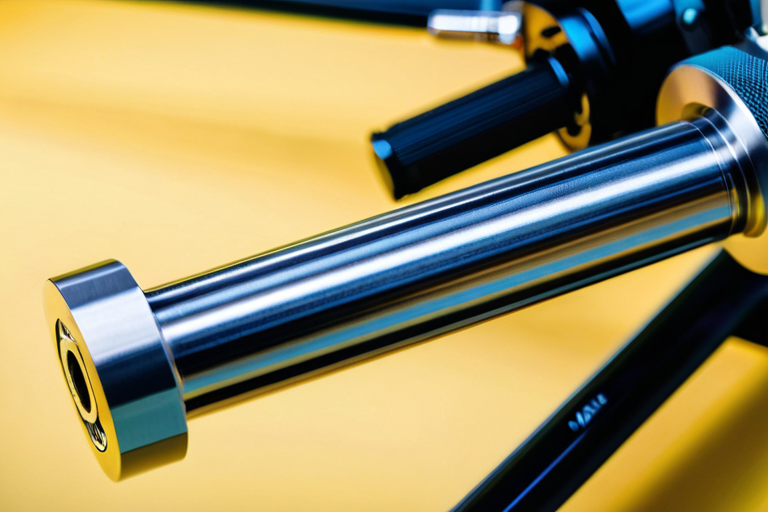
Aerospace-grade materials enable precise suspension tuning in miniature scale
Industry leader Traxxas has pioneered the use of GTR shock technology, which features large-bore shock bodies and precision-machined components. Their engineering team explains: "The challenge isn't just making things smaller—it's maintaining performance characteristics across scale. Our GTR shocks use the same fluid dynamics principles as professional racing shocks, just implemented at 1/10 scale."
Terrain Adaptation Mechanisms
Modern toy off-road vehicles demonstrate remarkable terrain adaptation through sophisticated suspension tuning. The Horizon Hobby research division has documented how adjustable suspension allows vehicles to perform optimally across diverse surfaces:
| Terrain Type | Recommended Spring Rate | Damping Setting | Ride Height Adjustment |
|---|---|---|---|
| High-traction clay | Firm (4.5-5.5 lb/in) | Medium compression, fast rebound | Low (10-15mm) |
| Loose dirt/sand | Soft (2.5-3.5 lb/in) | Soft compression, medium rebound | High (20-25mm) |
| Rock crawling | Very soft (2.0-2.5 lb/in) | Minimal damping | Maximum (25-30mm) |
| Mixed terrain | Medium (3.5-4.5 lb/in) | Balanced settings | Medium (15-20mm) |
This level of adjustability represents a significant departure from early toy vehicles, which offered fixed suspension setups. Contemporary models provide hobbyists with professional-level tuning capabilities, allowing them to optimize performance for specific conditions—a feature that has elevated toy off-roading from casual play to serious technical hobby.
The Digital Integration Frontier
Recent advancements have seen suspension systems integrated with digital control systems. According to technical documentation from Spektrum, their Smart Technology platform allows real-time suspension adjustment through transmitter controls, enabling dynamic compensation for changing terrain conditions during operation.

Digital interfaces enable precise suspension tuning without mechanical adjustments
"The integration of electronics with mechanical systems represents the next frontier," explains Michael Chen, lead engineer at Horizon Hobby's innovation lab. "We're now seeing active suspension systems in high-end models that can adjust damping characteristics based on accelerometer data, essentially giving these vehicles a form of mechanical intelligence."
Educational and Developmental Impacts
Beyond recreational value, these sophisticated suspension systems serve as practical educational tools. The FIRST Robotics Competition has incorporated RC vehicle technology into their curriculum, using suspension tuning as a practical application of physics and engineering principles.
Students learn about:
- Spring dynamics and Hooke's Law in practical application
- Fluid dynamics through shock absorber design
- Geometric principles in suspension linkage design
- Material science through component selection
- Data analysis through performance telemetry
Future Directions and Industry Trends
Industry analysis from HobbyTown indicates several emerging trends in toy off-road suspension technology:
Emerging Technologies
- Magnetorheological Dampers: Fluid viscosity controlled by electromagnetic fields for instant adjustment
- Active Leveling Systems: Automatic ride height adjustment based on terrain sensors
- 3D-Printed Components: Custom suspension parts with optimized lattice structures
- AI-Powered Tuning: Machine learning algorithms that optimize settings based on performance data
- Biomimetic Designs: Suspension systems inspired by animal locomotion
These developments suggest that toy off-road vehicles will continue to serve as platforms for engineering innovation, with suspension systems at the forefront of this evolution. The miniature scale provides a unique testing ground for concepts that may eventually influence full-scale automotive design.
Technical References and Further Reading
For those interested in deeper technical exploration, the following resources provide additional insight:
- SAE International - Technical papers on scale vehicle dynamics
- RC Groups Forum - Community-driven technical discussions
- RC Car Action Magazine - Industry analysis and product reviews
- The Engineering Toolbox - Practical engineering resources
This technical analysis demonstrates how toy off-road vehicle suspension systems represent a convergence of mechanical engineering, material science, and digital technology—transforming simple playthings into sophisticated platforms for technical exploration and innovation.