The Unseen Mechanics of Toy Off-Road Vehicles: How Miniature Engineering Creates Maximum Adventure
While often dismissed as simple playthings, modern toy off-road vehicles represent some of the most sophisticated miniature engineering achievements available to consumers. These scaled-down machines incorporate advanced technologies that mirror their full-sized counterparts with surprising accuracy.
The Evolution of Scale Performance
The journey from basic wind-up toys to today's high-performance remote-controlled vehicles has been marked by significant technological leaps. According to Horizon Hobby, one of the industry's leading manufacturers, the transition from simple brushed motors to brushless systems in the early 2000s revolutionized what was possible in miniature form. These electric motors, often no larger than a thimble, can generate power outputs that would have been unimaginable just two decades ago.
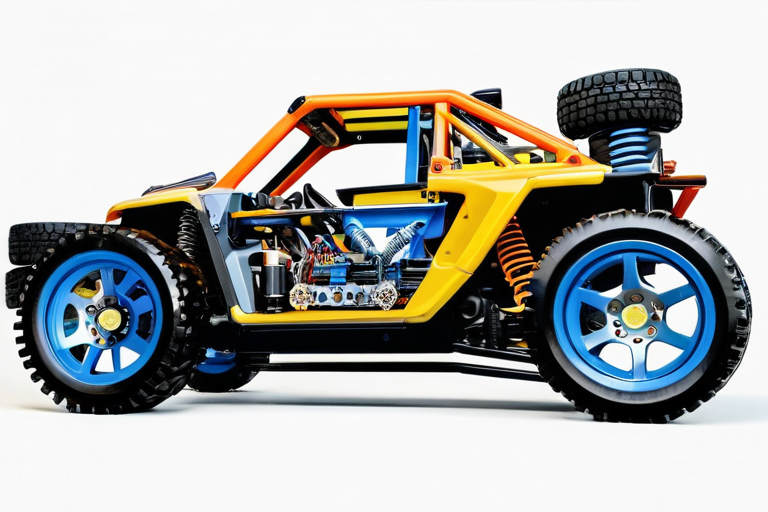
Modern toy off-road vehicles feature sophisticated internal components that mirror full-scale engineering principles
What makes these miniature machines particularly fascinating is their ability to overcome scaling challenges. As noted by engineering experts at RC Groups, the largest community for remote control enthusiasts, surface tension and air resistance affect small vehicles disproportionately compared to their full-sized counterparts. Engineers must compensate for these physical realities through innovative design solutions.
Suspension Systems: The Heart of Terrain Capability
Perhaps the most critical component in any off-road vehicle, miniature or otherwise, is its suspension system. Modern toy off-road vehicles employ sophisticated shock absorber designs that manage wheel articulation while maintaining stability. These systems often feature:
- Oil-filled dampers with adjustable compression and rebound
- Progressive rate springs that adapt to varying terrain
- Multi-link configurations for optimal wheel travel
- Anti-roll bars to minimize body lean during cornering
Industry analysis from RC Car Action reveals that suspension tuning has become so precise that enthusiasts can adjust their vehicles for specific conditions—whether it's loose sand, rocky trails, or muddy terrain. This level of customization was once reserved for professional racing teams but is now accessible to hobbyists of all skill levels.
Electronic Control Systems: The Invisible Intelligence
Beneath the colorful plastic shells lies a network of electronic components that would impress any technology enthusiast. Modern toy off-road vehicles incorporate:
Electronic Speed Controllers (ESCs)
These microprocessor-based units manage power delivery with remarkable precision, offering features like drag brake control, thermal protection, and programmable acceleration curves.
Gyroscopic Stabilization
Advanced models include inertial measurement units that help maintain stability during high-speed maneuvers, automatically adjusting throttle and steering inputs.
Telemetry Systems
Real-time data transmission allows users to monitor battery voltage, motor temperature, and speed directly from their controllers.

Advanced electronic systems enable precise control even in the most challenging environments
According to technical documentation from Spektrum, a leading electronics manufacturer for the RC industry, modern radio systems operate on 2.4GHz frequencies with frequency-hopping spread spectrum technology. This ensures reliable control even in crowded environments while providing latency as low as 5 milliseconds—faster than human reaction time.
Material Science: Building Durability into Miniature Form
The materials used in contemporary toy off-road vehicles represent a careful balance between weight, strength, and cost. Engineering teams have moved beyond simple plastics to incorporate:
Research from ARRMA RC demonstrates how material selection directly impacts performance. Their testing shows that optimized chassis materials can reduce weight by up to 30% while increasing torsional rigidity—a critical factor in maintaining handling precision during aggressive maneuvers.
Power Systems: Beyond Simple Batteries
The evolution of power systems in toy off-road vehicles mirrors advancements in the electric vehicle industry. Modern systems feature:
Lithium Polymer (LiPo) Technology
These batteries offer energy densities that allow for longer run times and higher power outputs. Advanced battery management systems monitor cell balance and temperature, extending both performance and lifespan.
Brushless Motor Innovation
Contemporary brushless motors utilize rare-earth magnets and precision windings to achieve efficiency levels exceeding 90%. Sensorless variants provide smooth low-speed control while sensored designs offer precise torque management.
Regenerative Braking
Some advanced systems capture kinetic energy during deceleration, converting it back to electrical energy to extend battery life—a technology trickled down from hybrid and electric vehicles.
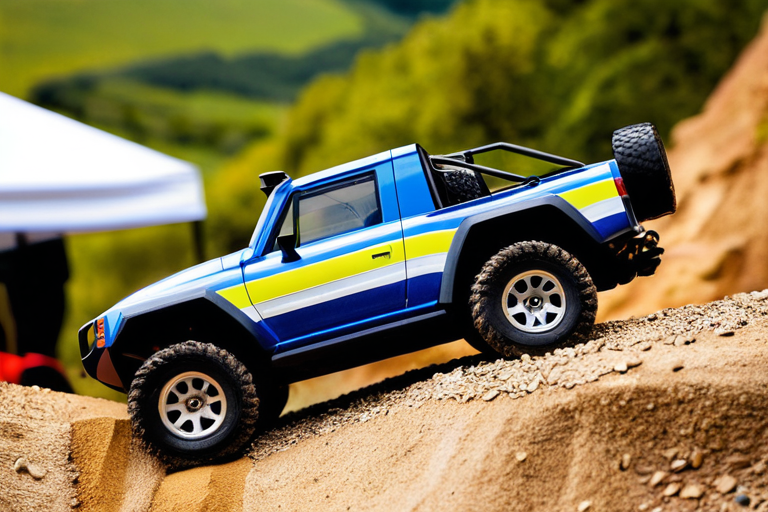
Advanced power systems enable impressive climbing ability and sustained performance
Technical analysis from Castle Creations, a specialist in high-performance RC electronics, reveals that modern power systems can deliver peak power outputs exceeding 2,000 watts—equivalent to approximately 2.7 horsepower in a package weighing less than 500 grams.
The Educational Dimension: Engineering Principles in Action
Beyond entertainment value, toy off-road vehicles serve as practical demonstrations of fundamental engineering principles. Educators and industry professionals note several educational benefits:
- Mechanical Advantage: Gear reduction systems illustrate torque multiplication principles
- Suspension Geometry: Camber, caster, and toe adjustments demonstrate vehicle dynamics
- Electronic Control: Pulse-width modulation teaches digital signal processing basics
- Aerodynamics: Body design influences stability at speed
- Material Selection: Different applications require specific material properties
Organizations like FIRST Robotics have incorporated RC vehicle principles into their educational programs, recognizing their value in teaching STEM concepts through hands-on application.
Future Directions: Where Miniature Engineering is Heading
The trajectory of toy off-road vehicle development points toward several exciting innovations:
Autonomous Navigation
Early prototypes demonstrate obstacle avoidance and path-finding capabilities using miniature LIDAR and camera systems.
Advanced Telepresence
Virtual reality integration allows operators to experience terrain from the vehicle's perspective with immersive feedback.
Sustainable Materials
Development of biodegradable composites and recyclable electronic components addresses environmental concerns.
Industry forecasts from RC Universe suggest that artificial intelligence integration will become increasingly common, with vehicles learning from terrain patterns and optimizing their own performance characteristics based on environmental conditions.
Conclusion: More Than Just Toys
The modern toy off-road vehicle represents a convergence of multiple engineering disciplines in miniature form. From advanced materials science to sophisticated electronics, these machines demonstrate that scale doesn't limit capability. They serve not only as sources of entertainment but also as accessible platforms for understanding complex engineering principles, inspiring future generations of designers, engineers, and innovators.
As technology continues to advance, the boundary between toy and tool becomes increasingly blurred, reminding us that sometimes the most profound engineering achievements come in the smallest packages.