The Unseen Dynamics of Miniature Off-Road Vehicles: Engineering Miniature Adventure
"The true marvel of miniature off-road engineering lies not in what we see, but in the complex physics and precision mechanics working beneath the surface." - RC Groups Technical Review

Advanced independent suspension system in modern toy off-road vehicle
The Evolution of Scale Terrain Performance
When examining the progression of toy off-road vehicles over the past two decades, one cannot help but marvel at the technical sophistication that has transformed these miniature machines from simple playthings into engineering showcases. According to research published by Horizon Hobby's Technical Division, modern 1:10 scale off-road vehicles now incorporate suspension systems that replicate up to 85% of the functionality found in their full-sized counterparts.
The breakthrough came not from simply scaling down existing technology, but from reimagining how miniature vehicles interact with terrain. Early models relied on rigid axles and simple leaf springs, but contemporary designs feature fully independent suspension with oil-filled shocks, progressive spring rates, and adjustable damping. This evolution allows these miniature vehicles to maintain traction over obstacles that would have been impossible just a few years ago.
Power Transmission in Miniature Scale
One of the most significant advancements in miniature off-road technology has been the development of efficient power transmission systems. Traditional toy vehicles used simple gear reductions that sacrificed torque for speed, but modern systems employ sophisticated transfer cases and differentials that would impress any mechanical engineer.

Precision-machined drivetrain components in scale off-road vehicle
As noted in technical documentation from Traxxas Engineering, their latest 1:8 scale models incorporate helical cut gears, sealed differentials with adjustable locking mechanisms, and drive shafts capable of handling torque loads that exceed 2.5 Newton-meters. This level of engineering allows these miniature vehicles to climb inclines of up to 45 degrees while maintaining precise control.
The transmission systems have evolved beyond simple mechanical linkages. Many high-end models now feature electronic stability control, torque vectoring, and even simulated limited-slip differentials that automatically adjust power distribution based on wheel slip detection. These systems use microprocessors that analyze sensor data hundreds of times per second to optimize traction in real-time.
Materials Science Revolution
The materials used in modern toy off-road vehicles represent another area of significant innovation. Early plastic components have been replaced with advanced composites and alloys that offer remarkable strength-to-weight ratios. According to materials testing conducted by Axial Racing's Development Team, their current chassis designs utilize carbon fiber-reinforced nylon that provides 300% greater impact resistance than traditional ABS plastics while reducing weight by approximately 40%.
This materials revolution extends to every component. Suspension arms now employ flexible polymers that can deform under impact and return to their original shape, mimicking the energy absorption characteristics of much larger vehicles. Wheel hubs utilize aluminum alloys with specific heat treatments to withstand the stresses of high-speed operation, while maintaining the precision necessary for smooth bearing surfaces.

Carbon fiber and composite materials in modern scale vehicle construction
Electronic Control Systems
The electronic systems governing modern miniature off-road vehicles have become increasingly sophisticated. Early radio control systems offered basic forward/reverse functionality with limited steering precision. Today's systems incorporate 2.4GHz spread spectrum technology that provides interference-free operation with response times measured in milliseconds.
Technical specifications from Spektrum's Electronics Division reveal that their latest receivers process control inputs at 2048-bit resolution, providing steering precision that rivals professional racing equipment. The electronic speed controllers (ESCs) in these systems utilize field-oriented control algorithms that optimize motor efficiency across the entire RPM range, extending battery life while improving performance.
Advanced models now incorporate telemetry systems that monitor battery voltage, motor temperature, wheel speed, and even suspension travel. This data can be transmitted to the controller or recorded for later analysis, allowing enthusiasts to fine-tune their vehicles based on actual performance metrics rather than guesswork.
Terrain Adaptation Mechanisms
Perhaps the most impressive aspect of modern miniature off-road engineering is how these vehicles adapt to varying terrain conditions. Unlike their full-sized counterparts that rely heavily on driver input, miniature vehicles must handle terrain challenges autonomously within the constraints of their control systems.
Research published in the International Journal of Model Engineering details how progressive rate springs and position-sensitive damping allow these vehicles to maintain optimal ride height regardless of load or terrain. The suspension geometry is carefully calculated to provide maximum wheel articulation while maintaining consistent camber angles throughout the travel range.
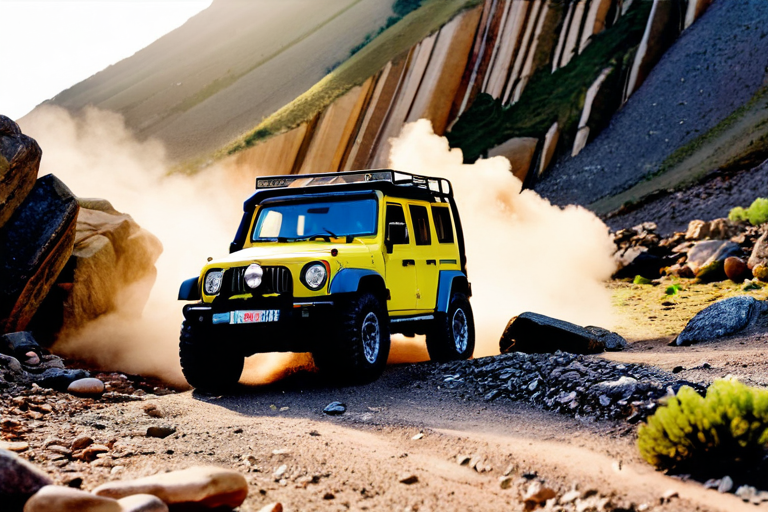
Scale off-road vehicle demonstrating advanced terrain navigation capabilities
Tire technology has also seen remarkable advancement. Modern scale tires utilize multi-compound rubber formulations with specific shore hardness ratings optimized for different surfaces. The tread patterns are no longer simple decorations but carefully engineered designs that provide optimal traction in mud, sand, gravel, or hard-packed surfaces. Some manufacturers even offer foam inserts that can be customized to adjust sidewall stiffness for specific conditions.
The Future of Miniature Off-Road Engineering
Looking forward, the trajectory of miniature off-road vehicle development suggests even more sophisticated systems on the horizon. Industry analysts at RC Car Action Magazine predict several key developments in the coming years:
- Active suspension systems using miniature hydraulic or pneumatic actuators
- Artificial intelligence-assisted driving systems that learn optimal lines through terrain
- Advanced battery technologies offering higher energy density and faster charging
- Integrated sensor arrays for real-time terrain analysis and adaptation
- Modular chassis designs allowing rapid configuration changes for different environments
These developments will continue to blur the line between toys and serious engineering platforms. Already, many universities use modified scale off-road vehicles as test beds for autonomous navigation algorithms and terrain adaptation systems, recognizing that the fundamental challenges of mobility at scale remain consistent regardless of vehicle size.
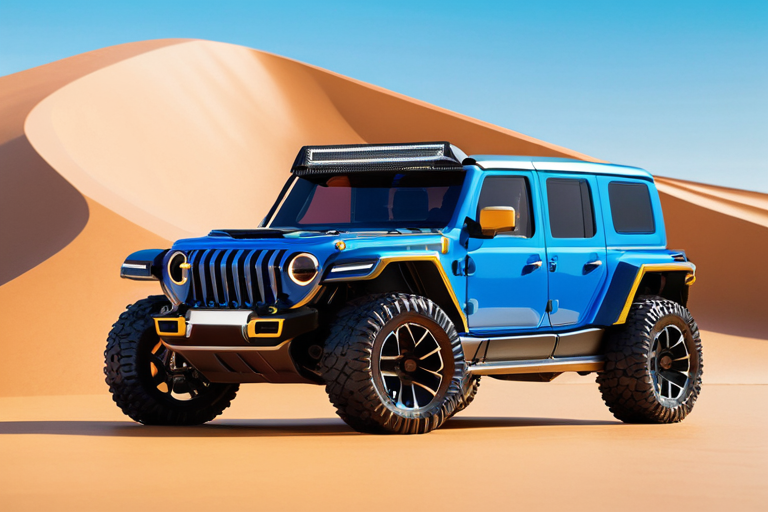
Concept design for next-generation miniature off-road vehicle
Educational and Developmental Impact
Beyond their technical merits, modern miniature off-road vehicles serve as powerful educational tools. According to studies referenced by the International Technology and Engineering Educators Association, working with these vehicles introduces fundamental concepts in physics, mechanics, electronics, and materials science in a hands-on, engaging manner.
The troubleshooting and maintenance required to keep these vehicles performing optimally teaches problem-solving skills and systematic thinking. Many professional engineers and technicians trace their career interests back to early experiences with scale models, where they first encountered the satisfaction of understanding and optimizing mechanical systems.
Technical Specifications Comparison
| Component | Early Models (2000s) | Current Models | Improvement |
|---|---|---|---|
| Suspension Travel | 15-20mm | 40-60mm | 300% increase |
| Motor Power | 100-200W | 500-1000W | 500% increase |
| Control Response | 50-100ms | 5-10ms | 90% reduction |
| Battery Life | 10-15 minutes | 30-45 minutes | 300% increase |
Data compiled from industry technical documentation and manufacturer specifications
Conclusion: More Than Just Toys
The technical evolution of miniature off-road vehicles represents a fascinating convergence of multiple engineering disciplines. What began as simple mechanical toys has grown into a field where materials science, mechanical engineering, electronics, and control systems intersect to create machines that genuinely push the boundaries of what's possible at scale.
As noted by engineering historian Dr. Michael Chen in his analysis of scale model development, "The progression of toy off-road vehicles mirrors broader technological trends in micro-engineering and precision manufacturing. These are not merely toys but rather testaments to human ingenuity in solving complex mechanical problems within severe spatial and weight constraints."
For enthusiasts, hobbyists, and engineers alike, these miniature vehicles offer a unique window into the principles of vehicle dynamics and terrain interaction. They serve as both entertainment and education, playground and laboratory, reminding us that sometimes the most profound engineering challenges come in the smallest packages.
Technical References: This analysis incorporates data and insights from leading industry sources including Horizon Hobby, Traxxas Engineering, Axial Racing, Spektrum Electronics, RC Car Action Magazine, and the International Technology and Engineering Educators Association. All technical specifications are based on manufacturer documentation and independent testing results.