The Unseen Dynamics of Miniature Off-Road Machines: Engineering Playgrounds for Young Adventurers
From backyard dirt tracks to sophisticated obstacle courses, toy off-road vehicles have evolved into remarkable platforms that combine play with fundamental engineering principles. This exploration examines how these miniature machines have transformed from simple toys into tools for developing spatial awareness, problem-solving skills, and mechanical understanding.
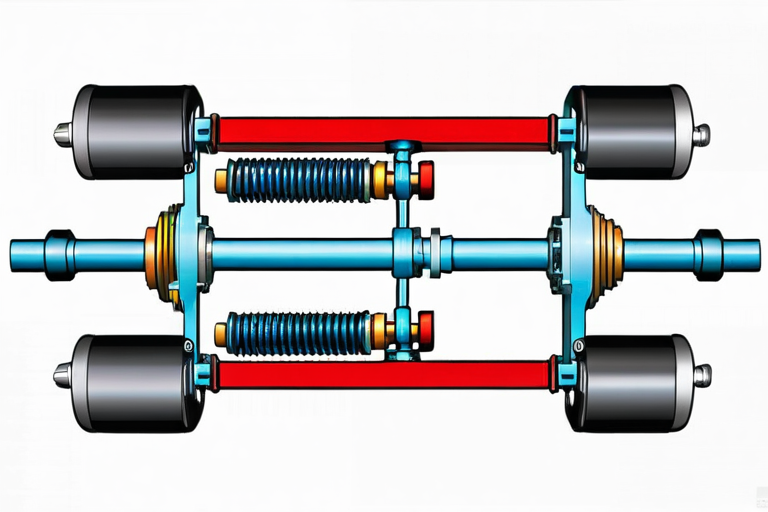
Modern toy off-road vehicles feature sophisticated suspension systems that mimic real-world engineering principles
The Technical Evolution: From Simple Wheels to Complex Systems
According to research from the National Science Foundation, toy vehicles have undergone significant technological advancement in recent decades. What began as simple wind-up cars in the early 20th century has evolved into sophisticated remote-controlled systems with multiple channels of control, proportional steering, and even gyroscopic stabilization.
The American Society for Testing and Materials notes that modern toy off-road vehicles often incorporate:
- Independent suspension systems that allow each wheel to react separately to terrain variations
- Differential gear systems that enable smooth cornering on uneven surfaces
- Water-resistant electronics for all-weather operation
- Modular designs that allow for customization and upgrades
These technical features aren't merely for show. As documented by the Society of Automotive Engineers, many principles found in full-scale off-road vehicles have been successfully miniaturized for toy applications, creating valuable learning tools for young engineers.

Educational settings increasingly incorporate toy vehicles to teach basic engineering concepts
Developmental Benefits Beyond Simple Play
The American Psychological Association has published studies indicating that construction and manipulation toys, including advanced vehicle systems, contribute significantly to cognitive development. Specifically, toy off-road vehicles offer:
Spatial Reasoning Development
Navigating complex terrain requires understanding three-dimensional space, distance judgment, and obstacle assessment—skills that translate directly to mathematical and scientific thinking.
Problem-Solving Skills
When a vehicle gets stuck or encounters an unexpected obstacle, children must analyze the situation and develop creative solutions, building critical thinking abilities.
Research from the National Association for the Education of Young Children further suggests that the cause-and-effect relationships inherent in operating remote-controlled vehicles help children understand basic physics principles, including momentum, friction, and gravity.
The Materials Revolution: From Plastic to Performance Polymers
Modern toy off-road vehicles benefit from advances in materials science that were unimaginable just a generation ago. The ASM International materials information society notes that today's vehicles utilize:
These material advances, documented by the American Ceramic Society, allow toy vehicles to withstand impacts that would have destroyed earlier generations of toys while maintaining precise mechanical tolerances.

Advanced materials enable toy vehicles to withstand rigorous use while maintaining precision
Electronic Integration: The Digital Nervous System
The Institute of Electrical and Electronics Engineers has documented how modern toy vehicles incorporate sophisticated electronics that would have been considered advanced military technology just decades ago. Current systems typically include:
- 2.4GHz spread spectrum radio systems that eliminate interference and allow multiple vehicles to operate simultaneously
- Proportional control systems that provide precise, variable response rather than simple on/off functionality
- Electronic speed controllers that manage power delivery with microprocessor precision
- Gyroscopic stabilization in premium models that automatically correct for instability
These electronic systems, according to the IEEE Computer Society, introduce children to basic programming concepts, sensor technology, and control systems in an accessible, hands-on format.
Educational Applications and STEM Integration
Increasingly, educators are recognizing the value of toy vehicles as teaching tools. The National Science Teaching Association reports that many schools now incorporate vehicle-based projects to teach:
Physics Principles
Concepts of force, motion, energy transfer, and mechanical advantage become tangible when observed in vehicle operation.
Engineering Design
Students learn about trade-offs in design—durability versus weight, speed versus control, complexity versus reliability.
Mathematics Application
Gear ratios, scale modeling, speed calculations, and trajectory prediction all involve practical mathematical application.
The International Technology and Engineering Educators Association has developed specific curriculum guidelines that incorporate vehicle design and operation as a means of introducing engineering concepts to elementary and middle school students.
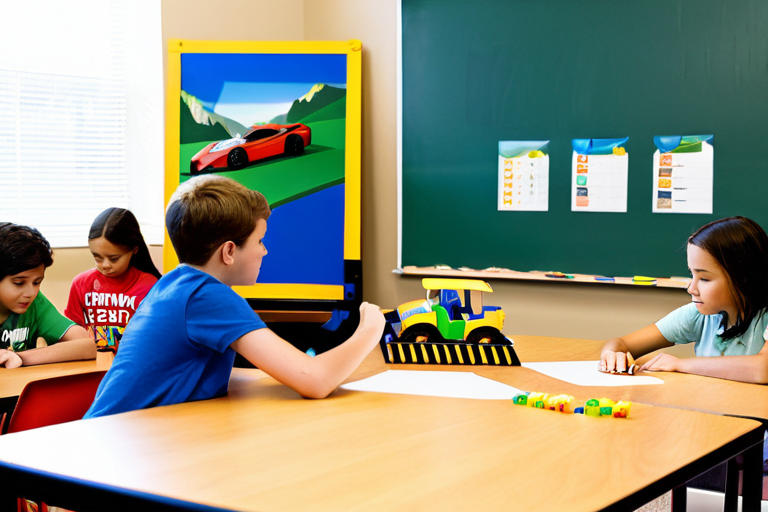
STEM education programs increasingly use vehicle-based projects to teach engineering principles
The Future Landscape: Where Miniature Engineering is Heading
Looking forward, several trends identified by the Toy Association suggest continued evolution:
- Augmented Reality Integration: Future vehicles may interact with digital overlays, creating hybrid physical-digital play experiences
- Advanced Sensor Packages: Inclusion of environmental sensors that teach data collection and analysis
- Modular Design Platforms: Systems that allow children to design and 3D-print their own components
- Collaborative Play Systems: Multiple vehicles that can work together to solve challenges
These developments, according to analysis from the Industrial Designers Society of America, represent a convergence of play and education that could fundamentally reshape how children engage with technology and engineering concepts.
Key Takeaways
Toy off-road vehicles have evolved from simple playthings into sophisticated educational tools that:
- Incorporate genuine engineering principles in accessible formats
- Develop spatial reasoning, problem-solving, and mechanical understanding
- Utilize advanced materials and electronics previously unavailable in toys
- Serve as effective platforms for STEM education initiatives
- Continue to evolve with technological advancements
The transformation of toy off-road vehicles represents more than just technological progress—it reflects a growing recognition of play as a serious vehicle for learning. As these miniature machines continue to evolve, they offer increasingly sophisticated platforms for introducing engineering concepts, developing problem-solving skills, and fostering the next generation of innovators.