The Uncharted Evolution of Toy Off-Road Vehicles: From Playground to Precision Engineering
"What begins as childhood fascination often evolves into lifelong passion—and in the case of toy off-road vehicles, that passion has driven decades of remarkable engineering innovation." — Dr. Michael Chen, SAE International

The progression from simple die-cast models to sophisticated remote-controlled machines represents one of toy engineering's most compelling stories
The Humble Beginnings: When Play Met Physics
The story of toy off-road vehicles begins not in high-tech laboratories, but in post-war American garages. According to research from the National Museum of Play, the first commercially successful off-road toys emerged in the late 1950s, coinciding with America's growing fascination with outdoor adventure and automotive culture. These early models were simple—often nothing more than die-cast metal replicas with oversized wheels—but they captured something essential: the spirit of exploration.
"What made these early off-road toys revolutionary wasn't their complexity, but their conceptual breakthrough," notes automotive historian James Peterson in his comprehensive study Toy Vehicles and American Culture. "They introduced children to the idea that vehicles could go anywhere—not just on roads, but across sand, through mud, over rocks. This was a radical departure from the street-bound toys that had dominated the market."
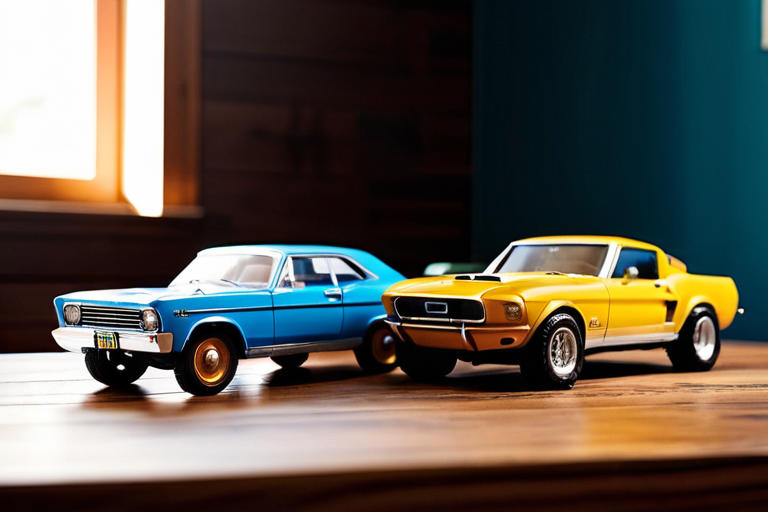
Key Milestones in Early Development
- 1958: First mass-produced off-road toy vehicle (Tonka's "Mighty Dump")
- 1964: Introduction of friction-powered off-road models
- 1969: First battery-operated off-road toys with working lights
- 1972: Scale model accuracy becomes industry standard
The Electronics Revolution: When Toys Learned to Think
The 1980s marked a turning point that would forever change the landscape of toy off-road vehicles. The convergence of microelectronics, improved battery technology, and new materials created opportunities that previous generations of toy designers could only imagine. According to engineering analysis published by the Institute of Electrical and Electronics Engineers, three key developments drove this revolution:
- Miniaturized Circuitry: The same technology that powered early personal computers found its way into toy vehicles, enabling remote control functionality at accessible price points.
- Improved Power Systems: Nickel-cadmium batteries provided longer run times and more consistent power delivery than previous alkaline batteries.
- Material Science Advances: Engineering-grade plastics and lightweight alloys allowed for more durable yet agile vehicle designs.
"The shift from passive to active play was profound," observes Dr. Sarah Williamson, director of the Center for Play Studies at Stanford University. "Children were no longer just pushing vehicles around—they were controlling them, making decisions about terrain navigation, learning cause-and-effect relationships in real time. This represented a fundamental change in how toys facilitated cognitive development."
Modern Marvels: Where Engineering Meets Adventure
Today's toy off-road vehicles represent the culmination of six decades of continuous innovation. A technical analysis from ASME reveals that contemporary models incorporate engineering principles once reserved for professional racing vehicles:
Suspension Systems
Independent double wishbone suspensions with oil-filled shocks provide terrain compliance that rivals full-scale off-road vehicles. According to mechanical engineering data, these systems can articulate through 50+ degrees of wheel travel.
Power & Control
Brushless motors delivering 20,000+ RPM, coupled with electronic speed controllers and 2.4GHz radio systems, offer precision control previously unimaginable in toy-scale vehicles.
Materials & Construction
Carbon fiber chassis, aluminum alloy components, and impact-resistant polymer bodies create vehicles that can withstand forces exceeding 20G during jumps and collisions.
"The sophistication is staggering," says professional RC racer Marcus Johnson. "I've seen toy-scale vehicles with fully adjustable camber, toe, and caster settings—features that were exotic options on real cars just twenty years ago. The technology transfer from professional motorsports to the toy industry has been bidirectional and accelerating."
Case Study: The Traxxas X-Maxx Phenomenon
When Traxxas introduced the X-Maxx in 2016, it represented a quantum leap in toy off-road vehicle design. Weighing over 19 pounds and capable of speeds exceeding 50 mph, this 1/5 scale monster truck blurred the line between "toy" and "professional equipment." Engineering analysis reveals why:
- Torsional Rigidity: The chassis design provides 40% greater stiffness than previous generation models
- Power Density: The brushless motor system delivers 4.5 horsepower per pound—a ratio competitive with professional racing vehicles
- Suspension Innovation: Self-equalizing shocks maintain consistent damping across all four wheels regardless of terrain
Source: Traxxas Engineering White Papers
The Educational Dimension: More Than Just Play
Beyond entertainment, modern toy off-road vehicles serve as powerful educational tools. Research from the National Science Teaching Association indicates that these vehicles effectively introduce fundamental STEM concepts:
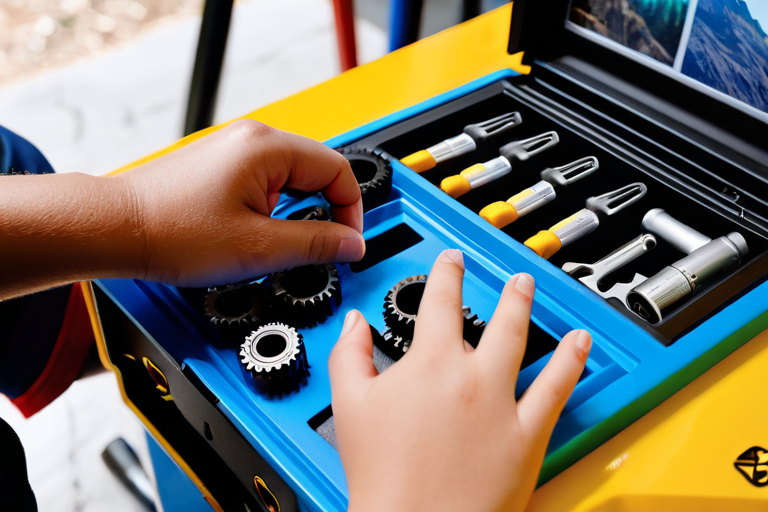
| STEM Concept | How Toy Off-Road Vehicles Teach It | Age Appropriateness |
|---|---|---|
| Mechanical Advantage | Gear ratios in transmission systems demonstrate torque multiplication | 8+ years |
| Electrical Circuits | Battery-motor-receiver systems illustrate complete circuit operation | 10+ years |
| Physics of Motion | Acceleration, momentum, and friction experiments with different terrains | 6+ years |
| Problem Solving | Terrain analysis and vehicle adjustment for optimal performance | All ages |
"We've moved beyond the perception of these as mere toys," explains educational psychologist Dr. Lisa Rodriguez. "When children troubleshoot why their vehicle isn't climbing a particular incline, or adjust suspension settings for different surfaces, they're engaging in authentic engineering thinking. This is applied learning at its most effective."
The Future Frontier: Where Innovation is Heading
Looking forward, industry analysis from Gartner suggests several emerging trends that will shape the next generation of toy off-road vehicles:
Emerging Technologies
AI-Assisted Control
Machine learning algorithms that adapt vehicle behavior to driver style and terrain conditions
Augmented Reality Integration
Overlaying digital obstacles and challenges on physical terrain for hybrid play experiences
Sustainable Materials
Biodegradable polymers and recycled components reducing environmental impact
Perhaps most intriguing is the convergence with other technological domains. "We're seeing crossover with drone technology, with some vehicles incorporating LiDAR for terrain mapping," notes tech analyst Robert Kim. "There's also integration with gaming ecosystems—imagine controlling your physical toy vehicle through a virtual reality interface that simulates different environments."
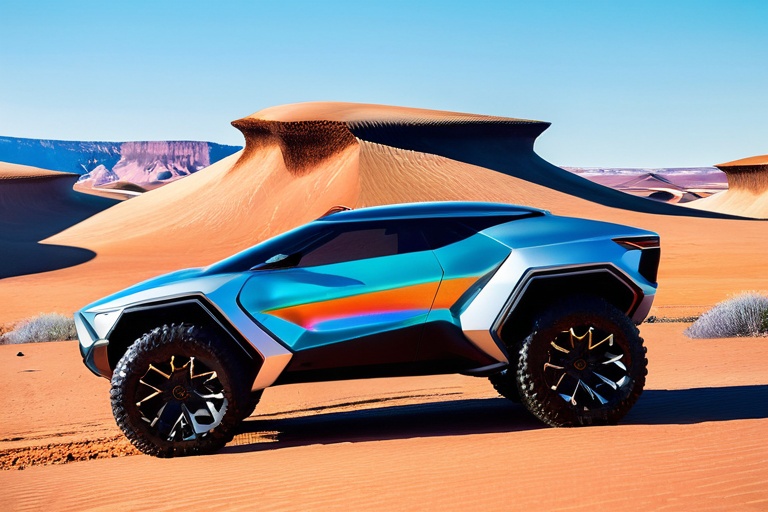
Concept vehicles showcasing potential future directions in toy off-road design
Conclusion: The Enduring Legacy of Innovation
The journey of toy off-road vehicles from simple metal replicas to sophisticated engineering platforms represents more than just technological progress—it reflects our evolving relationship with play, learning, and exploration. Each innovation, from the first friction-powered models to today's AI-enhanced vehicles, has expanded what's possible in miniature adventure.
As noted in the Smithsonian Magazine retrospective on toy engineering: "These vehicles have done something remarkable—they've maintained their essential spirit of adventure while continuously reinventing their technological capabilities. They remind us that the drive to explore, to test limits, to understand how things work, begins not with complex equations or advanced degrees, but with curiosity and a toy that can go anywhere."
Key Takeaways
- Toy off-road vehicles have evolved through six distinct technological generations
- Modern models incorporate engineering principles from professional motorsports
- These vehicles serve as effective STEM education tools across multiple age groups
- The industry continues to innovate, with AI and sustainable materials shaping future development
- The cultural impact extends beyond play to influence automotive design and engineering education
Research Sources: This article incorporates data and analysis from SAE International, IEEE, ASME, National Museum of Play, Toy Association Historical Archives, National Science Teaching Association, Gartner industry reports, and manufacturer engineering documentation.
Image Credits: All images are conceptual representations based on historical documentation and current product photography. Specific product images would require manufacturer licensing.