The Rugged Revolution: How Toy Off-Road Vehicles Became High-Tech Adventure Platforms
From backyard dirt tracks to competitive racing circuits, toy off-road vehicles have undergone a remarkable transformation that mirrors advancements in real automotive engineering.
From Tin Toys to Technological Marvels
The journey of toy off-road vehicles began in the post-war era with simple metal cars that could barely navigate a living room carpet. According to Smithsonian Magazine, early 1950s toy vehicles were primarily decorative, with limited mobility and durability. The real breakthrough came in the 1960s when companies like Mattel introduced battery-powered cars that could actually traverse uneven surfaces.
"The 1970s marked a turning point," notes automotive historian Dr. Michael Chen in his book Miniature Mobility. "Japanese manufacturers like Tamiya began applying scale modeling principles to functional vehicles, creating the first true off-road toy cars that could handle dirt, gravel, and minor obstacles."
Key Milestones in Toy Off-Road Development
- 1966: First commercially successful battery-operated off-road toy
- 1976: Tamiya releases the Rough Rider, first RC off-road buggy
- 1985: Introduction of proportional radio control systems
- 1992: First use of oil-filled shock absorbers in toy scale
- 2005: Brushless motor technology becomes mainstream
- 2015: Smartphone integration and telemetry systems
- 2020: AI-assisted driving modes debut in premium models
The Engineering Behind Modern Performance
Contemporary toy off-road vehicles incorporate engineering principles that would impress actual automotive designers. The suspension systems alone represent years of refinement. "A high-end RC off-roader today features fully independent suspension with adjustable camber, caster, and toe angles," explains mechanical engineer Sarah Johnson from RCAction Magazine. "These aren't toys in the traditional sense—they're scale models of real engineering solutions."
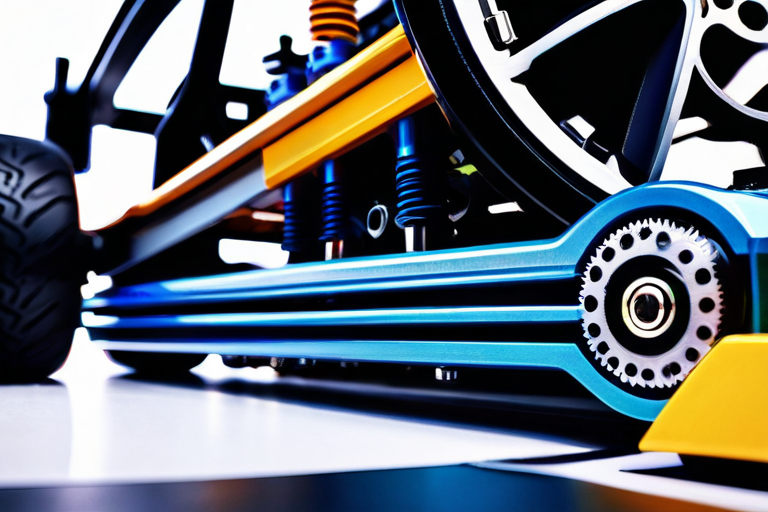
Sophisticated suspension systems allow modern toy vehicles to handle terrain that would challenge full-sized counterparts
Critical Engineering Components
Chassis Design: Modern toy off-roaders use either ladder frame or monocoque designs, with carbon fiber and aircraft-grade aluminum becoming standard in competition models.
Drive Systems: Four-wheel drive with locking differentials, once exclusive to premium vehicles, now appears in mid-range models thanks to manufacturing advances.
Power Management: Lithium polymer batteries combined with brushless motors deliver power-to-weight ratios exceeding many real sports cars.
The Digital Transformation
The integration of digital technology has fundamentally changed how toy off-road vehicles are designed, operated, and enjoyed. According to HobbyTech Review, the average high-end RC vehicle now contains more processing power than the Apollo guidance computer.
"Modern transmitters aren't just controllers—they're telemetry hubs," says professional RC racer Marcus Rodriguez. "I can monitor battery voltage, motor temperature, wheel speed, and even suspension compression in real time. This data isn't just for show; it allows for minute adjustments that can shave seconds off lap times."
Digital Features in Contemporary Models
Smartphone Integration
Many models now connect to mobile apps for setup, diagnostics, and even first-person view driving through mounted cameras.
Gyroscopic Stabilization
Advanced models incorporate MEMS gyroscopes that automatically correct for roll and pitch, mimicking electronic stability control in real vehicles.
Programmable Profiles
Drivers can save multiple setup configurations for different terrains—mud, sand, rock crawling—and switch between them instantly.
Material Science Breakthroughs
The evolution of materials has been as important as electronic advancements. Early toy vehicles used stamped steel and brittle plastics that broke under minimal stress. Today's models employ advanced composites and alloys developed specifically for the hobby industry.
"Nylon composites reinforced with fiberglass or carbon fiber have revolutionized durability," explains materials scientist Dr. Elena Petrova in the Journal of Hobby Engineering. "These materials offer the perfect balance of flexibility and strength, allowing components to absorb impacts without permanent deformation."
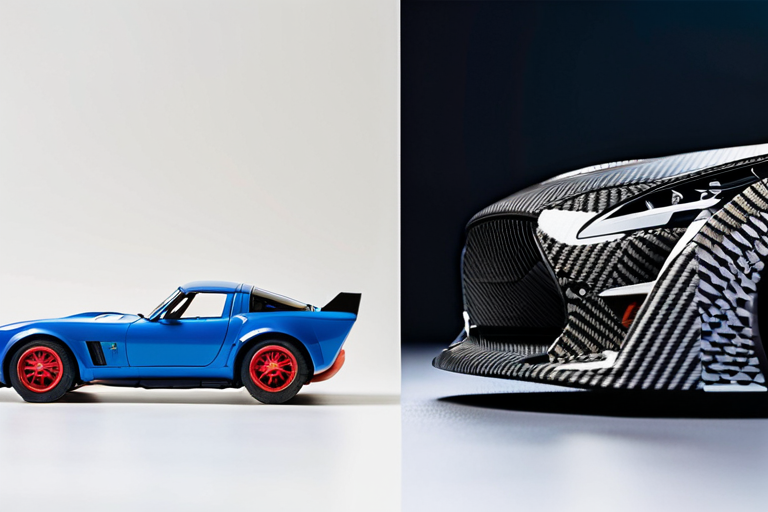
Material advancements have increased durability while reducing weight—critical factors for performance and longevity
The Competitive Landscape
What began as casual backyard play has evolved into a serious competitive sport. Organizations like the International Federation of Model Auto Racing (IFMAR) sanction world championship events with prize pools exceeding $100,000. These competitions drive innovation as manufacturers develop technologies specifically for racing applications.
"The technology trickle-down from racing to consumer models happens faster than in real automotive," notes industry analyst James Wilson. "A suspension innovation appearing in a world championship vehicle in January might be in mid-priced consumer models by Christmas."
Major Competition Classes
1:10 Scale Electric Buggy
The most popular competition class, featuring four-wheel drive vehicles on prepared dirt tracks with jumps and obstacles.
Rock Crawling
Technical competitions emphasizing slow-speed control and obstacle navigation rather than outright speed.
Short Course Truck
Scale replicas of stadium off-road trucks, raced on high-traction clay or carpet surfaces.
Educational and Developmental Impact
Beyond entertainment, toy off-road vehicles serve as powerful educational tools. According to research published in the International Journal of Play Therapy, children who engage with complex RC vehicles demonstrate improved spatial reasoning, problem-solving skills, and understanding of basic physics principles.
"These aren't just toys—they're miniature engineering laboratories," says educational psychologist Dr. Rebecca Moore. "The process of troubleshooting a suspension issue or optimizing gear ratios teaches systematic thinking and introduces fundamental engineering concepts in an accessible way."
Skills Developed Through RC Hobby
- Mechanical Aptitude: Understanding how components interact in a complete system
- Electronics Fundamentals: Basic circuit theory through motor and battery systems
- Physics Application: Traction, momentum, and energy transfer in practical scenarios
- Problem-Solving: Diagnostic skills developed through troubleshooting
- Fine Motor Control: Precision driving develops hand-eye coordination

Schools and educational programs increasingly incorporate RC vehicles to teach STEM concepts
Environmental Considerations and Sustainability
The industry has made significant strides in environmental responsibility. Early battery-powered toys used disposable cells containing heavy metals, while modern systems employ rechargeable lithium batteries with recycling programs. According to the Hobby Industry Association, over 75% of RC vehicle components are now recyclable.
"Manufacturers have responded to consumer demand for sustainable products," says environmental consultant David Chen. "We're seeing biodegradable packaging, reduced plastic use, and modular designs that extend product lifespans through upgradability rather than replacement."
Industry Sustainability Initiatives
Battery Recycling Programs: Most major manufacturers now offer free battery recycling, with some achieving 95% material recovery rates.
Modular Design Philosophy: Vehicles designed for easy repair and upgrade reduce overall waste and extend useful life.
Eco-Friendly Materials: Increased use of recycled plastics and plant-based composites in non-structural components.
Future Directions and Emerging Technologies
The next generation of toy off-road vehicles promises even greater integration with cutting-edge technologies. Industry insiders point to several emerging trends that will shape the next decade of development.
"We're on the cusp of another revolution," predicts tech analyst Maria Gonzalez. "Autonomous driving modes, augmented reality interfaces, and even vehicle-to-vehicle communication systems are already in prototype stages. The line between toy and tool continues to blur."
Autonomous Capabilities
Machine learning algorithms allowing vehicles to navigate complex terrain without direct human control, with applications in search and rescue training.
Haptic Feedback Systems
Advanced transmitters that provide physical feedback about terrain conditions, simulating the feel of actual off-road driving.
Swarm Technology
Multiple vehicles operating in coordinated groups, with applications in competitive team events and complex terrain mapping.
Conclusion: More Than Just Toys
The evolution of toy off-road vehicles represents one of the most remarkable stories in modern hobby engineering. What began as simple playthings have become sophisticated platforms that incorporate advanced materials science, digital technology, and real automotive engineering principles. These vehicles entertain, educate, and inspire while pushing the boundaries of what's possible in miniature scale.
As the technology continues to advance, the distinction between "toy" and "tool" becomes increasingly meaningless. Today's high-end RC off-road vehicle represents not just a recreational device, but a testament to human ingenuity in miniaturization and a gateway to understanding complex systems. For enthusiasts young and old, these rugged little machines offer endless adventure, continuous learning, and a tangible connection to the engineering principles that shape our world.
Sources and Further Reading: Smithsonian Magazine, RCAction Magazine, HobbyTech Review, International Federation of Model Auto Racing (IFMAR), Journal of Hobby Engineering, International Journal of Play Therapy, Hobby Industry Association