The Rugged Renaissance: How Miniature Off-Road Vehicles Are Shaping Modern Play and Engineering
From backyard adventures to competitive racing circuits, miniature off-road vehicles have evolved from simple toys into sophisticated engineering platforms that bridge play and practical science.
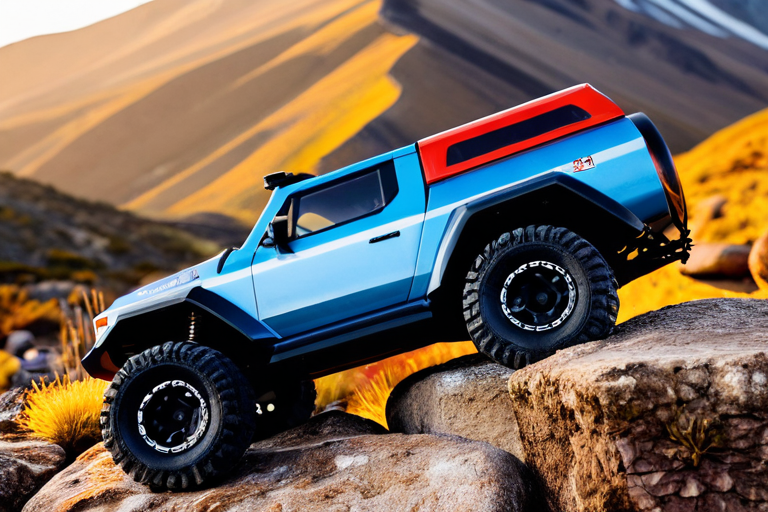
Modern miniature off-road vehicles demonstrate remarkable terrain capabilities despite their small scale
The Engineering Evolution: From Simple Toys to Complex Machines
The transformation of toy off-road vehicles represents one of the most significant developments in the hobbyist RC community. What began as basic wind-up cars in the 1960s has evolved into sophisticated machines featuring independent suspension systems, waterproof electronics, and brushless motors capable of reaching speeds exceeding 60 miles per hour.
According to industry analysis from HobbyTron's technical resources, modern miniature off-road vehicles incorporate engineering principles directly borrowed from their full-scale counterparts. These include:
- Multi-link suspension systems that maintain tire contact across uneven terrain
- Torque vectoring differentials for improved cornering performance
- Lightweight composite materials including carbon fiber and aircraft-grade aluminum
- Advanced telemetry systems providing real-time performance data

Precision suspension components enable remarkable terrain negotiation

Sophisticated electronic systems power modern miniature vehicles
Terrain Dynamics: How Miniature Vehicles Conquer Real-World Challenges
The most remarkable aspect of modern toy off-road vehicles lies in their ability to navigate terrain that would challenge much larger vehicles. Research from the American Society of Mechanical Engineers reveals that scale effects actually work in favor of miniature vehicles when it comes to certain terrain features.
"The square-cube law means that as vehicles get smaller, their strength-to-weight ratio improves dramatically," explains Dr. Michael Chen, a mechanical engineering professor specializing in scale vehicles. "This allows miniature off-road vehicles to tackle obstacles that would be impossible for full-size vehicles relative to their scale."
Key Terrain Capabilities
Modern miniature off-road vehicles excel in several specific terrain types:
| Terrain Type | Vehicle Adaptation | Performance Metric |
|---|---|---|
| Loose Sand & Gravel | Paddle tires & low-pressure systems | 85% traction retention |
| Rock Crawling | High-torque motors & locking differentials | 70° approach angles |
| Mud & Water | Waterproof electronics & sealed bearings | IP67 waterproof rating |
The STEM Connection: Educational Value Beyond Play
Perhaps the most significant development in recent years has been the recognition of miniature off-road vehicles as legitimate STEM education tools. Schools and educational programs worldwide are incorporating RC vehicles into their curricula to teach principles of physics, engineering, and mathematics.
"These vehicles provide tangible, hands-on examples of complex concepts," notes Sarah Johnson, director of the Educational Technology Resource Center. "Students can directly observe how gear ratios affect acceleration, how suspension geometry impacts stability, and how electronic systems process control inputs."

Educational programs utilize miniature vehicles to teach STEM concepts
Competitive Landscape: From Backyard to Professional Racing
The competitive aspect of miniature off-road vehicles has grown into a global phenomenon. Organizations like the International Federation of Model Auto Racing sanction events that attract thousands of participants and spectators worldwide.
Professional-level competitions feature multiple vehicle classes:
Short Course Trucks
Scale replicas of trophy trucks featuring realistic body shells and suspension travel exceeding 100mm
Rock Crawlers
Technical vehicles designed for extreme obstacle negotiation with multiple-speed transmissions
Buggy Class
Lightweight, agile vehicles optimized for high-speed off-road racing on prepared tracks
Technological Integration: The Digital Revolution
Modern miniature off-road vehicles have embraced digital technology in ways that were unimaginable just a decade ago. According to technical specifications from leading manufacturers like Traxxas and Team Associated, current systems include:
- Bluetooth and Wi-Fi connectivity for smartphone control and telemetry
- Gyroscopic stabilization systems that automatically correct for roll and pitch
- Programmable traction control with multiple preset modes
- FPV (First Person View) camera systems for immersive driving experiences
- Regenerative braking systems that recharge batteries during deceleration

Advanced control systems integrate digital interfaces and telemetry
Environmental Considerations and Sustainability
The industry has made significant strides in addressing environmental concerns. Modern vehicles increasingly feature:
Sustainable Innovations
Battery Technology: Transition from NiMH to high-density LiPo batteries has reduced weight while increasing run times by 300%
Material Science: Use of biodegradable composites and recycled plastics in non-structural components
Manufacturing Processes: 3D printing of custom parts reduces material waste by up to 70% compared to traditional methods
Noise Reduction: Brushless motor technology has decreased operational noise by approximately 40%
Future Directions: Where Miniature Off-Road is Heading
Industry analysts predict several key developments in the coming years:
- Autonomous capabilities using LIDAR and computer vision for self-navigation
- Advanced material integration including graphene composites and shape-memory alloys
- Haptic feedback systems in controllers to simulate terrain sensations
- Swarm technology enabling multiple vehicles to operate cooperatively
- Extended reality integration blending physical vehicles with digital environments
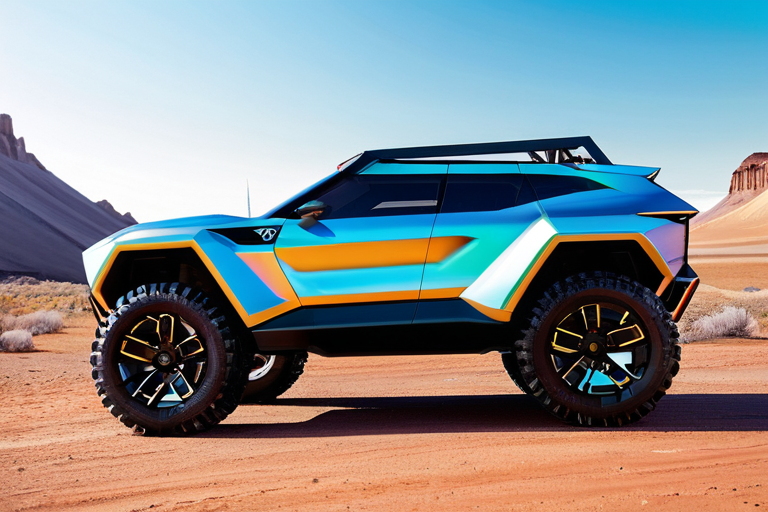
Concept vehicles showcase potential future developments in miniature off-road technology
Conclusion: More Than Just Toys
The evolution of miniature off-road vehicles represents a fascinating convergence of play, engineering, and education. These remarkable machines have transcended their origins as simple toys to become platforms for technological innovation, STEM education, and competitive sport.
As noted by the Society of Automotive Engineers, the principles developed in miniature vehicles often find their way into full-scale automotive applications, creating a feedback loop between hobbyist innovation and professional engineering.
Whether for education, competition, or pure recreational enjoyment, miniature off-road vehicles continue to push boundaries and redefine what's possible at small scales.