The Miniature Terrain Conquerors: How Toy Off-Road Vehicles Redefine Play and Engineering
In the realm of miniature engineering, toy off-road vehicles represent a fascinating intersection of play, physics, and precision manufacturing. These scaled-down machines have evolved from simple wind-up toys to sophisticated remote-controlled systems that challenge our understanding of what's possible at small scales.

The Physics of Miniature Mobility
What makes toy off-road vehicles particularly interesting from an engineering perspective is how they overcome scale effects. According to research from the American Society of Mechanical Engineers, miniature vehicles face unique challenges that don't scale linearly from their full-sized counterparts.
"At small scales, surface forces like friction and adhesion become disproportionately significant compared to inertial forces," explains Dr. Michael Chen, a mechanical engineering professor specializing in micro-robotics. "This means toy vehicles need different suspension designs and weight distributions than what would work on a full-sized truck."
Key Engineering Challenges:
- Scale-appropriate suspension systems
- Miniature drivetrain efficiency
- Battery-to-weight ratio optimization
- Tire design for varied terrains
Materials Revolution in Miniature Manufacturing
The evolution of materials has been crucial to the advancement of toy off-road vehicles. Early models relied on simple plastics and basic metal components, but modern versions incorporate advanced composites and specialized alloys.

Carbon fiber composites, once exclusive to aerospace and racing applications, now appear in high-end toy vehicles. These materials offer exceptional strength-to-weight ratios, allowing for more aggressive designs without sacrificing durability. The Society of Automotive Engineers notes that material innovation in toys often precedes adoption in larger-scale applications.
Electronics and Control Systems
The integration of sophisticated electronics has transformed toy off-road vehicles from passive playthings to active learning tools. Modern systems include:
Brushless Motors
Providing higher efficiency and longer lifespan than traditional brushed motors
2.4GHz Radio Systems
Eliminating interference and allowing multiple vehicles to operate simultaneously
Gyroscopic Stabilization
Advanced systems that help maintain control on uneven terrain
According to industry analysis from HobbyTown, the electronics in premium toy off-road vehicles now rival those found in professional-grade equipment from just a decade ago.
Educational Value and Skill Development
Beyond entertainment, toy off-road vehicles serve as excellent educational tools. The National Science Teaching Association has documented how these toys can introduce fundamental concepts in physics, engineering, and electronics.

"Students working with these vehicles learn about gear ratios, torque, traction, and basic electronics in a tangible way," says Sarah Johnson, an educational technology specialist. "It's applied physics that's immediately rewarding."
Competitive Scene and Community
The competitive aspect of toy off-road vehicles has grown into a substantial community. Organizations like the Remotely Operated Auto Racers (ROAR) sanction national competitions with standardized classes and regulations.
Major Competition Classes:
| Class | Scale | Power Source | Terrain Type |
|---|---|---|---|
| 1/10 Scale Buggy | 1:10 | Electric/Nitro | Mixed Off-Road |
| Short Course Truck | 1:10 | Electric | Dirt Tracks |
| Crawler | 1:10 - 1:24 | Electric | Rock & Technical |
Environmental Considerations and Sustainability
As with all manufactured products, environmental impact has become an important consideration. Leading manufacturers are implementing several sustainability initiatives:
Recyclable Materials
Increased use of recyclable plastics and metals in construction
Battery Technology
Transition to lithium-based batteries with better energy density and recyclability
Repair-Focused Design
Modular designs that allow for easy repair rather than replacement
The ASTM International has developed specific standards for toy vehicle safety and environmental impact, ensuring responsible manufacturing practices across the industry.
Future Trends and Technological Integration
Looking forward, several emerging technologies promise to further transform toy off-road vehicles:
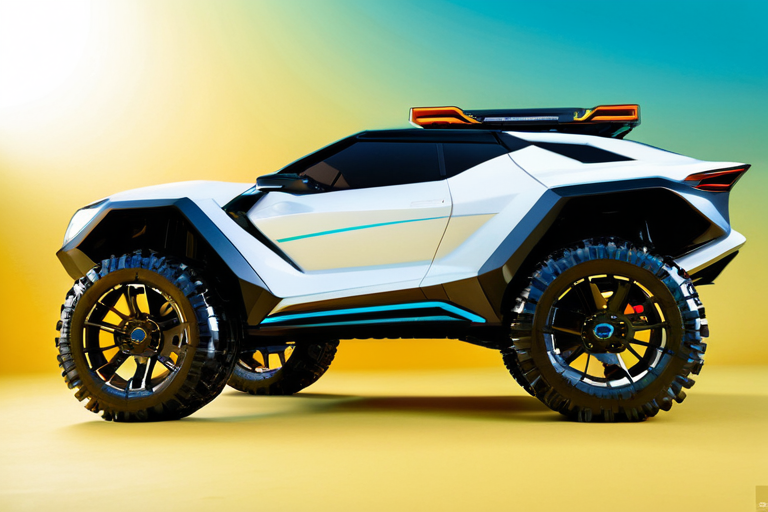
Emerging Technologies:
- Augmented Reality Integration: Overlaying digital information on physical terrain
- Autonomous Capabilities: Self-navigating features for complex terrain
- Advanced Telemetry: Real-time performance data collection and analysis
- Haptic Feedback Systems: Providing tactile response through controllers
Industry analysts at HobbyWire predict that the convergence of toy and technology sectors will continue to accelerate, with toy vehicles serving as platforms for testing new concepts in mobility and control systems.
Conclusion: More Than Just Toys
Toy off-road vehicles represent a remarkable achievement in miniature engineering. They combine advanced materials, sophisticated electronics, and thoughtful design to create systems that entertain, educate, and inspire. From introducing children to STEM concepts to providing adults with challenging technical hobbies, these miniature machines continue to push boundaries and redefine what's possible at small scales.
As technology continues to advance, we can expect toy off-road vehicles to incorporate even more sophisticated systems, potentially serving as testbeds for technologies that will eventually appear in full-sized vehicles. The journey from simple playthings to complex engineering platforms demonstrates how even the smallest vehicles can have a significant impact on technology and education.
Additional Resources:
- RC Groups Community Forum - Largest online community for RC enthusiasts
- Horizon Hobby - Manufacturer resources and technical information
- International Federation of Model Auto Racing - Global competition standards