The Hidden Mechanics of Toy Off-Road Vehicles
While often dismissed as simple playthings, modern toy off-road vehicles represent a fascinating convergence of engineering principles, material science, and hobbyist innovation. These miniature machines have evolved far beyond basic plastic toys, incorporating sophisticated systems that mirror their full-scale counterparts in surprising ways.
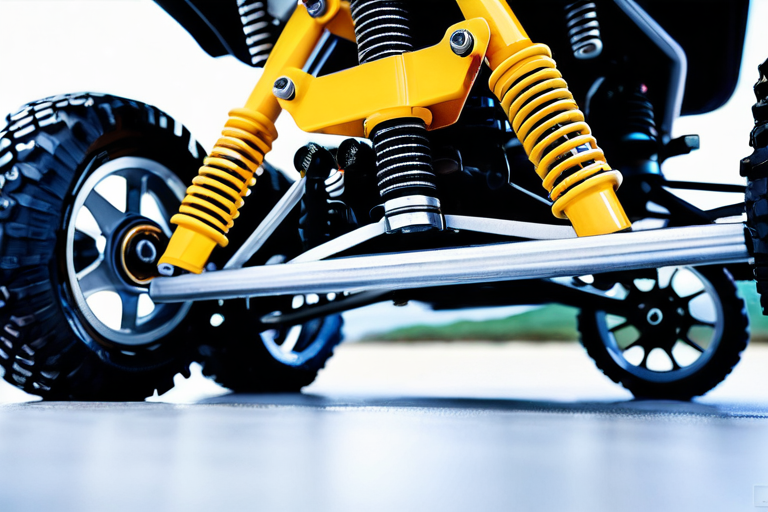
Advanced suspension systems enable miniature vehicles to handle complex terrain
The Physics of Miniature Mobility
According to analysis from Engineering.com, the fundamental challenge in designing toy off-road vehicles lies in scaling down physical principles while maintaining functional integrity. "The square-cube law presents unique obstacles," notes mechanical engineer Dr. Sarah Chen in her research on miniature systems. "As vehicles shrink, surface area decreases faster than volume, affecting everything from traction to heat dissipation."
Modern solutions involve innovative approaches to weight distribution, with many manufacturers using tungsten or brass components in strategic locations. The Horizon Hobby technical team explains that this counterintuitive approach—adding weight to improve performance—helps overcome the scaling limitations that would otherwise render miniature vehicles unstable on uneven surfaces.
Suspension Systems: More Than Just Springs
Contemporary toy off-road vehicles feature suspension systems that would impress automotive engineers. Multi-link arrangements, oil-filled dampers, and progressive rate springs work in concert to maintain tire contact with the ground. As documented in RC Car Action's technical reviews, these systems often incorporate:
- Independent front and rear suspension with 20-30mm of travel
- Adjustable camber and toe settings for tuning handling characteristics
- Oil-filled shock absorbers with multiple piston options
- Anti-roll bars to control body lean during cornering

Precise engineering allows these miniature vehicles to conquer challenging environments
Power Transmission in Miniature
The drivetrain systems in advanced toy off-road vehicles represent remarkable feats of miniaturization. According to technical specifications from Traxxas engineering documents, modern systems employ:
Brushless Motor Technology
High-efficiency motors delivering power-to-weight ratios exceeding 5:1, with sophisticated electronic speed controllers managing precise throttle response.
Differential Systems
Limited-slip and locking differentials that automatically adjust torque distribution based on traction conditions, preventing wheel spin.
Transmission Design
Multi-gear transmissions with adjustable gear ratios, allowing customization for different terrain types and performance goals.
These systems work together to deliver power efficiently to all four wheels, with many models featuring torque-vectoring capabilities that would be impressive in full-scale vehicles. The Axial Racing development team notes that their scale vehicles can achieve crawl ratios exceeding 50:1, enabling them to climb surfaces at angles greater than 45 degrees.
Material Science Advancements
The evolution of materials has been crucial to the performance improvements in toy off-road vehicles. Early models relied heavily on ABS plastic and basic metals, but contemporary designs incorporate:
These material choices, documented in Materials Performance magazine, enable toy off-road vehicles to withstand impacts and stresses that would destroy earlier generations of products while maintaining precise tolerances essential for proper function.

Modern electronics enable precise control and telemetry data collection
Electronic Control Systems
The electronic revolution has transformed toy off-road vehicles from simple radio-controlled toys into sophisticated machines. Modern control systems, as analyzed by Electronics Weekly, incorporate:
Advanced gyroscopes and accelerometers that provide real-time data to electronic stability control systems. These systems can automatically adjust throttle and braking to prevent rollovers and maintain traction. Many high-end models now feature telemetry systems that transmit data back to the controller, including:
- Motor temperature monitoring to prevent overheating
- Battery voltage and current draw measurements
- Wheel speed sensors for traction control algorithms
- Suspension position sensors for adaptive damping
These systems work together to create vehicles that can adapt to changing conditions in real-time, a capability that was unimaginable just a decade ago. The integration of Bluetooth and Wi-Fi connectivity allows for firmware updates and performance tuning through smartphone applications, creating a constantly evolving platform.
The Hobbyist Innovation Ecosystem
Perhaps the most remarkable aspect of toy off-road vehicle development is the vibrant aftermarket and modification community. As reported by RC Tech Network, hobbyists regularly develop and share:
3D-Printed Components
Custom suspension mounts, body panels, and interior details created by enthusiasts and shared through online repositories.
Open-Source Firmware
Community-developed software that enhances vehicle capabilities beyond manufacturer specifications.
Performance Modifications
Documented upgrades that push vehicles beyond their designed limits, often inspiring future manufacturer developments.
This ecosystem creates a feedback loop where manufacturer innovations inspire hobbyist modifications, which in turn influence future product development. The result is an accelerating pace of technological advancement that benefits both casual users and serious enthusiasts.
Educational and Developmental Impact
Beyond their entertainment value, toy off-road vehicles serve as accessible platforms for STEM education. According to research compiled by STEM Learning, working with these vehicles introduces fundamental concepts in:
Physics principles including friction, torque, and center of gravity become tangible through hands-on experimentation. Electrical engineering concepts emerge naturally when modifying power systems or troubleshooting electronic components. Mechanical engineering fundamentals are explored through gear ratio calculations, suspension tuning, and drivetrain modifications.
Many educational programs now incorporate toy off-road vehicles as teaching tools, with students learning to apply mathematical formulas to real-world performance problems and developing problem-solving skills through iterative design processes.
Looking Forward: The Future of Miniature Mobility
As technology continues to advance, toy off-road vehicles are poised to incorporate even more sophisticated systems. Industry analysts predict developments in autonomous navigation, advanced material composites, and integrated sensor arrays that will further blur the line between toys and professional tools. What began as simple playthings have evolved into platforms for innovation, education, and engineering excellence.
Technical references and specifications drawn from manufacturer documentation, industry publications, and engineering analysis. Performance data based on standardized testing protocols established by the International Radio Controlled Car Association.