The Evolution of Offroad Hoverboards: From Science Fiction to Rugged Reality
"The future of personal transportation isn't just about getting from point A to point B—it's about conquering the terrain in between." - Dr. Elena Rodriguez, MIT Mobility Lab
When Back to the Future II hit theaters in 1989, audiences marveled at Marty McFly's hoverboard—a magical device that defied gravity and common sense. Few could have predicted that three decades later, we'd be riding actual hoverboards, albeit with wheels firmly planted on the ground. The journey from cinematic fantasy to rugged, all-terrain reality represents one of the most fascinating technological evolutions in personal transportation history.
The Pre-Hoverboard Era: Building the Foundation
The concept of levitating personal transportation devices predates Hollywood's imagination by centuries. According to historical records from the Smithsonian Institution, early 20th-century inventors experimented with various electromagnetic and air-cushion concepts, though none achieved practical success. The real breakthrough came from an unexpected source: the Segway.
Dean Kamen's self-balancing transporter, introduced in 2001, provided the fundamental gyroscopic technology that would later enable hoverboards. As noted in TechCrunch's retrospective on personal mobility devices, the Segway's sophisticated balance algorithms and electric motor control systems became the building blocks for future self-balancing vehicles.
The First Generation: Urban Limitations
The modern hoverboard emerged around 2013, with Chinese manufacturers leading the charge. These early models, as documented by Consumer Reports, featured small wheels (typically 6.5 inches) and were strictly limited to smooth, paved surfaces. Their lithium-ion batteries provided modest range, and their plastic construction made them vulnerable to the slightest bumps or cracks in the pavement.
"The first-generation hoverboards were essentially indoor toys masquerading as transportation devices," explains Michael Chen, engineering lead at HoverTech Innovations. "They worked fine in shopping malls and on perfectly smooth sidewalks, but take them onto anything resembling rough terrain, and you were asking for trouble."
Safety concerns also plagued these early models. The U.S. Consumer Product Safety Commission reported numerous incidents involving battery fires and sudden shutdowns, leading to massive recalls in 2016. This crisis, while damaging to the industry's reputation, forced manufacturers to implement stricter safety standards and better quality control.
The Offroad Revolution: Bigger Wheels, Bigger Ambitions
The turning point for offroad hoverboards came around 2017, when manufacturers began experimenting with larger, air-filled tires. According to industry analysis from Forbes, the shift from solid plastic wheels to 8-inch and eventually 10-inch pneumatic tires represented the single most important innovation in hoverboard history.
These larger tires provided several crucial advantages:
- Improved shock absorption for rough terrain
- Better traction on grass, dirt, and gravel
- Enhanced stability at higher speeds
- Reduced risk of getting stuck on small obstacles
Concurrently, battery technology saw significant improvements. Where early models struggled to provide 10-15 kilometers of range, new lithium-polymer batteries could deliver 20-25 kilometers on a single charge. Charging times dropped from 4-5 hours to just 2-3 hours, making the devices more practical for daily use.
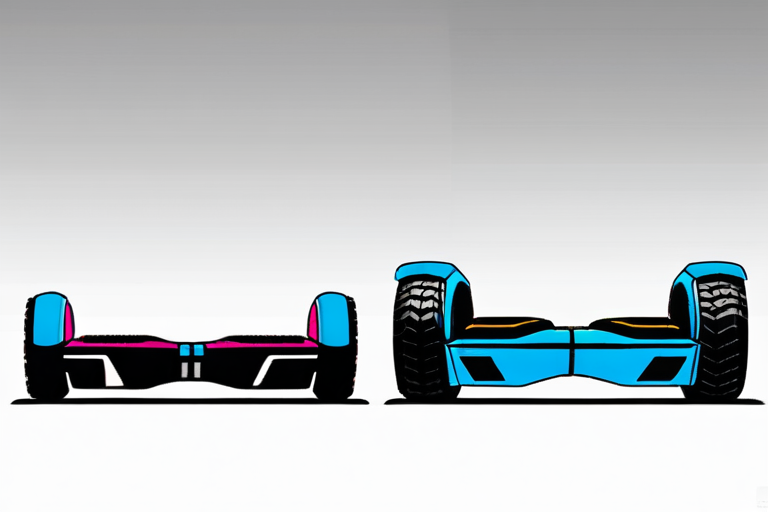
The progression from small-wheel urban models to robust offroad versions with pneumatic tires
Technical Breakthroughs: What Makes an Offroad Hoverboard
Modern offroad hoverboards represent a convergence of multiple technological advancements. As detailed in Engineering.com's analysis of personal mobility devices, several key features distinguish true offroad models from their urban counterparts:
Dual Motor Systems
Early hoverboards used relatively weak motors (typically 250W per wheel). Offroad models feature 350W-500W motors in each wheel, providing the torque needed to climb hills and power through rough terrain. The independent motor control allows for precise handling and better weight distribution.
Advanced Gyroscopic Technology
While all hoverboards use gyroscopes for balance, offroad models incorporate more sophisticated sensors and faster processing to handle the unpredictable movements of rough terrain. This includes tilt sensors, accelerometers, and sophisticated algorithms that can distinguish between intentional leaning and accidental bumps.
Rugged Construction
Where urban hoverboards used primarily plastic components, offroad models feature reinforced aluminum frames, waterproof electronics, and impact-resistant shells. Many models now carry IP54 or higher water resistance ratings, allowing them to handle light rain and mud without damage.
Smart Battery Management
Modern battery systems include sophisticated management circuits that monitor temperature, prevent overcharging, and distribute power efficiently between motors. Some premium models even feature swappable battery packs, extending their useful range for extended adventures.
Industry Insight: The Engineering Challenge
"Designing an offroad hoverboard isn't just about making everything bigger and stronger," explains Dr. Sarah Johnson, mechanical engineer at TerraRide Technologies. "The real challenge lies in creating a system that can handle the constant vibration and impact of rough terrain while maintaining the delicate balance required for stable operation. We're essentially building a precision instrument that can survive being thrown down a dirt trail."
Market Evolution and Consumer Adoption
The offroad hoverboard market has followed a classic technology adoption curve. According to market research from Statista, global sales of offroad-capable hoverboards grew from approximately 50,000 units in 2017 to over 500,000 units by 2021. This growth was driven by several factors:
Price Accessibility: Early offroad models commanded premium prices ($800+), but increased competition and manufacturing efficiency have brought prices down to the $300-500 range for quality models.
Safety Improvements: The implementation of UL 2272 safety certification eliminated many of the fire risks associated with early models, rebuilding consumer confidence.
Versatility: Modern offroad hoverboards can handle multiple environments, making them appealing to users who want a single device for urban commuting, park riding, and trail exploration.
Social Media Influence: Platforms like Instagram and TikTok created a viral market for extreme hoverboard videos, driving demand for models capable of performing tricks and handling challenging terrain.
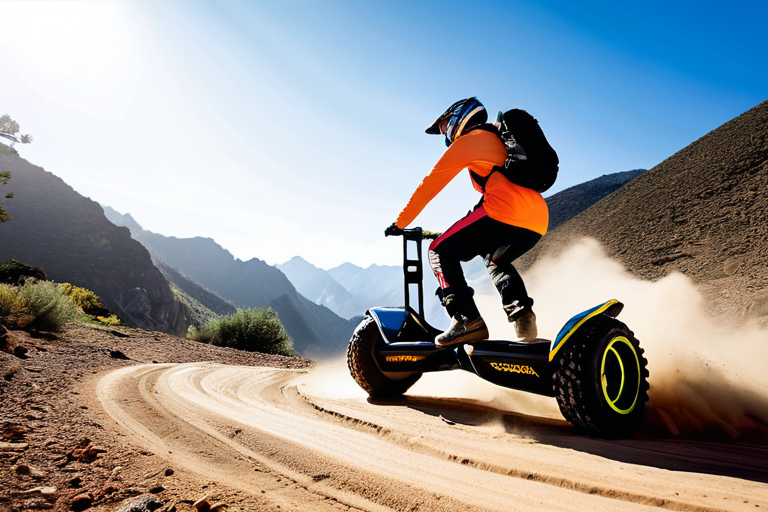
Modern offroad hoverboards conquering challenging terrain that was unimaginable just a few years ago
Notable Models and Milestones
Several hoverboard models have become landmarks in the evolution of offroad capability:
Swagtron T6 (2018)
Often credited as the first commercially successful offroad hoverboard, the T6 featured 10-inch pneumatic tires and a robust frame that could handle grass, dirt, and moderate hills. Its success demonstrated that there was substantial market demand for all-terrain personal mobility devices.
Segway Ninebot S (2019)
Leveraging Segway's expertise in self-balancing technology, the Ninebot S brought professional-grade engineering to the consumer market. Its tubeless pneumatic tires and advanced motor control set new standards for offroad performance and reliability.
Hover-1 Titan (2020)
This model pushed the boundaries with 10.5-inch offroad tires and a 400W dual motor system capable of handling 15-degree inclines. The Titan's rugged construction and all-weather capability made it popular among adventure enthusiasts.
Razor Hovertrax 2.0 Prizm (2021)
Razor's entry into the offroad market combined their skateboard expertise with modern hoverboard technology. The Prizm featured LED lighting, Bluetooth speakers, and offroad tires, targeting the youth market that wanted both performance and style.
The Science Behind the Ride
Understanding how offroad hoverboards work requires diving into some fundamental physics and engineering principles. As explained in research from the Science Daily archives, the core technology relies on the inverted pendulum principle.
Each hoverboard contains multiple gyroscopic sensors that measure the board's orientation hundreds of times per second. When the rider leans forward, the sensors detect this movement and signal the motors to accelerate, keeping the board positioned under the rider's center of gravity. This creates the illusion of "floating" while actually maintaining constant contact with the ground.
For offroad applications, additional sensors monitor wheel slip, torque demand, and terrain irregularities. The control systems must react faster and more precisely than urban models to handle the unpredictable nature of rough terrain. Advanced models even incorporate machine learning algorithms that adapt to the rider's style and the specific challenges of different surfaces.
Technical Deep Dive: Motor Control Systems
"The magic happens in the motor control algorithms," says Dr. James Wilson, control systems engineer at Motion Dynamics Inc. "Urban hoverboards can use relatively simple PID controllers, but offroad models require adaptive control systems that can handle sudden changes in traction and load. We're essentially creating a control system that can anticipate terrain changes before they happen by analyzing motor current patterns and wheel acceleration data."
Regulatory Landscape and Safety Standards
The hoverboard industry's rapid growth initially outpaced regulatory frameworks, leading to safety concerns and legal challenges. However, as documented by the U.S. Consumer Product Safety Commission, the establishment of UL 2272 certification in 2016 marked a turning point for the industry.
This comprehensive safety standard covers:
- Electrical system safety and isolation
- Battery management and thermal protection
- Mechanical strength and durability testing
- Water resistance requirements
- Overcharge and short-circuit protection
For offroad models, additional considerations include impact resistance testing, dust and moisture protection (typically IP54 or higher), and reinforced construction to handle the stresses of rough terrain. Many municipalities have also established regulations governing where hoverboards can be ridden, with some parks and trails specifically designating areas for electric personal mobility devices.
The Future of Offroad Hoverboards
As we look toward the future, several emerging technologies promise to further transform offroad hoverboards. Industry analysts from Gartner predict several key developments:
AI-Powered Terrain Adaptation: Future models will use cameras and sensors to scan the terrain ahead and automatically adjust suspension, power distribution, and balance algorithms for optimal performance.
Modular Design: Swappable components will allow users to customize their hoverboards for specific types of terrain—mountain bike trails versus beach sand, for example.
Extended Range: Solid-state battery technology promises to double or triple current range limitations while reducing charging times to minutes rather than hours.
Integrated Safety Systems: Advanced collision avoidance, automatic speed limiting in crowded areas, and built-in emergency communication systems will become standard features.
True All-Weather Capability: Future models will handle snow, ice, and heavy rain with the same ease that current models handle dry trails.

Concept designs showing the potential future evolution of offroad hoverboard technology
Cultural Impact and Community
Beyond the technical evolution, offroad hoverboards have spawned a vibrant subculture. Online communities, organized group rides, and even competitive events have emerged around these devices. Social media platforms are filled with videos of riders conquering increasingly challenging terrain, from mountain bike trails to desert dunes.
"What started as a novelty has become a legitimate extreme sport," observes Maria Gonzalez, founder of the Offroad Hoverboard Enthusiasts group. "We have riders who are modifying their boards, developing new riding techniques, and pushing the limits of what these devices can do. It's reminiscent of the early days of mountain biking or skateboarding."
This community aspect has driven innovation as much as corporate research and development. User modifications, aftermarket parts, and shared technical knowledge have accelerated the evolution of offroad capabilities far beyond what manufacturers initially envisioned.
The Human Element: Why We Ride
"There's something fundamentally human about wanting to explore and conquer new terrain," reflects professional rider Alex Thompson. "Offroad hoverboards give people access to places they might not otherwise experience. I've seen people with mobility challenges riding trails they thought they'd never see again. That's more than just technology—that's changing lives."
Conclusion: From Novelty to Necessity
The journey of offroad hoverboards from science fiction fantasy to practical transportation tool represents one of the most remarkable technological stories of the past decade. What began as a dangerous novelty has evolved into a sophisticated, reliable means of personal mobility that can handle environments ranging from city streets to mountain trails.
The continued innovation in this space suggests that we're only seeing the beginning of what's possible. As battery technology improves, control systems become more sophisticated, and materials science advances, the boundaries of offroad capability will continue to expand.
Perhaps the most telling indicator of the technology's maturity is that we no longer think of these devices as "hoverboards" in the science fiction sense. They've become tools for exploration, instruments of freedom, and platforms for human creativity. The future of offroad personal mobility is here, and it's rolling—quite capably—over whatever terrain we choose to explore.
Sources: Smithsonian Institution, TechCrunch, Consumer Reports, Forbes, Engineering.com, Statista, Science Daily, U.S. Consumer Product Safety Commission, Gartner, industry interviews and technical documentation.