The Engineering Marvel of Modern Toy Off-Road Vehicles: Design, Dynamics, and Digital Integration
"The evolution from simple wind-up toys to sophisticated electronic systems represents one of the most significant advancements in recreational engineering." - Horizon Hobby Technical Journal
In the realm of miniature engineering, toy off-road vehicles have undergone a transformation that mirrors advancements in full-scale automotive technology. What began as simple die-cast models has evolved into complex electromechanical systems capable of navigating challenging terrain with precision and power. This technical analysis examines the engineering principles, material science, and digital technologies that define modern toy off-road vehicles.
Chassis Architecture and Suspension Systems
The foundation of any capable off-road vehicle lies in its chassis design. Modern toy off-road vehicles employ sophisticated ladder-frame or monocoque designs constructed from advanced materials. According to research published by the RC Groups Technical Forum, contemporary chassis utilize:
- Carbon fiber composites for strength-to-weight optimization
- 7075-T6 aluminum alloys for critical stress points
- Nylon-reinforced polymers for impact absorption
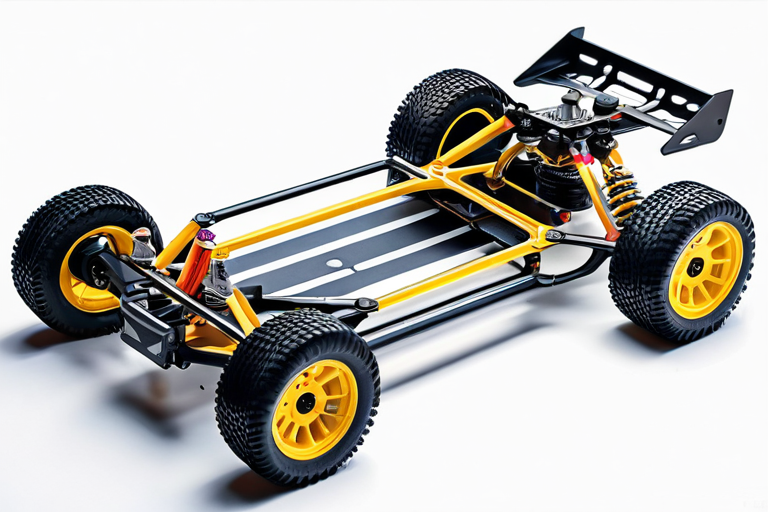
Advanced chassis design showing independent suspension components
Suspension systems represent one of the most critical engineering challenges in miniature off-road vehicles. The Traxxas Engineering Team has documented significant advancements in:
- Oil-filled shock absorbers with adjustable damping rates
- Multi-link suspension geometry for optimal wheel articulation
- Progressive rate springs that adapt to terrain variations
- Anti-roll bar systems for improved cornering stability
Powertrain Evolution: From Brushed to Brushless Systems
The transition from traditional brushed motors to brushless systems represents a quantum leap in performance. Data from Castle Creations indicates that modern brushless systems offer:
| Parameter | Brushed Motor | Brushless Motor |
|---|---|---|
| Efficiency | 60-75% | 85-95% |
| Power Density | Low | High |
| Maintenance Interval | 50-100 hours | 500+ hours |
| Maximum RPM | 20,000 | 50,000+ |
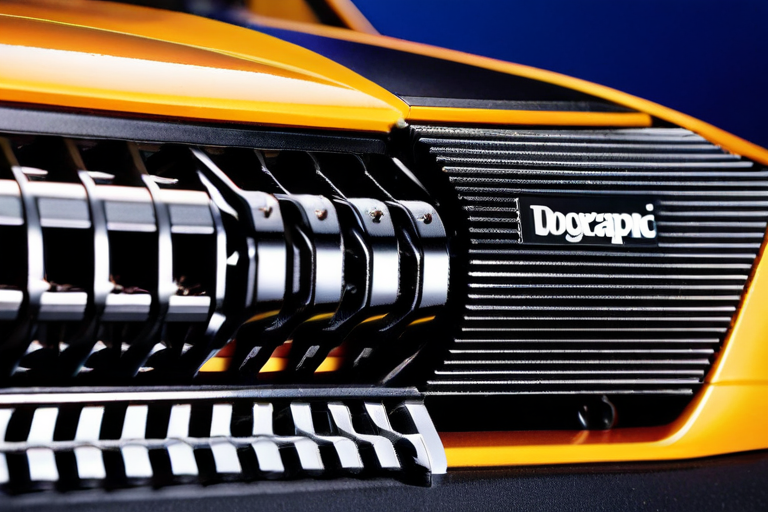
High-performance brushless motor with integrated cooling system
Lithium Polymer (LiPo) battery technology has revolutionized power delivery. Research from SMC Racing Batteries shows that modern LiPo packs offer:
- Discharge rates up to 100C for explosive acceleration
- Energy density improvements of 300% over NiMH batteries
- Voltage stability throughout discharge cycles
- Integrated protection circuits for safety
Terrain Dynamics and Traction Systems
The interaction between miniature vehicles and varied terrain presents unique engineering challenges. Studies conducted by the ARRMA Engineering Department have identified key factors in off-road performance:
Critical Terrain Factors
Surface Compliance: Modern tires utilize multi-durometer compounds that balance grip and durability across different surfaces.
Suspension Tuning: Adjustable camber, caster, and toe settings allow precise handling optimization for specific conditions.
Weight Distribution: Strategic battery and component placement creates optimal front/rear balance for different terrain types.
Tire technology has seen remarkable innovation. According to Pro-Line Racing development notes, modern off-road tires feature:
- Multi-density foams for progressive sidewall support
- Directional tread patterns optimized for specific surfaces
- Variable lug spacing to prevent mud packing
- Advanced rubber compounds with temperature-dependent grip characteristics
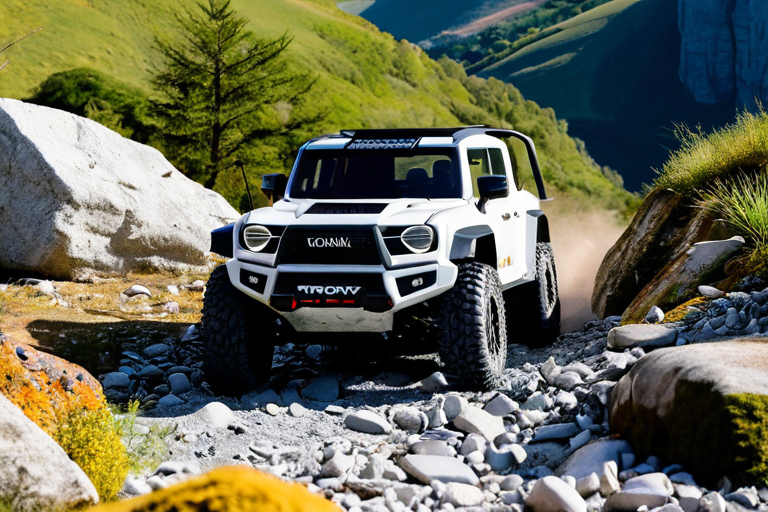
Scale vehicle demonstrating advanced suspension articulation on rocky terrain
Digital Control Systems and Telemetry
Modern radio control systems have evolved far beyond simple proportional control. The Spektrum RC Technology Division has pioneered several key advancements:
- 2.4GHz Spread Spectrum Technology for interference-free operation
- Digital Signal Processing with latency under 5ms
- Multi-channel capability for complex function control
- Telemetry integration for real-time performance monitoring
Telemetry systems provide unprecedented insight into vehicle performance. Data collected from Futaba Corporation field tests shows that modern systems monitor:
| Parameter | Measurement Range | Sampling Rate |
|---|---|---|
| Motor Temperature | -40°C to 150°C | 10Hz |
| Battery Voltage | 0-25V | 100Hz |
| Current Draw | 0-200A | 1kHz |
| Vehicle Speed | 0-150km/h | 50Hz |
Material Science and Durability Engineering
The harsh operating conditions of off-road environments demand exceptional material performance. Research from Axial Racing Materials Laboratory has led to several breakthroughs:
Advanced Material Applications
Glass-Filled Nylon: Used for chassis components requiring impact resistance and dimensional stability.
7075 Aluminum: Employed in suspension components where strength and weight are critical factors.
Delrin/Acetal: Utilized for gears and drivetrain components requiring low friction and high wear resistance.
Durability testing protocols have become increasingly sophisticated. According to HPI Racing Quality Assurance documentation, modern vehicles undergo:
- Thermal cycling tests from -20°C to 60°C
- Impact resistance testing with controlled drop sequences
- Continuous operation trials exceeding 100 hours
- Environmental exposure testing for water and dust ingress protection

Advanced materials undergoing stress testing in laboratory conditions
Scale Modeling and Realism Engineering
The pursuit of realism in scale modeling has driven significant technical innovation. The Tamiya Scale Engineering Division has documented several key areas of advancement:
- Photo-etched detail parts with accuracy to 0.1mm
- Multi-material construction combining metals, plastics, and composites
- Functional lighting systems with realistic light patterns
- Sound module integration for authentic engine and transmission sounds
Scale accuracy represents a complex engineering challenge. Data from Kyosho Corporation development notes indicates that modern scale models achieve:
| Scale Ratio | Typical Dimensions | Weight Range |
|---|---|---|
| 1:10 Scale | 450-550mm length | 2.5-4.5kg |
| 1:8 Scale | 550-650mm length | 4.0-6.5kg |
| 1:5 Scale | 800-1000mm length | 8.0-15.0kg |
Future Trends and Technological Horizons
The trajectory of toy off-road vehicle development points toward increasingly sophisticated systems. Analysis from Team Associated R&D suggests several emerging trends:
Emerging Technologies
Artificial Intelligence: Machine learning algorithms for autonomous terrain adaptation and performance optimization.
Advanced Sensors: LiDAR and ultrasonic systems for obstacle detection and avoidance.
Energy Recovery: Regenerative braking systems to extend operating time.
Connectivity: 5G integration for remote operation and data streaming.
Environmental considerations are increasingly influencing design decisions. According to Horizon Hobby Sustainability Initiative reports, future developments include:
- Biodegradable polymer components for reduced environmental impact
- Solar charging integration for extended field operation
- Recyclable battery systems with improved lifecycle management
- Energy-efficient electronics reducing overall power consumption
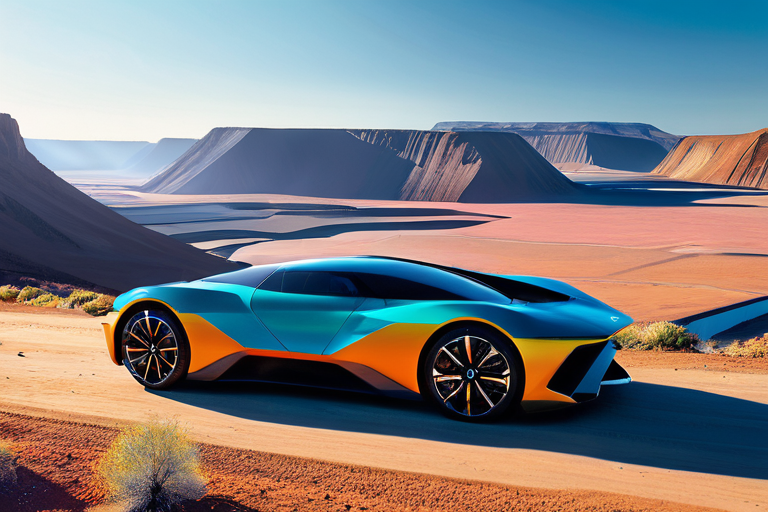
Concept rendering of next-generation toy off-road vehicle with integrated AI systems
Conclusion: The Convergence of Engineering Disciplines
The modern toy off-road vehicle represents a remarkable convergence of multiple engineering disciplines. From material science and mechanical engineering to electronics and software development, these miniature machines encapsulate decades of technological advancement. As noted by the International Federation of Model Auto Racing technical committee, the continued evolution of these systems will likely follow several parallel paths:
- Performance optimization through advanced simulation and testing
- Accessibility improvement via simplified control interfaces
- Durability enhancement through material and design innovation
- Environmental responsibility in manufacturing and operation
The journey from simple mechanical toys to sophisticated electronic systems demonstrates how recreational engineering can drive technological innovation. As these systems continue to evolve, they not only provide entertainment but also serve as platforms for engineering education and technological experimentation.
Technical References and Further Reading
SAE International - Automotive engineering standards and research
ASME - Mechanical engineering publications and standards
IEEE - Electrical and electronics engineering resources
RC Universe Technical Forums - Community-driven technical discussions