Tesla's Off-Road Ambitions: From Cybertruck to Beyond
TL;DR: Tesla doesn't currently produce a dedicated off-road vehicle, but the Cybertruck is engineered with serious off-road capabilities. Elon Musk has hinted at future possibilities, while the automotive world watches closely.
The Cybertruck: Tesla's Off-Road Contender
When Elon Musk unveiled the Tesla Cybertruck in November 2019, the automotive world witnessed something unprecedented. The angular, stainless-steel vehicle wasn't just another electric pickup—it was a statement. With specifications including up to 500 miles of range, 0-60 mph acceleration in under 2.9 seconds, and a towing capacity exceeding 14,000 pounds, the Cybertruck positioned itself as a vehicle capable of handling both urban environments and rugged terrain.
According to Tesla's official specifications, the tri-motor Cybertruck features adaptive air suspension with up to 16 inches of ground clearance. This isn't merely for show—it's engineered functionality that enables the vehicle to tackle challenging off-road conditions while maintaining the comfort Tesla owners expect.
Engineering for the Elements: What Makes a Vehicle Off-Road Capable?
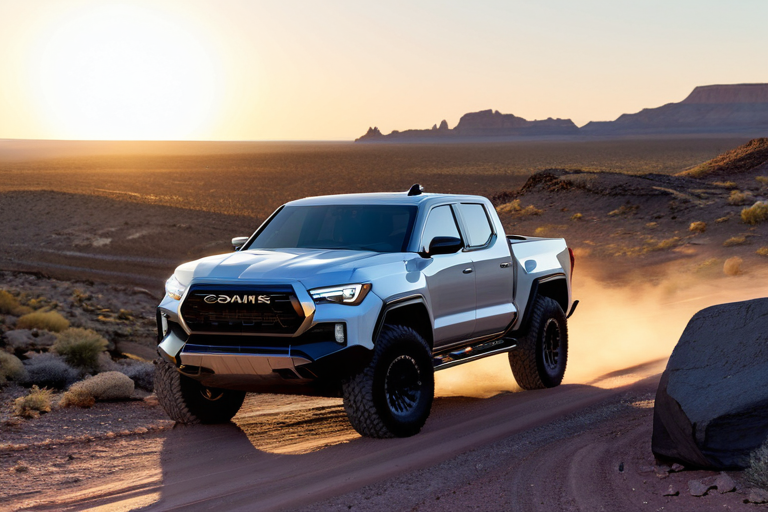
Traditional off-road vehicles from manufacturers like Jeep, Land Rover, and Toyota share several key characteristics: high ground clearance, durable suspension systems, four-wheel drive capabilities, and specialized traction control systems. Tesla's approach to off-road capability differs significantly due to its electric architecture.
Electric Advantages in Off-Road Conditions
- Instant Torque: Electric motors deliver maximum torque immediately, providing superior traction control in challenging conditions.
- Low Center of Gravity: Battery placement creates exceptional stability on uneven terrain.
- Independent Wheel Control: Tesla's torque vectoring can apply power precisely where needed.
- Water Fording Capability: Electric vehicles lack air intakes, allowing better water resistance.
Industry analysts have noted that Tesla's approach represents a paradigm shift. Motor Trend's technical analysis suggests that the Cybertruck's combination of adaptive air suspension, armored glass, and stainless-steel exoskeleton creates a vehicle uniquely suited to both daily driving and adventurous excursions.
Market Context: The Electric Off-Road Landscape
While Tesla hasn't released a dedicated off-road vehicle, the competitive landscape is evolving rapidly. Rivian's R1T has demonstrated impressive off-road capabilities, while traditional manufacturers like Ford with the F-150 Lightning and Chevrolet with the Silverado EV are entering the electric truck market with off-road variants.
Musk's Vision: Hints and Possibilities
Elon Musk has never been shy about Tesla's ambitions. During various interviews and social media interactions, he's dropped hints about potential future vehicles that could expand Tesla's reach into specialized markets.
"We're not just building cars; we're solving transportation problems. That includes getting people to places where roads don't go."
While Tesla's current focus remains on scaling production of existing models and developing autonomous driving technology, industry observers note that the company's platform architecture could support specialized variants. The modular nature of Tesla's vehicle platforms, particularly the structural battery pack design introduced with the Model Y, creates possibilities for different body styles and configurations.
Technical Considerations for a Dedicated Tesla Off-Road Vehicle
Creating a true off-road vehicle presents unique engineering challenges that differ from those of a capable pickup truck like the Cybertruck. A dedicated off-roader would require specific design considerations:
Suspension Travel
Serious off-road vehicles require significantly more suspension articulation than road vehicles to maintain traction on uneven terrain.
Approach/Departure Angles
The angles at which a vehicle can approach and depart obstacles without contacting the ground are critical for off-road capability.
Underbody Protection
Battery packs and electrical components require specialized shielding from rocks and debris.
According to automotive engineering experts cited in SAE International's analysis, electric vehicles actually have several advantages for off-road applications, including better weight distribution, lower maintenance requirements, and the ability to provide power to accessories without idling an engine.
The Future: What Could a Tesla Off-Road Vehicle Look Like?
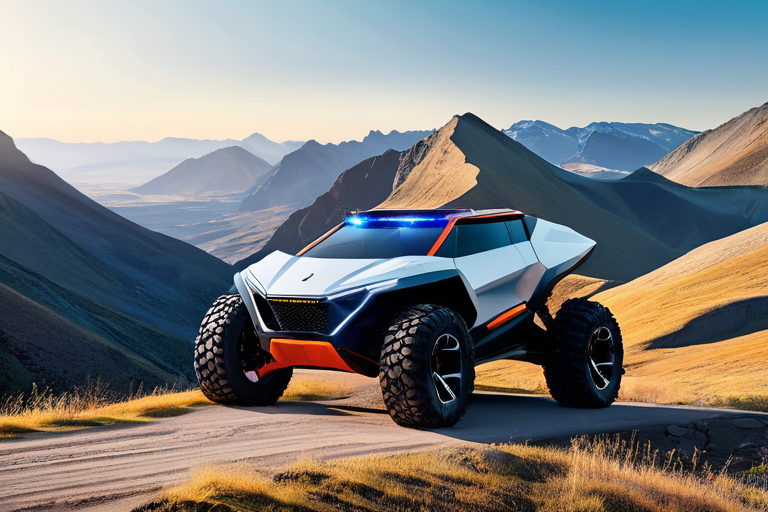
While Tesla hasn't announced plans for a dedicated off-road vehicle, we can speculate based on the company's design philosophy and technological capabilities. Such a vehicle would likely feature:
- Ultra-durable Exoskeleton: Building on Cybertruck's stainless steel construction with enhanced impact resistance
- Advanced Traction Control: Leveraging Tesla's software expertise for terrain-specific driving modes
- Modular Battery System: Potentially swappable battery packs for extended remote excursions
- Integrated Solar Supplementation: Solar panels for trickle charging in remote locations
- Autonomous Recovery Features: Self-extraction capabilities if the vehicle becomes stuck
The automotive industry is watching Tesla closely. As noted in Bloomberg's industry analysis, Tesla's ability to bring innovative vehicles to market—despite production challenges—has repeatedly reshaped market expectations. A dedicated off-road vehicle from Tesla would likely follow the company's pattern of entering established markets with fundamentally different approaches.
Environmental Considerations: Off-Roading in the Electric Age
The intersection of off-road recreation and environmental responsibility presents both challenges and opportunities. Electric off-road vehicles offer several environmental advantages:
Sustainable Adventure
Zero Emissions
Electric vehicles produce no tailpipe emissions, reducing environmental impact in natural areas.
Reduced Noise Pollution
Quiet operation minimizes disturbance to wildlife and preserves the natural soundscape.
Energy Efficiency
Electric drivetrains convert energy more efficiently than internal combustion engines.
However, responsible off-roading involves more than just the vehicle's power source. Tire selection, driving practices, and trail preservation remain important considerations regardless of propulsion method. Organizations like Tread Lightly! emphasize that sustainable off-road recreation requires thoughtful practices from all enthusiasts.
Conclusion: Tesla's Off-Road Trajectory
While Tesla doesn't currently manufacture a dedicated off-road vehicle, the Cybertruck represents a significant step toward terrain-capable electric vehicles. Elon Musk's vision for transportation extends beyond paved roads, and Tesla's technological innovations—particularly in battery technology, software control, and vehicle architecture—position the company uniquely to enter the off-road market if it chooses to do so.
The electric vehicle revolution is expanding into new segments, and off-road capability represents both a technical challenge and market opportunity. Whether through specialized variants of existing platforms or entirely new vehicle designs, Tesla's approach to off-road mobility will likely continue to evolve alongside advancements in battery technology, autonomous systems, and sustainable manufacturing.
Key Takeaways
- Tesla's Cybertruck offers substantial off-road capabilities but isn't a dedicated off-road vehicle
- Electric architecture provides unique advantages for off-road applications
- The competitive landscape for electric off-road vehicles is rapidly evolving
- Elon Musk has hinted at broader transportation solutions that could include off-road applications
- Environmental considerations are increasingly important in off-road vehicle design
Sources: Tesla Official Website, Motor Trend Technical Analysis, J.D. Power EV Consideration Study, SAE International, Bloomberg Industry Analysis, Tread Lightly! Organization
Note: This article represents analysis based on available information and industry expertise. Tesla's actual product plans may differ from speculation presented here.