Swamp Buggy Racing: The Untamed History of Florida's Muddy Motorsport
Deep in the heart of Florida's wilderness, where cypress knees rise from tea-colored waters and alligators sun themselves on muddy banks, a uniquely American motorsport was born. Swamp buggy racing—a spectacle of mud, metal, and Southern ingenuity—has carved its own path through Florida's history, evolving from practical transportation to professional sport while maintaining its rough-and-tumble charm.
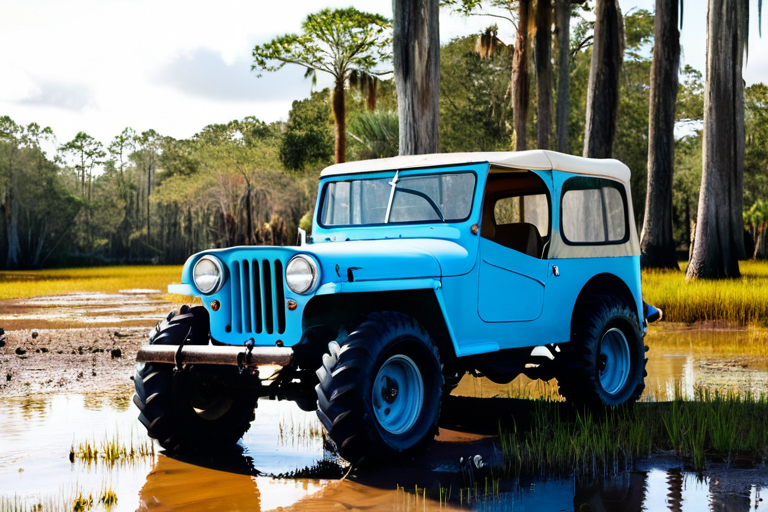
Early swamp buggies were essential for navigating Florida's challenging terrain
Origins in the Big Cypress Swamp
The story begins in the 1920s, when Florida's early settlers and hunters needed vehicles capable of traversing the state's notoriously difficult terrain. According to the Florida Memory Project, resourceful locals began modifying Model T Fords and other early automobiles, raising them on oversized tires and adapting them for wetland travel. These primitive "swamp cars" were purely functional—tools for survival in an environment where conventional vehicles couldn't venture.
Ed Frank, a Naples-area resident often credited as the "father of swamp buggies," took this concept further in the 1940s. As documented by the Swamp Buggy, Inc. historical archives, Frank built what many consider the first true swamp buggy using a surplus World War II Jeep chassis, oversized aircraft tires, and a homemade wooden body. His creation could float across water and climb through mud that would swallow ordinary vehicles whole.
"We weren't thinking about racing—we were thinking about getting through the swamp to hunt or check on property. The racing came later when guys started comparing whose buggy could go through the deepest mud." — Early swamp buggy builder quoted in Florida Sportsman Magazine
From Utility to Competition
The transition from practical vehicle to racing machine happened organically. As the Naples Daily News archives reveal, informal competitions began in the late 1940s when buggy owners would challenge each other to see whose vehicle could traverse the deepest mud or cross the widest stretches of water. These impromptu contests usually took place after hunting trips or during community gatherings, with bragging rights as the only prize.
The first organized swamp buggy race occurred in 1949 at a location known as "The Mile O' Mud" near Naples. Organized by local businessman Larry Ott, the event drew several hundred spectators who watched a handful of homemade buggies compete through a muddy course. According to the Florida Historical Society, this modest beginning laid the foundation for what would become an annual tradition.
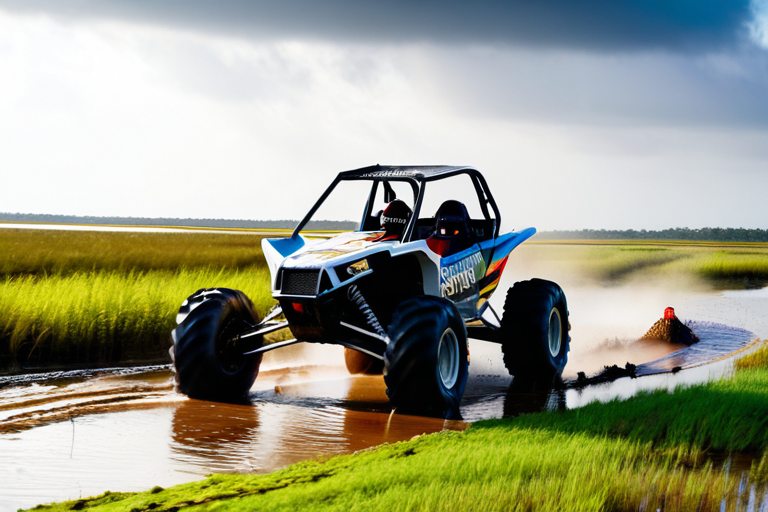
Modern swamp buggy races maintain the sport's muddy heritage
The Evolution of Design
As competition intensified, so did technological innovation. Early buggies used whatever materials were available—often surplus military parts, agricultural equipment, and salvaged automobile components. The Swamp Buggy Historical Society notes several key evolutionary stages:
- The Jeep Era (1940s-1950s): Modified surplus Jeeps with oversized tires and raised bodies
- The V8 Revolution (1960s): Introduction of powerful automobile engines, often from muscle cars
- The Professional Builds (1970s-1980s): Custom-built frames, specialized mud tires, and safety improvements
- The Modern Era (1990s-Present): Computer-designed chassis, specialized transmissions, and professional sponsorship
One of the most significant developments came in the 1960s when racers began installing powerful V8 engines from cars like the Chevrolet Corvette and Ford Mustang. This power increase transformed swamp buggies from slow, utilitarian vehicles to roaring machines capable of spectacular mud-spraying performances.
The Naples Swamp Buggy Races
While swamp buggy events occur throughout Florida, the Naples Swamp Buggy Races have become the sport's premier event. Held three times annually at the Florida Sports Park, these races attract thousands of spectators and feature multiple buggy classes. The event's signature feature remains the "Sippy Hole"—a deep mud pit that separates contenders from pretenders.
The races have developed their own traditions and terminology. As reported by Visit Florida, the "Swamp Buggy Queen" pageant began in 1950 and continues as part of the race weekend festivities. The "Budweiser Cup" championship, established in 1986, represents the sport's highest achievement, with winners' names engraved alongside racing legends.
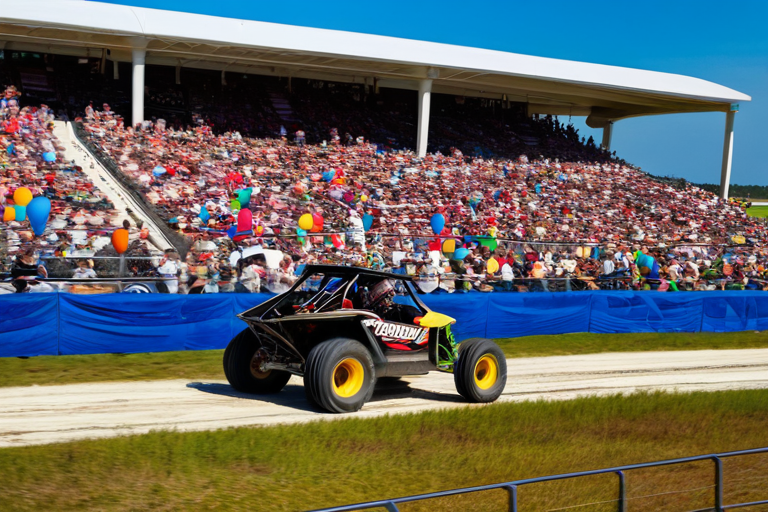
Swamp buggy races draw enthusiastic crowds from across Florida
Cultural Impact and Preservation
Beyond the racing itself, swamp buggies have become embedded in Florida's cultural identity. The Florida Museum of History includes swamp buggy artifacts in its transportation exhibits, recognizing their significance in the state's development. Local businesses from Naples to the Everglades have incorporated the swamp buggy theme into their branding, celebrating this homegrown tradition.
Preservation efforts have gained momentum in recent decades. Organizations like the Swamp Buggy Preservation Society work to restore historic buggies and document the sport's history. Several classic buggies from the 1950s and 1960s have been restored to running condition, appearing at exhibitions and historical demonstrations.
Key Historical Moments
- 1949: First organized swamp buggy race near Naples
- 1952: Introduction of multiple vehicle classes
- 1965: Television coverage begins on local Florida stations
- 1978: First corporate sponsorship (Budweiser)
- 1992: Establishment of the Florida Swamp Buggy Association
- 2005: Swamp buggy racing featured on national television
Modern Developments and Future
Today's swamp buggy racing balances tradition with innovation. While modern buggies feature advanced engineering and safety equipment, they still must conquer the same fundamental challenge: Florida's unforgiving terrain. The sport has expanded to include women drivers, youth categories, and environmental initiatives aimed at preserving the wetlands where racing occurs.
According to the Florida Swamp Buggy Association, recent years have seen increased interest from younger participants and improved safety standards. Digital streaming has expanded the audience beyond Florida, introducing swamp buggy racing to viewers worldwide who appreciate its unique combination of mechanical ingenuity and Southern culture.
From their humble beginnings as practical tools for navigating Florida's wilderness to their current status as professional racing machines, swamp buggies represent more than just a motorsport—they embody Florida's pioneering spirit and resourceful character. As long as there's mud to churn and water to cross, the roar of swamp buggy engines will continue echoing through the cypress swamps, connecting modern competitors to generations of Floridians who first dared to drive where others couldn't.
Sources & Further Reading:
- Florida Memory Project - State archival records
- Swamp Buggy, Inc. Historical Archives
- Naples Daily News Historical Coverage
- Florida Historical Society Publications
- Visit Florida Cultural Tourism Guides
- Florida Museum of History Collections