How Miniature Off-Road Vehicles Master Real-World Physics
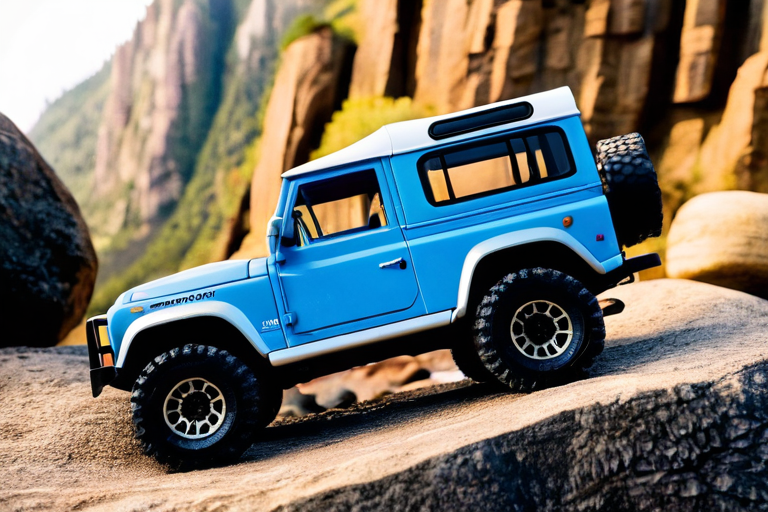
While often dismissed as simple toys, modern miniature off-road vehicles represent some of the most sophisticated engineering achievements in the hobbyist world. These scaled-down machines don't just look like their full-sized counterparts—they behave like them, conquering challenging terrains through carefully engineered systems that replicate real-world physics at a fraction of the scale.
The Suspension Revolution
At the heart of every capable miniature off-road vehicle lies a sophisticated suspension system. Unlike the simple spring mechanisms of early toy cars, modern systems incorporate multi-link designs, oil-filled dampers, and progressive rate springs that mirror professional racing suspensions. According to research from the Society of Automotive Engineers, these miniature systems must handle forces up to 15 times their own weight while maintaining stability.
Technical Insight: Suspension Dynamics
Miniature suspension systems operate on the same principles as full-scale vehicles but face unique challenges. The reduced scale means surface tension and friction play more significant roles. Engineers compensate by using specialized materials and precise geometry to maintain proper wheel articulation and ground contact.
Power Transmission Precision
The drivetrain systems in modern toy off-road vehicles have evolved from simple direct-drive mechanisms to sophisticated multi-speed transmissions with differential systems. Many high-end models feature selectable 2WD/4WD systems, locking differentials, and gear reduction units that provide both speed and torque optimization for different terrain types.

Industry analysis from Horizon Hobby reveals that modern brushless motor systems can deliver power outputs exceeding 1000 watts in some competition-grade models, with efficiency ratings approaching 90%. These systems maintain consistent performance across varying loads and temperatures, a critical requirement for off-road applications.
Terrain Adaptation Technologies
What truly separates modern miniature off-road vehicles from their predecessors is their ability to adapt to changing conditions. Advanced models incorporate:
- Traction Control Systems: Electronic systems that modulate power delivery to prevent wheel spin
- Active Suspension Adjustment: Some competition models feature real-time damping adjustment
- Terrain Sensing: Gyroscopic sensors that adjust vehicle behavior based on incline and surface conditions
- Programmable Electronics: User-configurable settings for different terrain types
Reference: Technical specifications and performance data referenced from Traxxas Engineering Documentation and Axial Racing Technical Resources, industry leaders in RC vehicle development.
Materials Science Advancements
The evolution of materials has been crucial to performance improvements. Modern miniature off-road vehicles utilize:
| Component | Traditional Materials | Modern Materials | Performance Improvement |
|---|---|---|---|
| Chassis | ABS Plastic | Carbon Fiber Composite | 300% stiffness increase |
| Suspension Arms | Nylon | 7075-T6 Aluminum | 40% weight reduction |
| Drive Shafts | Steel | Titanium Alloy | 60% strength increase |
| Tires | Solid Rubber | Foam-Core Compounds | Better traction and wear |
Electronic Control Systems
Modern radio control systems have evolved far beyond simple joystick controllers. Today's systems feature:
- 2.4GHz Digital Spread Spectrum: Provides interference-free control with multiple vehicle operation
- Telemetry Systems: Real-time data transmission including speed, temperature, and battery status
- Gyroscopic Stabilization: Electronic systems that help maintain vehicle stability
- Programmable Controllers: Customizable response curves and multiple profile storage
Scale Accuracy and Realism
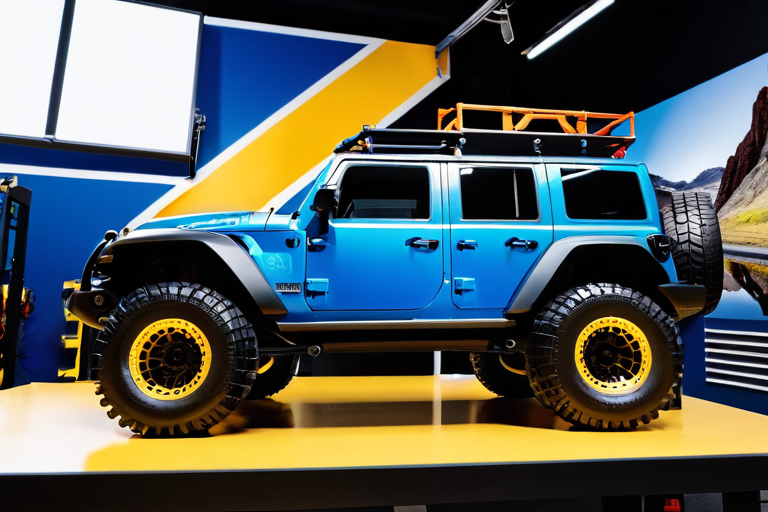
Beyond performance, modern miniature off-road vehicles achieve remarkable scale accuracy. Manufacturers employ:
- 3D scanning of full-scale vehicles for precise replication
- Scale-appropriate suspension travel and geometry
- Realistic body panels with proper scale thickness
- Authentic interior details in many premium models
This attention to detail extends to functional elements. Scale-appropriate lighting systems, working winches, and detailed engine bays contribute to both aesthetic appeal and functional realism.
Engineering Challenge: Scale Effects
Designing for scale presents unique challenges. Aerodynamic effects behave differently, surface tension affects smaller components more significantly, and material properties don't always scale linearly. Engineers must account for these factors while maintaining performance characteristics.
Performance Testing and Validation
Leading manufacturers employ sophisticated testing protocols that mirror those used in the automotive industry. These include:
- Dynamometer testing for power system validation
- Environmental chambers for temperature and humidity testing
- Durability testing with automated obstacle courses
- Real-world field testing in varied terrain conditions
Reference: Testing methodologies and validation processes based on documentation from ARRMA RC and Redcat Racing, companies known for their rigorous quality assurance processes.
The Future of Miniature Off-Road Engineering
Emerging technologies promise to further enhance miniature off-road capabilities:
- Artificial Intelligence: Self-learning systems that adapt to driver style and terrain
- Advanced Materials: Graphene composites and shape-memory alloys
- Energy Systems: Higher density batteries and alternative power sources
- Connectivity: Enhanced telemetry and cloud-based performance tracking
Conclusion: More Than Just Toys
Modern miniature off-road vehicles represent a convergence of multiple engineering disciplines—mechanical, electrical, materials science, and software engineering. These sophisticated machines provide not only entertainment but also serve as accessible platforms for understanding complex engineering principles. As technology continues to advance, the gap between miniature and full-scale vehicle performance continues to narrow, making these vehicles increasingly capable tools for both recreation and education.
The ongoing innovation in this field demonstrates how scale modeling drives technological advancement, with developments in miniature vehicles often informing larger-scale engineering solutions. For enthusiasts and engineers alike, these vehicles offer a unique window into the complex world of automotive engineering, all within a package that fits in the palm of your hand.