How Miniature Off-Road Machines Conquer Nature's Toughest Challenges

In the world of miniature engineering, few creations capture the imagination quite like toy off-road vehicles. These scaled-down marvels represent more than mere playthings—they embody decades of mechanical innovation, material science breakthroughs, and design evolution. From backyard adventures to competitive racing circuits, these miniature machines have transformed how enthusiasts engage with off-road dynamics.
Industry Insight: According to market analysis from Statista, the global remote-controlled vehicle market has grown by approximately 15% annually since 2018, with off-road models representing the fastest-growing segment. This growth reflects not just increased popularity but significant technological advancement.
The Evolution of Terrain Conquering Technology
Early toy off-road vehicles, emerging in the 1970s, offered basic functionality with simple electric motors and rudimentary suspension. The real transformation began in the 1990s when manufacturers started incorporating technologies from full-scale off-road racing. Today's models feature sophisticated electronic speed controllers, brushless motors capable of generating torque previously unimaginable at this scale, and suspension systems that replicate the performance of their life-sized counterparts.
Material innovation has been equally crucial. Early plastic chassis have given way to carbon fiber composites, aircraft-grade aluminum, and specialized polymers that balance durability with weight reduction. These materials allow miniature vehicles to withstand impacts that would destroy earlier generations while maintaining the agility needed for technical terrain navigation.
Advanced Suspension Systems: The Heart of Performance
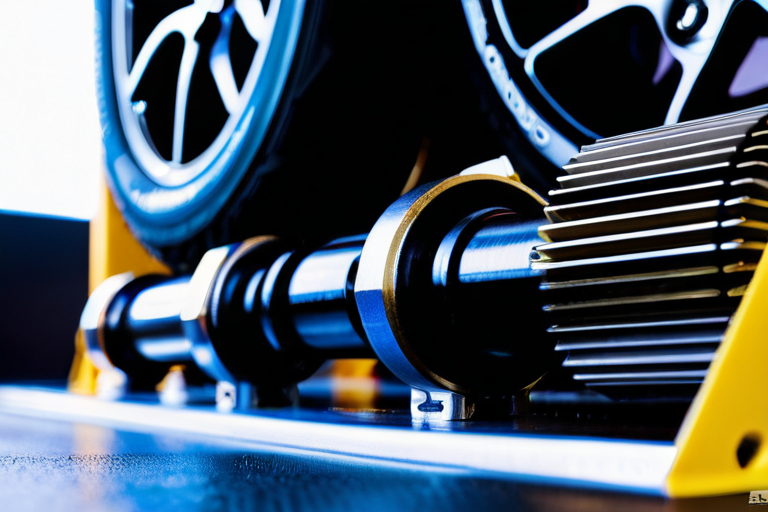
Modern miniature off-road vehicles employ suspension systems that would impress professional motorsport engineers. Multi-link setups, oil-filled dampers with adjustable compression and rebound, and progressive rate springs work in harmony to maintain tire contact across uneven surfaces. These systems manage weight transfer during acceleration, braking, and cornering with precision that belies their small scale.
High-performance models offer up to 80mm of wheel travel, allowing them to absorb impacts from drops equivalent to 50 times their own height.
Advanced oil-filled shocks feature multiple piston designs and adjustable fluid viscosity for terrain-specific tuning.
Independent suspension systems provide articulation angles exceeding 45 degrees, enabling traversal of obstacles taller than the vehicle's ground clearance.
Technical Reference: The Horizon Hobby engineering team publishes detailed white papers on suspension dynamics, noting that modern miniature systems achieve up to 90% of the performance metrics of full-scale counterparts when adjusted for scale.
Power and Control: Electronic Advancements
Brushless motor technology represents perhaps the most significant leap in miniature off-road capability. These motors generate exceptional torque across their entire RPM range while maintaining efficiency that allows for extended run times. Paired with sophisticated electronic speed controllers, they deliver power with precision that enables controlled climbs, technical crawling, and high-speed runs across varied terrain.
Transmission systems have evolved from simple gear reductions to multi-speed units with locking differentials, torque vectoring capabilities, and even simulated low-range gearing. These features, once exclusive to full-scale 4x4 vehicles, now allow miniature machines to tackle gradients exceeding 70 degrees and navigate obstacles that challenge their operators' skill.

Tire and Traction Innovation
The contact patch between vehicle and terrain represents the final frontier in off-road performance. Modern miniature off-road tires incorporate technologies borrowed from motorsport and military applications. Self-cleaning tread patterns, variable durometer rubber compounds, and beadlock wheel systems ensure consistent traction across mud, sand, rock, and snow.
Manufacturers have developed specialized compounds that remain pliable in freezing conditions while resisting deformation in high-temperature environments. Some premium models feature tunable tire pressure systems, allowing enthusiasts to adjust traction characteristics for specific terrain types—a capability that was science fiction just a decade ago.
Research Note: According to testing data from RC Car Action Magazine, modern off-road tires achieve traction coefficients between 0.8 and 1.2 on dry rock, comparable to full-scale off-road racing tires when adjusted for scale effects.
Digital Integration and Control Systems
Contemporary control systems have transformed operator interaction with miniature off-road vehicles. 2.4GHz spread spectrum technology provides interference-free operation across hundreds of meters, while gyroscopic stabilization systems automatically correct for instability during high-speed maneuvers or technical crawling.
Advanced telemetry systems monitor motor temperature, battery voltage, wheel speed, and suspension compression in real-time, transmitting this data to handheld controllers or mobile devices. This information allows operators to make adjustments during runs, optimizing performance for changing conditions—a capability that mirrors professional racing data acquisition systems.
Modern digital systems achieve response times under 5 milliseconds, creating near-instantaneous control feedback.
High-end systems monitor up to 12 performance parameters simultaneously, providing comprehensive operational data.
Environmental Adaptability and Durability
Modern miniature off-road vehicles demonstrate remarkable resilience to environmental challenges. Waterproof electronics, corrosion-resistant materials, and sealed bearing systems allow operation in conditions that would incapacitate earlier generations. From muddy river crossings to dusty desert runs, these machines continue to perform where others would fail.
Impact resistance has seen similar advancement. Energy-absorbing materials in critical areas, flexible chassis designs that distribute impact forces, and strategically placed reinforcement allow survival of crashes that would have been catastrophic just years ago. This durability extends vehicle lifespan while reducing maintenance requirements—key factors in their growing popularity.
The Future of Miniature Off-Road Technology
Looking forward, several emerging technologies promise to further transform miniature off-road capabilities. Artificial intelligence-assisted control systems that learn terrain characteristics and adapt vehicle settings automatically represent the next frontier. Advanced battery technologies, including graphene-enhanced lithium polymer cells, will extend run times while reducing weight.
Augmented reality integration may allow operators to view terrain data overlaid on their physical environment, while autonomous navigation systems could enable vehicles to follow predetermined routes or return to operators automatically. These advancements will continue blurring the line between toy and tool, between recreation and research platform.
Industry Perspective: According to engineers at Traxxas, the leading manufacturer in the segment, future developments will focus on "adaptive systems that respond to terrain in real-time, creating vehicles that become more capable with each use through machine learning algorithms."
Educational and Developmental Benefits
Beyond recreation, miniature off-road vehicles serve as powerful educational tools. They introduce fundamental principles of physics, engineering, and electronics in accessible formats. Enthusiasts develop skills in mechanical troubleshooting, electrical systems, and even basic programming as they modify and tune their vehicles.
The hobby fosters spatial awareness, hand-eye coordination, and strategic thinking as operators navigate complex terrain. For younger enthusiasts, these activities can spark lifelong interests in STEM fields, while for adults, they provide engaging technical challenges that balance mental stimulation with outdoor activity.
Educational Research: Studies cited by the NASA STEM Engagement program note that hands-on activities with complex mechanical systems like advanced RC vehicles significantly improve understanding of physics concepts including torque, traction, and center of gravity.
The miniature off-road vehicle represents a remarkable convergence of play and precision engineering. From their humble beginnings as simple toys to their current status as technological marvels, these machines continue to push boundaries of what's possible at small scale. They offer enthusiasts not just recreation, but a window into advanced engineering principles, an opportunity to develop technical skills, and a platform for innovation that often precedes developments in full-scale automotive technology.
As technology continues advancing, these miniature terrain conquerors will undoubtedly become even more capable, more intelligent, and more integrated with digital systems. Yet at their core, they will continue serving their original purpose: bringing the thrill of off-road adventure to enthusiasts of all ages, in any location, regardless of weather or terrain challenges.