How Do Miniature Off-Road Vehicles Navigate Complex Terrains
Examining the engineering principles that enable scaled-down vehicles to tackle challenging landscapes
The world of miniature off-road vehicles represents a fascinating intersection of play, engineering, and real-world automotive principles. These scaled-down machines, often dismissed as mere toys, incorporate sophisticated technologies that mirror their full-sized counterparts. From advanced suspension systems to durable material compositions, modern toy off-road vehicles demonstrate remarkable capabilities in navigating diverse terrains.
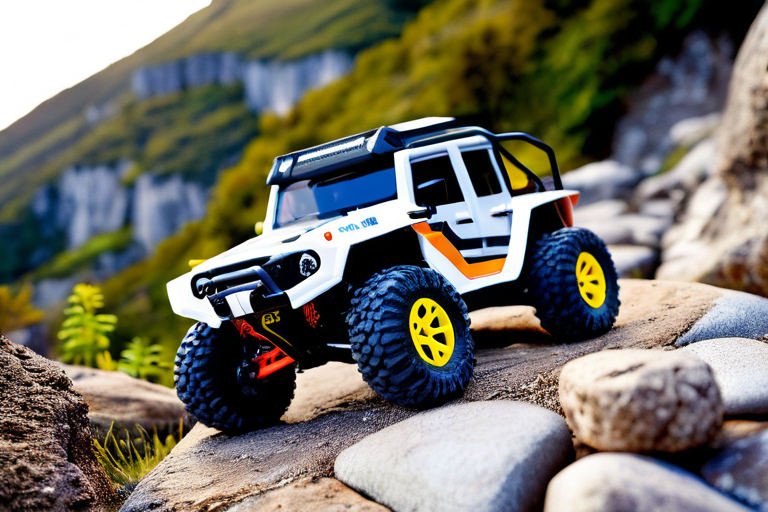
A modern RC off-road vehicle demonstrates its capabilities on challenging terrain
According to research from the Society of Automotive Engineers, miniature vehicle design has evolved significantly over the past decade. The organization notes that contemporary models incorporate suspension geometries that would have been considered advanced engineering just a few years ago. This progression reflects broader trends in materials science and manufacturing technologies.
Suspension Systems: The Foundation of Terrain Navigation
The most critical component determining a miniature off-road vehicle's performance is its suspension system. Unlike standard toy cars designed for smooth surfaces, off-road variants require sophisticated shock absorption mechanisms. These systems typically feature independent suspension on all four wheels, allowing each wheel to react independently to terrain variations.
Technical Insight: Modern miniature off-road vehicles often utilize oil-filled shock absorbers with adjustable damping rates. This technology, adapted from full-scale racing applications, enables precise tuning for different terrain types. The RC Groups technical community documents how these systems maintain tire contact with uneven surfaces, maximizing traction and control.
Suspension travel, measured as the vertical distance a wheel can move, represents another crucial parameter. High-performance models offer travel distances proportional to their scale that would be impressive even in full-sized vehicles. This capability allows them to absorb impacts from rocks, roots, and other obstacles without losing stability.

Close-up examination of advanced suspension components in a miniature off-road vehicle
Material Innovations and Durability Considerations
The materials used in constructing miniature off-road vehicles have undergone significant evolution. Early models relied heavily on plastic components that limited durability and performance. Contemporary designs incorporate advanced composites, aluminum alloys, and carbon fiber elements that provide strength without excessive weight.
Chassis Materials
Modern vehicles utilize polycarbonate blends for chassis construction, offering flexibility and impact resistance. High-end models feature carbon fiber plates for reduced weight and increased rigidity.
Source: Materials Performance Magazine
Drivetrain Components
Metal gear transmissions and hardened steel drive shafts have become standard in performance models, significantly increasing durability under stress.
Source: ASM International
Tire Compounds
Specialized rubber compounds provide optimal grip across different surfaces, from loose dirt to hard-packed clay, with tread patterns designed for specific terrain types.
Source: Rubber & Plastics News
These material advancements have transformed miniature off-road vehicles from fragile novelties into robust machines capable of withstanding significant punishment. The integration of metal components in high-stress areas, combined with strategic use of advanced plastics, creates vehicles that balance durability with performance characteristics.
Power Systems and Control Technologies
The transition from simple battery-powered motors to sophisticated brushless systems represents one of the most significant advancements in miniature vehicle technology. Modern power systems deliver remarkable power-to-weight ratios, enabling impressive acceleration and top speeds even on challenging surfaces.
| Power System Type | Advantages | Typical Applications |
|---|---|---|
| Brushed Motors | Lower cost, simpler electronics, adequate torque | Entry-level vehicles, educational models |
| Brushless Systems | Higher efficiency, greater power, longer lifespan | Competition vehicles, high-performance models |
| LiPo Battery Systems | High energy density, lightweight, rapid discharge | All performance-oriented applications |
Control systems have evolved alongside power technologies. Modern 2.4GHz radio systems provide interference-free operation with multiple vehicles operating simultaneously. Advanced transmitters offer programmable features, including throttle curves, steering sensitivity adjustments, and multiple model memory. According to technical documentation from IEEE, these systems employ frequency-hopping spread spectrum technology to maintain reliable communication even in crowded radio environments.

Advanced electronic systems that power modern miniature off-road vehicles
Terrain-Specific Design Considerations
Different terrain types present unique challenges that manufacturers address through specialized design approaches. Vehicles intended for loose surfaces like sand or gravel require different characteristics than those designed for rocky trails or muddy conditions.
For sandy environments, manufacturers prioritize flotation and traction. This often involves larger diameter tires with paddle-like tread patterns and reduced ground pressure. The ASTM International has developed testing standards for evaluating vehicle performance across different soil types, with many manufacturers using these protocols during development.
Rocky terrain demands different optimizations. Here, ground clearance becomes paramount, along with protective skid plates and reinforced suspension components. Vehicles designed for these conditions typically feature higher ride heights and stronger chassis construction to withstand impacts from rocks and other obstacles.
Engineering Perspective: The most versatile miniature off-road vehicles employ modular designs that allow users to adjust key parameters. Adjustable ride height, interchangeable tires, and tunable suspension enable adaptation to various conditions. This approach reflects principles documented in the American Society of Mechanical Engineers publications on adaptable mechanical systems.
Educational and Developmental Applications
Beyond recreational use, miniature off-road vehicles serve important educational functions. Engineering programs increasingly incorporate these platforms to teach principles of mechanics, electronics, and control systems. Their scaled-down nature makes complex concepts more accessible while maintaining relevance to full-scale applications.
Research published in the Journal of Engineering Education demonstrates that hands-on experience with these vehicles improves understanding of fundamental engineering concepts. Students gain practical insights into gear ratios, torque transmission, suspension dynamics, and electronic control systems through direct interaction with functional mechanical systems.
The modular nature of many modern kits further enhances their educational value. Students can experiment with different configurations, testing how changes to suspension geometry, weight distribution, or power delivery affect performance. This experimental approach fosters deeper understanding of engineering trade-offs and optimization principles.

Miniature vehicles used in educational settings to demonstrate engineering principles
Future Developments and Technological Trends
The miniature off-road vehicle sector continues to evolve, with several emerging technologies poised to transform capabilities further. Advanced materials, including graphene-enhanced composites and shape-memory alloys, may soon find applications in high-performance models.
Sensor integration represents another promising direction. Inertial measurement units, terrain scanning systems, and adaptive control algorithms could enable vehicles that automatically adjust their behavior based on environmental conditions. These technologies, currently in development according to Nature Electronics research, would create vehicles capable of optimizing performance in real-time.
Connectivity features are also expanding. Modern vehicles increasingly incorporate telemetry systems that provide real-time data on performance parameters. Future developments may include integrated camera systems, autonomous navigation capabilities, and swarm coordination technologies that allow multiple vehicles to operate collaboratively.
Conclusion: Bridging Scale and Capability
Miniature off-road vehicles represent a remarkable achievement in scaled engineering. Through sophisticated suspension systems, advanced materials, and precise control technologies, these machines demonstrate capabilities that belie their small stature. They serve not only as recreational devices but also as educational tools and testbeds for engineering concepts.
The continued evolution of these vehicles reflects broader trends in materials science, electronics, and mechanical design. As technologies advance, miniature off-road vehicles will likely incorporate even more sophisticated systems, further blurring the line between scaled models and their full-sized counterparts. Their development continues to provide valuable insights into fundamental engineering principles while offering increasingly capable platforms for exploration and learning.