How Do Miniature Off-Road Vehicles Conquer Real-World Terrain Challenges
The miniature off-road vehicle market has evolved from simple playthings to sophisticated engineering platforms that mirror full-scale counterparts. According to RC Groups, a leading hobbyist community, modern toy 4x4 vehicles incorporate suspension travel ratios, torque vectoring, and terrain response systems previously found only in professional racing vehicles.

Advanced suspension systems allow miniature vehicles to handle uneven surfaces
Suspension Engineering at Microscopic Scale
The fundamental challenge in miniature off-road design involves scaling down physical principles without compromising performance. Research from ASME indicates that successful scale models maintain specific stiffness-to-weight ratios, with independent suspension systems becoming standard in premium models since 2018.
Modern miniature suspensions utilize several key technologies:
- Oil-filled dampers: Providing progressive damping characteristics across varied terrain
- Multi-link configurations: Maintaining wheel alignment during extreme articulation
- Adjustable preload systems: Allowing customization for different surface conditions
- Anti-squat geometry: Preventing chassis dive during acceleration
These systems work in concert to create what Horizon Hobby engineers call "terrain memory" – the vehicle's ability to adapt its behavior based on previous surface encounters.

Precision-engineered suspension components in 1/10 scale vehicles
Electronic Control Systems Evolution
Beyond mechanical engineering, electronic systems have revolutionized miniature off-road capabilities. The transition from analog radio control to 2.4GHz digital systems, documented by Spektrum, eliminated interference issues and enabled multiple vehicle operation in shared spaces.
Modern electronic speed controllers (ESCs) incorporate several advanced features:
Dynamic Traction Control
Microprocessor-based systems that monitor wheel slip and redistribute power to maintaining grip, similar to systems found in production vehicles from manufacturers like Land Rover.
Torque Vectoring
Independent control of power delivery to each wheel, enabling precise cornering and improved stability on loose surfaces, as implemented in competition-grade models from Team Associated.
Battery technology represents another critical advancement. Lithium polymer (LiPo) batteries, according to data from Battery Space, provide 3-4 times the energy density of older nickel-metal hydride cells, enabling longer run times and higher power output in compact packages.
Material Science Applications
The choice of materials significantly impacts performance and durability. Carbon fiber composites, once exclusive to aerospace and motorsport applications, now feature in chassis construction for high-end models. These materials offer exceptional stiffness-to-weight ratios while providing necessary flex for impact absorption.
Aluminum alloys, particularly 6061 and 7075 grades, dominate suspension component construction. Their combination of strength, machinability, and corrosion resistance makes them ideal for miniature applications where every gram matters.
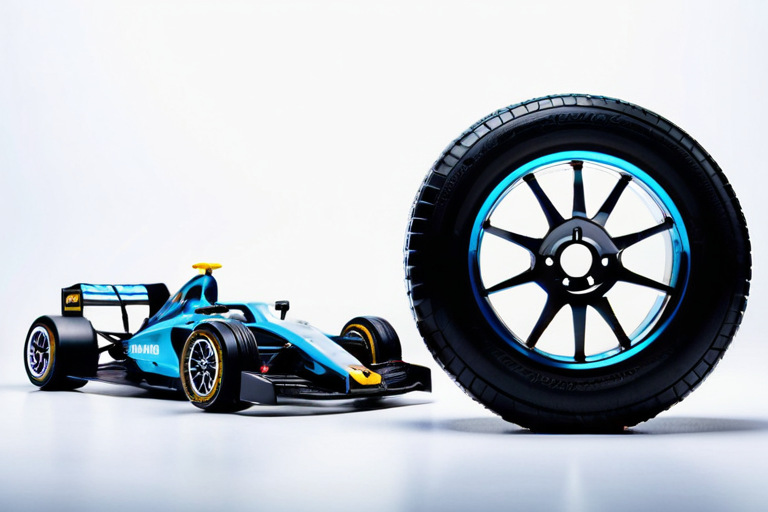
Material selection directly impacts performance characteristics
Tire compound development represents another area of material innovation. Silicone-based rubber compounds, developed specifically for scale applications, provide varying levels of grip across different surfaces. Competition tires often feature multiple durometer ratings within a single tire, with softer sidewalls for compliance and firmer tread blocks for wear resistance.
Terrain-Specific Design Considerations
Different environments demand specialized engineering approaches. Rocky terrain vehicles prioritize ground clearance and suspension articulation, while sand-focused models emphasize flotation and power delivery characteristics.
Mud-running vehicles, popular in regions like the southeastern United States, incorporate several unique features:
- Waterproof electronics: Complete sealing of control systems against moisture intrusion
- Self-cleaning tread patterns: Tire designs that shed mud rather than packing it
- High-torque motor configurations: Overcoming the suction effect of thick mud
- Corrosion-resistant fasteners: Stainless steel or titanium hardware throughout
These specialized adaptations demonstrate how miniature off-road engineering has moved beyond generic solutions to purpose-built configurations.
Performance Measurement and Validation
Quantifying miniature vehicle performance requires specialized instrumentation. Accelerometers and gyroscopes, similar to those used in smartphone technology, now integrate into premium models to provide real-time performance data.
According to testing methodologies developed by RC Tech, key performance metrics include:
| Metric | Measurement Method | Typical Range |
|---|---|---|
| Suspension Travel | Laser displacement measurement | 35-65mm (1/10 scale) |
| Power-to-Weight Ratio | Dynamometer testing | 0.8-1.2 kW/kg |
| Ground Clearance | Static and dynamic measurement | 45-75mm (unloaded) |
These quantitative approaches allow for objective comparison between different designs and facilitate continuous improvement through iterative development cycles.
Future Development Trajectories
The miniature off-road sector continues to evolve, with several emerging technologies poised to reshape the landscape. Artificial intelligence integration, currently in experimental phases, promises to deliver autonomous terrain assessment and adaptive control strategies.
Advanced manufacturing techniques, particularly additive manufacturing (3D printing), enable rapid prototyping and customization. Enthusiasts can now design and produce specialized components tailored to specific terrain conditions or performance requirements.
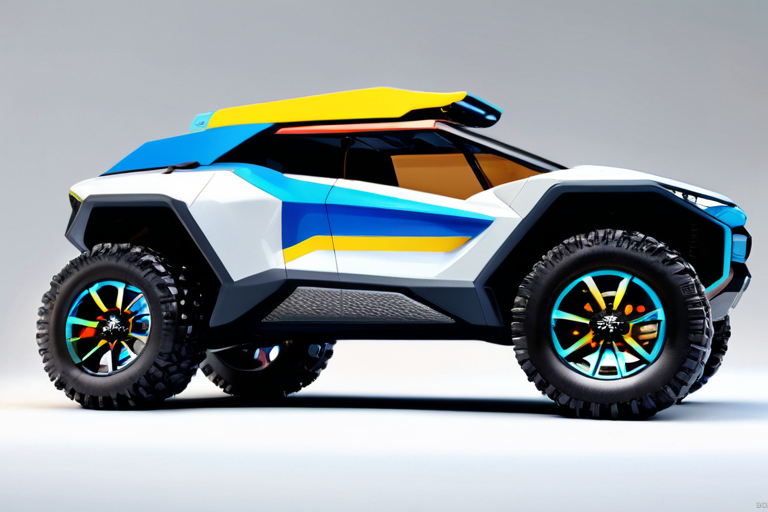
Emerging technologies continue to push performance boundaries
Wireless charging systems, adapted from consumer electronics, may eliminate the need for physical battery connections, while advanced telemetry systems could provide real-time performance feedback through augmented reality interfaces.
Engineering Insights
The convergence of mechanical engineering, electronics, and material science has transformed miniature off-road vehicles from simple toys into sophisticated engineering platforms. These developments not only enhance recreational experiences but also serve as testbeds for technologies that may eventually influence full-scale vehicle design.
As noted by engineering publications including SAE International, the lessons learned from scaling complex systems continue to inform broader engineering principles across multiple disciplines.