How Do Miniature Off-Road Vehicles Achieve Their Impressive Terrain Capabilities
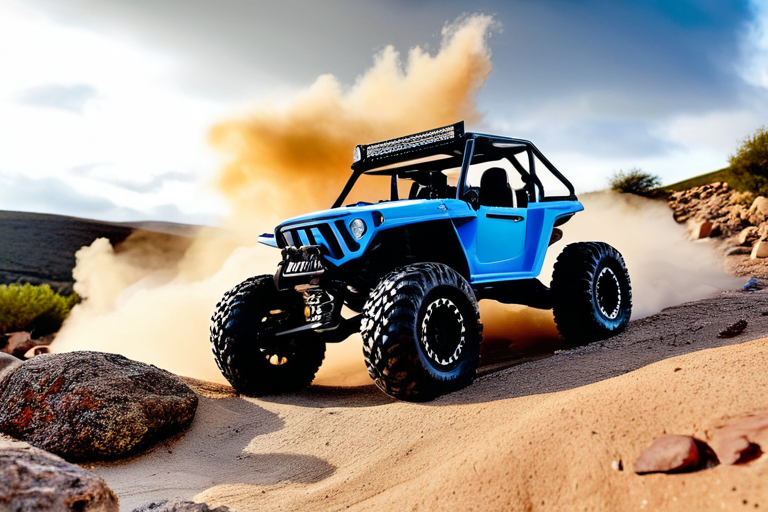
The world of miniature off-road vehicles has undergone a radical transformation in recent years. What began as simple battery-powered toys has evolved into sophisticated engineering platforms that replicate real-world vehicle dynamics with astonishing accuracy. These scaled-down machines now tackle terrain that would challenge full-sized vehicles, thanks to advancements in materials science, electronics, and mechanical design.
According to research from the Society of Automotive Engineers, miniature vehicle technology has progressed at a rate exceeding that of many full-scale automotive sectors. The convergence of hobbyist innovation and professional engineering has created a unique ecosystem where experimental designs can be rapidly tested and refined.
Suspension Systems: The Foundation of Terrain Mastery
Technical Insight: Modern miniature off-road suspensions utilize multi-link systems with oil-filled dampers that provide progressive damping characteristics. These systems maintain tire contact with uneven surfaces while managing weight transfer during acceleration, braking, and cornering.
The suspension system represents perhaps the most critical component in determining a miniature off-road vehicle's capability. Unlike their on-road counterparts, off-road vehicles must contend with constantly changing surface conditions, requiring suspension systems that offer both compliance and control.
Advanced models now feature independent suspension systems with adjustable camber, caster, and toe angles, allowing enthusiasts to fine-tune handling characteristics for specific terrain types. The integration of oil-filled shock absorbers with multiple piston configurations enables precise control over compression and rebound damping.
Recent innovations include active suspension systems that adjust damping rates based on terrain feedback, a technology trickling down from premium automotive applications. These systems use miniature accelerometers and gyroscopes to detect surface irregularities and adjust suspension settings in real-time.
Power Transmission and Drivetrain Innovations
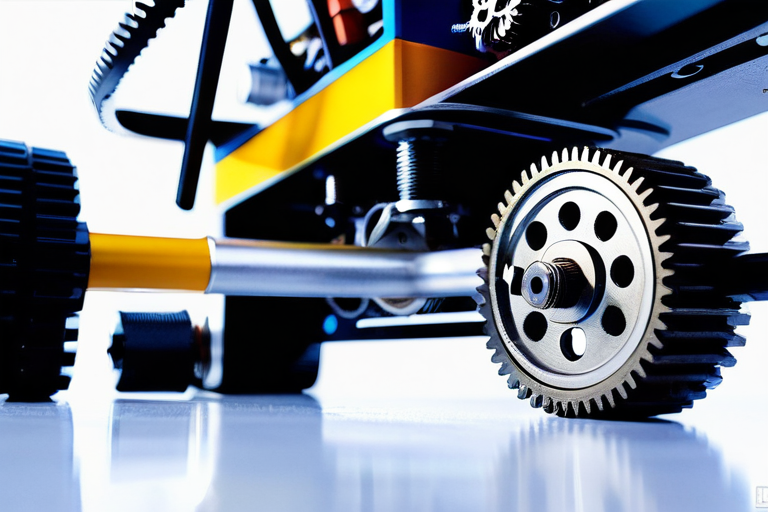
The evolution of power transmission systems in miniature off-road vehicles mirrors advancements in full-scale automotive engineering. Modern systems feature sophisticated differentials, including limited-slip and locking variants, that optimize traction across varying surface conditions.
| Drivetrain Type | Terrain Advantage | Technical Complexity |
|---|---|---|
| 2WD (Rear Wheel Drive) | Lightweight, simple maintenance | Low |
| 4WD (Full-Time) | Maximum traction on loose surfaces | Medium |
| 4WD with Center Differential | Balanced handling on mixed terrain | High |
| 4WD with Torque Vectoring | Active traction management | Very High |
Engineering Note: The shift from brushed to brushless motor technology has revolutionized miniature vehicle performance. Brushless systems offer higher efficiency, greater power density, and improved thermal management, enabling sustained high-performance operation without overheating.
Electronic speed controllers (ESCs) have become increasingly sophisticated, incorporating features like drag brake control, boost timing, and turbo functions that were once exclusive to professional racing applications. These systems manage power delivery with precision, preventing wheel spin on loose surfaces while maximizing acceleration on firm ground.
Materials Science and Structural Integrity
The materials used in modern miniature off-road vehicles represent a significant departure from traditional toy manufacturing. Carbon fiber composites, CNC-machined aluminum alloys, and advanced polymer blends now form the structural foundation of high-performance models.
Chassis design has evolved from simple plate configurations to sophisticated space-frame and monocoque structures that optimize strength-to-weight ratios. These designs incorporate strategic flex zones that absorb impact energy while maintaining structural integrity during extreme maneuvers.
Tire technology represents another area of significant advancement. Modern off-road tires feature multi-compound rubber formulations, with softer compounds for maximum grip and harder compounds for durability. Tread patterns are now computer-optimized for specific terrain types, with self-cleaning designs that prevent mud and debris buildup.

Electronic Control Systems and Telemetry
The integration of sophisticated electronics has transformed miniature off-road vehicles from simple remote-controlled toys into data-rich platforms. Modern control systems incorporate multiple microprocessors that manage everything from motor timing to suspension dynamics.
Technical Insight: Advanced telemetry systems now provide real-time data on motor temperature, battery voltage, wheel speed, and suspension travel. This information enables drivers to make informed adjustments during operation and provides valuable feedback for post-run analysis.
Radio control technology has progressed from basic analog systems to sophisticated 2.4GHz digital protocols with frequency hopping capabilities. These systems offer near-zero latency control with exceptional range and interference resistance, enabling precise vehicle control in challenging environments.
Gyroscopic stabilization systems, once exclusive to aerospace applications, now help maintain vehicle stability during high-speed cornering and over rough terrain. These systems work in conjunction with electronic traction control to prevent loss of control while maximizing performance.
The Future of Miniature Off-Road Technology
Looking forward, several emerging technologies promise to further enhance miniature off-road vehicle capabilities. Artificial intelligence systems are beginning to appear in experimental platforms, offering autonomous terrain assessment and adaptive control strategies.
Emerging Trend: Hybrid power systems combining lithium-polymer batteries with supercapacitors are showing promise for delivering instantaneous power bursts while maintaining energy efficiency. This technology could revolutionize climbing and acceleration performance.
Advanced manufacturing techniques, including 3D printing with composite materials, are enabling rapid prototyping of custom components. This democratization of manufacturing allows enthusiasts to develop and test innovative designs without requiring extensive industrial infrastructure.
The continued miniaturization of sensor technology will likely lead to even more sophisticated vehicle dynamics systems. Future platforms may incorporate LIDAR or radar systems for terrain mapping, enabling predictive suspension adjustments and optimal line selection.

As these technologies mature, the boundary between miniature and full-scale vehicle engineering continues to blur. Innovations developed in the RC community frequently influence mainstream automotive design, creating a symbiotic relationship that benefits both domains.
The remarkable capabilities of modern miniature off-road vehicles stem from a convergence of multiple engineering disciplines. From advanced materials science to sophisticated electronic control systems, these machines represent the cutting edge of scaled mechanical design. As technology continues to advance, these miniature platforms will likely become even more capable, further blurring the line between toy and tool, between recreation and research.
What began as simple playthings has evolved into platforms for engineering innovation, with each new model pushing the boundaries of what's possible in miniature vehicle design. The continued enthusiasm of the hobbyist community, combined with professional engineering insights, ensures that this evolution will continue, driving ever-greater capabilities from these remarkable miniature machines.