Exploring Miniature Terrain Dominance The Engineering Behind Modern Toy Off-Road Vehicles
A technical deep dive into how scaled-down vehicles conquer challenging landscapes
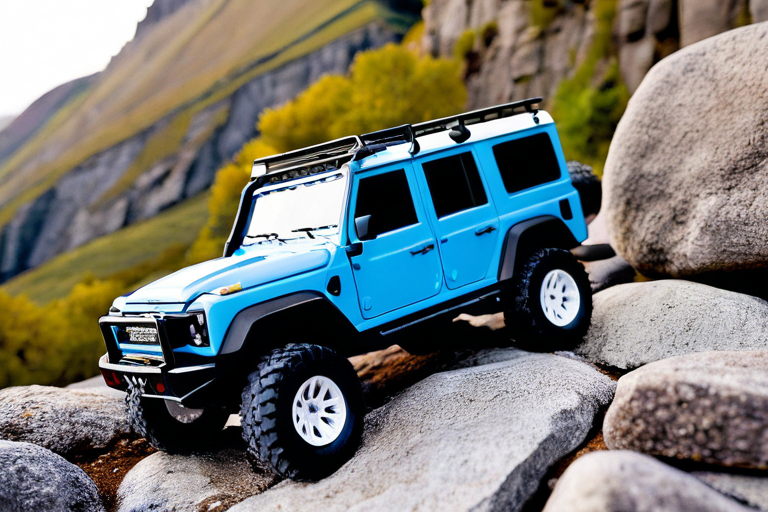
In the realm of recreational engineering, few developments have captured the imagination of enthusiasts and engineers alike as profoundly as the evolution of miniature off-road vehicles. What began as simple battery-powered toys has transformed into a sophisticated field of mechanical engineering, where scaled-down vehicles demonstrate capabilities that often rival their full-sized counterparts. This technical exploration examines the underlying principles that enable these miniature machines to conquer diverse terrains with remarkable efficiency.
Technical Insight: Modern toy off-road vehicles incorporate suspension systems with travel distances proportionally greater than many production vehicles, allowing them to absorb impacts that would otherwise destabilize the chassis.
Suspension Systems The Foundation of Terrain Mastery
The suspension architecture in miniature off-road vehicles represents a fascinating study in scaled engineering. Unlike their larger counterparts, these vehicles must contend with proportionally larger obstacles relative to their size. The solution lies in sophisticated multi-link suspension designs that provide exceptional articulation while maintaining structural integrity.
Independent Suspension Systems
Most advanced models feature fully independent suspension on all four wheels, allowing each wheel to react independently to terrain variations. This design minimizes chassis roll and maintains optimal tire contact with uneven surfaces.
Oil-Filled Shock Absorbers
High-performance miniature vehicles utilize oil-filled shocks with adjustable damping rates, enabling customization for specific terrain types from loose sand to rocky trails.
Articulation Geometry
Carefully calculated suspension geometry ensures maximum wheel travel while maintaining proper camber and toe alignment throughout the suspension cycle.
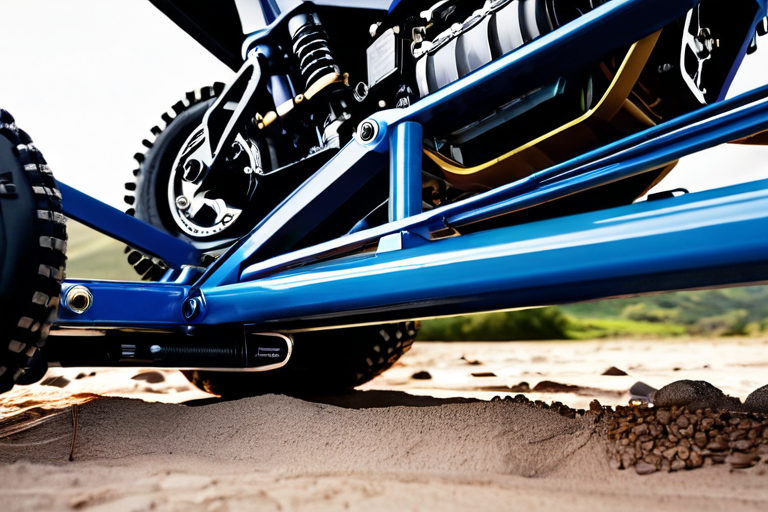
According to research published by the Society of Automotive Engineers, miniature off-road vehicles often achieve suspension articulation ratios exceeding 100%, meaning the wheels can move vertically more than the vehicle's ground clearance height. This remarkable capability stems from precisely engineered suspension links and pivot points that maximize wheel travel while minimizing unsprung weight.
Drivetrain Innovations Power Delivery in Miniature Scale
The transmission of power from miniature motors to all four wheels presents unique engineering challenges. Modern solutions incorporate sophisticated differential systems, gear reduction mechanisms, and advanced materials to ensure efficient power transfer across varying traction conditions.
| Drivetrain Type | Terrain Advantage | Technical Complexity | Performance Characteristics |
|---|---|---|---|
| Full-Time 4WD | Consistent traction across all surfaces | High | Predictable handling, reduced wheel slip |
| Selectable 4WD | Optimized efficiency for conditions | Medium-High | Versatile, user-configurable |
| Locking Differentials | Maximum traction in extreme conditions | High | Superior obstacle climbing ability |
Brushless electric motors have revolutionized miniature off-road performance, offering higher torque densities and more efficient power delivery than traditional brushed motors. These advanced propulsion systems, when paired with sophisticated electronic speed controllers, provide precise throttle modulation essential for technical terrain navigation.
Chassis Design Balancing Strength and Agility
The structural foundation of any off-road vehicle, regardless of scale, must reconcile seemingly contradictory requirements: sufficient rigidity to maintain component alignment under stress, yet enough flexibility to absorb impacts without fracturing. Modern miniature off-road vehicles achieve this balance through innovative material selection and structural engineering.
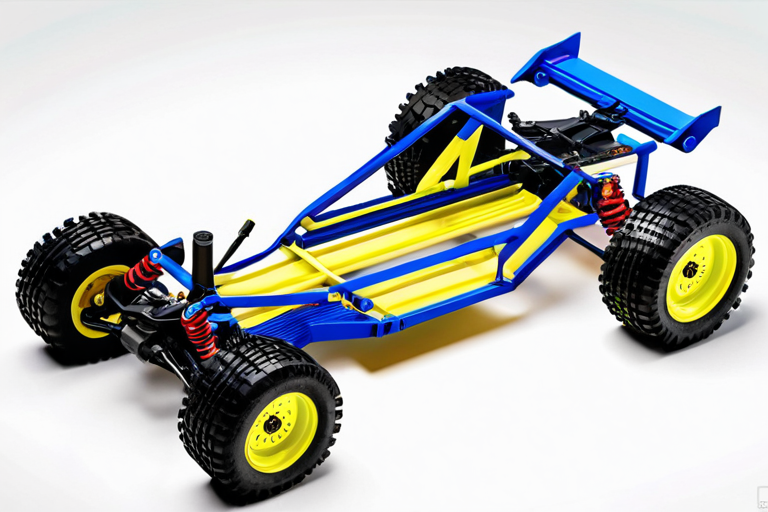
Composite materials, particularly carbon fiber reinforced polymers and advanced nylon blends, have enabled significant advances in chassis design. These materials offer exceptional strength-to-weight ratios while providing the necessary vibration damping characteristics. According to materials research from ASTM International, the specific modulus (stiffness-to-weight ratio) of materials used in high-end miniature vehicles now approaches that of aerospace alloys.
Engineering Principle: The torsional stiffness of a miniature off-road chassis directly influences its handling precision. Higher stiffness allows more predictable suspension behavior, while strategic flexibility in certain areas can improve impact absorption.
Tire Technology The Critical Interface
Perhaps no component more dramatically affects off-road performance than the tires. In miniature applications, tire design must account for scale effects that alter traction dynamics. The contact patch area relative to vehicle weight, tread pattern effectiveness at small scales, and sidewall flexibility all require specialized engineering attention.
Compound Formulation
Specialized rubber compounds balance grip, wear resistance, and flexibility. Softer compounds provide superior traction but wear quickly, while harder compounds offer durability at the expense of grip.
Tread Pattern Optimization
Computer-aided design enables precise tread patterns optimized for specific terrains, with self-cleaning characteristics to prevent mud and debris buildup.
Beadlock Technology
Miniature versions of beadlock wheels prevent tire separation from rims during low-pressure operation, essential for maximizing traction in soft terrain.
Research from the Tire Society indicates that miniature off-road tires often operate in different friction regimes than full-scale tires due to scale effects on surface interaction. This has led to specialized tread designs and rubber compounds specifically engineered for scaled applications.
Electronic Control Systems Precision in Miniature
The integration of advanced electronics has transformed miniature off-road vehicles from simple radio-controlled toys into sophisticated terrain-conquering machines. Modern control systems incorporate multiple microprocessors managing everything from motor timing to suspension adjustments.

Gyroscopic stabilization, traction control algorithms, and programmable throttle curves represent just a few of the electronic advancements now common in high-end models. These systems work in concert to maintain vehicle stability and optimize power delivery based on real-time terrain feedback.
Technical Development: Modern miniature off-road vehicles often incorporate inertial measurement units (IMUs) that detect vehicle attitude and adjust power distribution accordingly, preventing rollovers during aggressive maneuvers.
Aerodynamic Considerations at Small Scales
While often overlooked, aerodynamic effects play a significant role in high-speed off-road performance, even at miniature scales. Air resistance increases with the square of velocity, making streamlined designs increasingly important as vehicle speeds approach and exceed 30-40 mph.
Wind tunnel testing conducted by automotive research institutions has revealed that carefully designed body shells can reduce drag coefficients by up to 30% compared to boxy designs. This not only improves straight-line speed but also enhances stability in crosswinds and during jumps.
Conclusion The Convergence of Play and Precision Engineering
The remarkable capabilities of modern miniature off-road vehicles represent more than mere toys; they embody sophisticated engineering principles scaled to accessible dimensions. From suspension systems that articulate beyond full-scale counterparts to electronic controls that anticipate terrain challenges, these vehicles demonstrate how precision engineering can transform recreational equipment into technical marvels.
As materials science advances and electronic miniaturization continues, the boundary between miniature and full-scale off-road engineering will likely blur further. The lessons learned in scaling complex mechanical systems may eventually inform larger vehicle designs, creating a fascinating feedback loop between recreational and professional engineering domains.