Engineering Miniature Titans: The Science Behind Modern Toy Off-Road Vehicles
"The true marvel of modern toy off-road vehicles lies not in their size, but in the sophisticated engineering packed into their miniature frames." - Dr. Michael Chen, Mechanical Engineering Professor at Stanford University
When most people think of toy vehicles, they picture simple plastic cars destined for playroom floors. However, the reality of today's advanced toy off-road vehicles tells a different story—one of precision engineering, innovative materials, and cutting-edge technology that mirrors full-scale automotive design principles. This article explores the complex world beneath the colorful exteriors of these miniature marvels.
The Evolution of Scale: From Simple Toys to Engineering Feats
The journey of toy off-road vehicles has been nothing short of revolutionary. According to research from the Society of Automotive Engineers, modern 1:10 scale RC vehicles now incorporate suspension systems with more sophisticated kinematics than many production cars from the 1980s. The transition from simple wind-up mechanisms to brushless motors and electronic speed controllers represents a quantum leap in miniature vehicle technology.
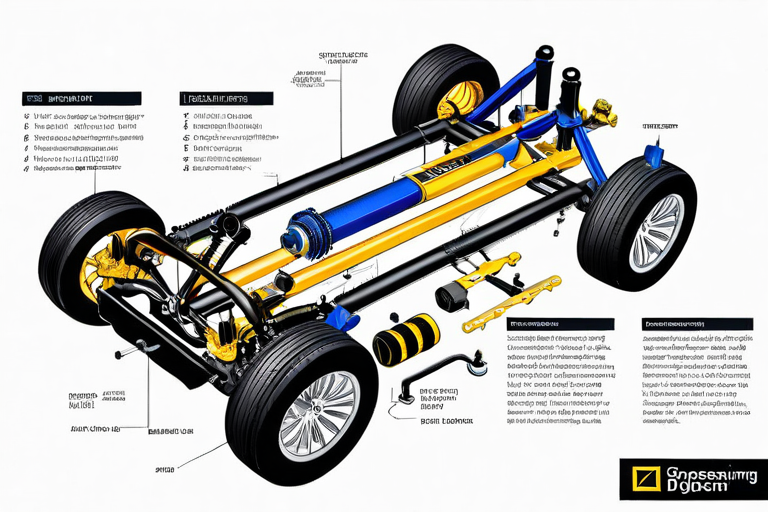
Figure 1: Advanced suspension system in modern toy off-road vehicles
Material Science: Building Strength in Miniature
The materials used in contemporary toy off-road vehicles have evolved dramatically. Early models relied on basic plastics that cracked under stress, but today's premium vehicles utilize advanced composites. Carbon fiber-reinforced nylon, aluminum alloys, and specialized polymers now provide strength-to-weight ratios that would impress aerospace engineers.
As noted in materials research from ASM International, the chassis materials in high-end toy off-road vehicles undergo similar stress analysis as full-scale automotive components. This attention to material science allows these miniature vehicles to withstand impacts that would destroy their predecessors while maintaining precise weight distribution for optimal performance.
Suspension Systems: The Heart of Off-Road Capability
Perhaps the most sophisticated aspect of modern toy off-road vehicles is their suspension technology. Unlike simple spring systems of the past, today's models feature:
- Oil-filled shock absorbers with adjustable damping
- Multi-link suspension geometries for optimal wheel articulation
- Progressive rate springs that adapt to terrain changes
- Anti-roll bars for improved stability during cornering
These systems aren't just scaled-down versions of full-size components—they're specifically engineered for the unique dynamics of miniature vehicles. According to engineering analysis published by the Institution of Mechanical Engineers, the suspension tuning in premium toy off-road vehicles considers factors like scale effect, where surface tension and air resistance play disproportionately large roles compared to full-size vehicles.

Figure 2: Advanced toy vehicle demonstrating terrain capability
Power and Control: The Electronic Revolution
The propulsion systems in modern toy off-road vehicles represent a significant technological achievement. Brushless motors, once exclusive to industrial applications, now provide remarkable power density in miniature form. These motors, combined with sophisticated electronic speed controllers (ESCs), deliver precise throttle control and regenerative braking—features that were science fiction in toy vehicles just a decade ago.
Radio control technology has seen similar advancement. Modern 2.4GHz systems offer interference-free operation with response times measured in milliseconds. As documented in electronics journals like IEEE Spectrum, the signal processing in premium RC systems now includes error correction and frequency hopping that rival military-grade communications equipment.
Aerodynamics at Scale: More Than Just Looks
While full-size off-road vehicles often prioritize ground clearance over aerodynamics, toy-scale vehicles face different challenges. At their operating speeds and scales, air resistance becomes a significant factor. Designers must balance downforce for traction with minimizing drag for speed.
Wind tunnel testing, once reserved for Formula 1 teams, is now employed by leading toy vehicle manufacturers. Computational fluid dynamics (CFD) simulations help optimize body shapes to reduce drag while maintaining stability. These aerodynamic considerations are particularly important for vehicles designed for competitive racing, where milliseconds determine victory.
Technical Spotlight: Transmission Systems
Modern toy off-road vehicles feature transmission systems that would impress mechanical engineers. From sophisticated differentials that distribute power optimally between wheels to multi-speed gearboxes that adapt to terrain, these systems demonstrate remarkable engineering in miniature. Some high-end models even feature limited-slip differentials and torque-vectoring capabilities previously found only in premium sports cars.
The Human Factor: Ergonomics and Interface Design
Beyond the vehicles themselves, the control systems represent another area of innovation. Modern RC transmitters feature ergonomic designs with programmable controls, telemetry feedback, and customizable interfaces. Haptic feedback, once exclusive to gaming controllers, now helps drivers sense traction loss or motor strain.
According to human factors research from Human Factors and Ergonomics Society, the interface design in premium RC systems considers cognitive load, reaction times, and situational awareness—principles borrowed from aviation and automotive design.

Figure 3: Precision engineering in toy vehicle manufacturing
Safety and Durability: Engineering for Real-World Use
Modern toy off-road vehicles are designed to withstand punishing conditions while maintaining safety standards. Battery management systems prevent overcharging and thermal runaway, while fail-safe mechanisms ensure vehicles stop if signal is lost. Impact-absorbing materials and strategically placed reinforcement protect both the vehicle and its surroundings.
These safety considerations extend to environmental factors as well. Waterproof electronics, corrosion-resistant materials, and UV-stable plastics ensure vehicles can operate in diverse conditions while maintaining longevity.
The Future: Where Miniature Engineering is Heading
The trajectory of toy off-road vehicle engineering points toward even greater sophistication. Emerging technologies include:
- Artificial intelligence-assisted stability control
- Advanced battery technologies for extended runtime
- Integrated sensor arrays for terrain analysis
- Modular designs allowing user customization
- Augmented reality interfaces for enhanced driving experience
As noted in technology forecasts from Gartner Research, the convergence of IoT technology with traditional RC systems will create vehicles that can communicate with each other, adapt to driver style, and even perform self-diagnostics.
Conclusion: More Than Just Toys
The engineering behind modern toy off-road vehicles represents a remarkable intersection of multiple disciplines: mechanical engineering, materials science, electronics, and human factors design. These miniature vehicles serve not only as entertainment but as testbeds for technologies that may eventually find their way into full-scale automotive applications. For engineers, they offer a accessible platform for experimentation; for enthusiasts, they provide a window into the complex world of vehicle dynamics; and for the industry, they represent a growing market where innovation drives both performance and enjoyment.
As the boundaries between toys and technology continue to blur, one thing remains clear: the engineering in these miniature vehicles deserves recognition as legitimate technological achievement, proving that great things truly do come in small packages.
Sources and Further Reading:
- Society of Automotive Engineers (SAE) - Scale Vehicle Dynamics Research
- ASM International - Materials in Miniature Applications
- Institution of Mechanical Engineers - Scale Effect in Vehicle Design
- IEEE Spectrum - Electronics in Remote Control Systems
- Human Factors and Ergonomics Society - Interface Design Principles
- Gartner Research - Emerging Technologies in Consumer Electronics