Elon Musk's Off-Road Obsession: Beyond Tesla and SpaceX
When you think of Elon Musk, your mind likely jumps to electric cars, space rockets, or neural interfaces. But there's another passion that fuels this visionary entrepreneur: off-road vehicles. From rugged terrain to extreme adventures, Musk's fascination with all-terrain machines reveals a side of him that's less about silicon valleys and more about muddy trails.
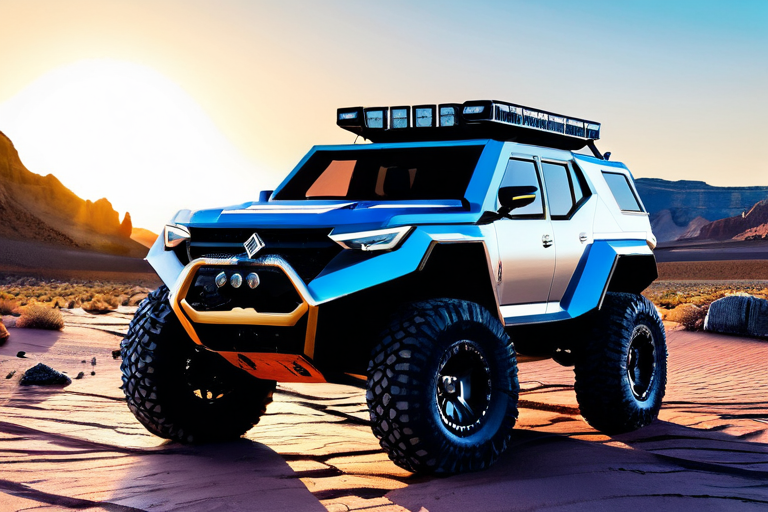
Conceptual illustration of an off-road vehicle inspired by Musk's interests
The Cybertruck: Musk's Off-Road Masterpiece
Perhaps the most public demonstration of Musk's off-road enthusiasm is the Tesla Cybertruck. Unveiled in November 2019, this angular, stainless-steel behemoth was designed with off-road capability at its core. According to Tesla's official specifications, the tri-motor version boasts over 500 miles of range, 14,000 pounds of towing capacity, and adaptive air suspension that can raise the vehicle for challenging terrain.
During the unveiling event, Musk famously demonstrated the Cybertruck's durability by having its armored glass withstand multiple hammer strikes. While the window-breaking moment became viral, the underlying message was clear: this vehicle was built for toughness. Industry analysts at MotorTrend noted that the Cybertruck's exoskeleton design and ultra-hard 30X cold-rolled stainless steel make it uniquely suited for off-road adventures where dents and scratches are inevitable.
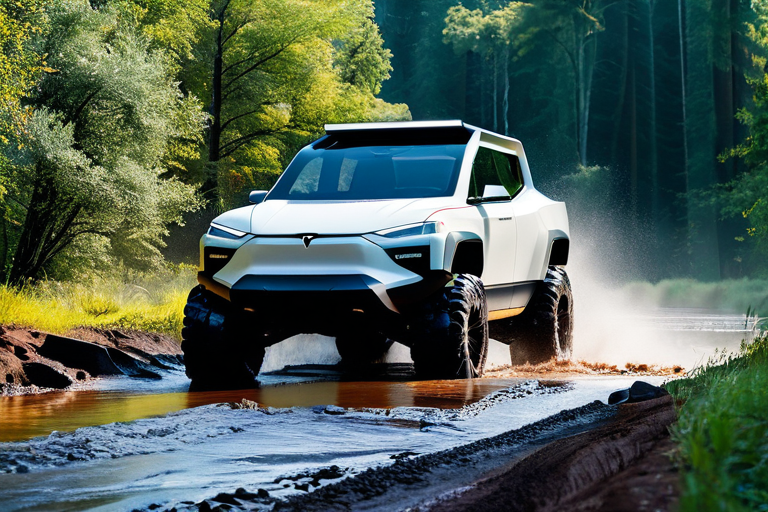
Tesla Cybertruck navigating rough terrain
From Personal Collection to Corporate Vision
Musk's personal vehicle collection offers further evidence of his off-road interests. While he's famously owned several luxury and sports cars, insiders have noted his appreciation for capable utility vehicles. In various interviews and social media posts, Musk has referenced enjoying outdoor activities that require robust transportation.
The connection between Musk's personal interests and corporate strategy became particularly evident with Tesla's acquisition of trucking technology. As reported by Bloomberg, Tesla's development of the Semi truck and continued investment in all-terrain vehicle technology suggests that Musk sees off-road capability as more than just a hobby—it's a market opportunity.
Engineering Philosophy: Where Off-Road Meets Innovation
What makes Musk's approach to off-road vehicles distinctive is how it intersects with his broader engineering philosophy. Traditional off-road vehicles prioritize mechanical robustness over efficiency, but Musk's electric approach flips this paradigm. Electric motors provide instant torque—perfect for climbing steep inclines or powering through mud—while maintaining environmental sustainability.
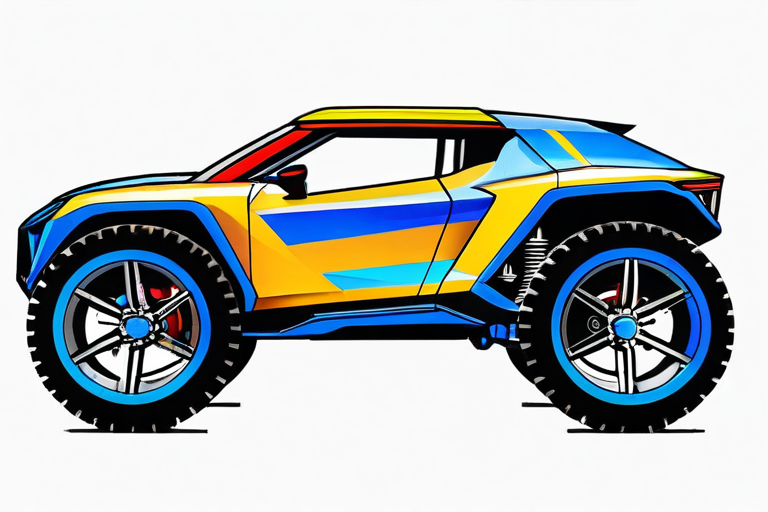
Technical illustration of electric off-road vehicle systems
According to automotive engineering experts cited by SAE International, electric off-road vehicles offer several advantages: lower center of gravity from battery placement, precise torque distribution to individual wheels, and reduced mechanical complexity. These align perfectly with Musk's first principles thinking—breaking down problems to their fundamental truths and rebuilding solutions from there.
The Mars Connection: Off-Roading on Another Planet
Perhaps the most fascinating aspect of Musk's off-road interest is how it connects to his extraterrestrial ambitions. SpaceX's Starship, designed for Mars colonization, will need surface vehicles capable of navigating the Red Planet's rugged terrain. While not officially confirmed, industry observers speculate that Tesla's off-road technology could inform future Martian rovers.
In a 2020 interview with Popular Mechanics, Musk discussed the challenges of planetary surface transportation, noting that Martian vehicles would need extreme durability and energy efficiency—qualities he's been developing in Earth-bound off-road vehicles. This creates a fascinating feedback loop: technologies developed for terrestrial adventure could one day enable exploration of other worlds.
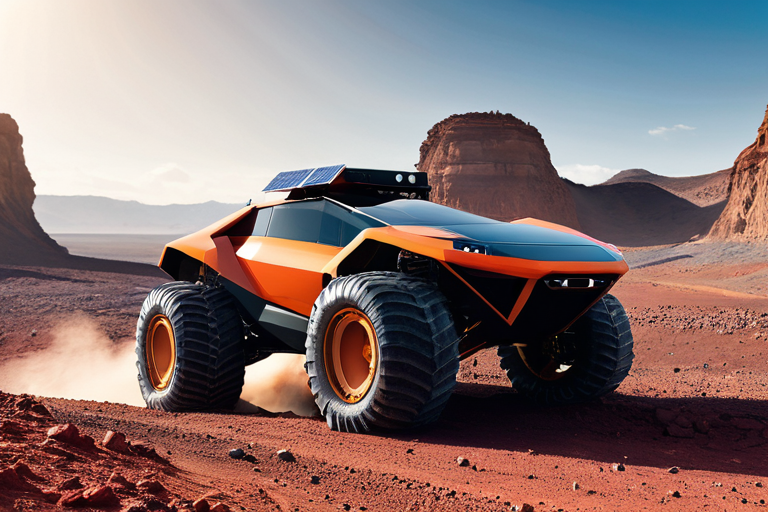
Concept vehicle for Martian surface exploration
Market Impact and Industry Response
Musk's foray into off-road vehicles hasn't gone unnoticed by traditional manufacturers. Companies like Ford, with their electric F-150 Lightning, and Rivian, with their adventure-focused R1T, have accelerated their electric off-road offerings in response to Tesla's moves. According to market analysis from McKinsey & Company, the electric off-road segment is projected to grow at 25% annually through 2030, largely driven by Musk's demonstration of market viability.
What makes Musk's approach particularly disruptive is the integration of software and hardware. Tesla's off-road vehicles aren't just mechanically capable; they're computationally intelligent. Features like terrain mapping, adaptive suspension algorithms, and torque vectoring through software updates represent a paradigm shift in what off-road vehicles can be.
Conclusion: More Than Just a Hobby
Elon Musk's interest in off-road vehicles transcends personal preference—it represents a convergence of multiple passions: engineering innovation, environmental sustainability, and human exploration. From the Cybertruck's brutalist design to potential applications on Mars, Musk's off-road vision challenges conventional thinking about what vehicles can do and where they can go.
As electric off-road technology continues to evolve, influenced by Musk's unique perspective, we're witnessing not just the electrification of adventure vehicles, but a reimagining of mobility itself. Whether navigating mountain trails or Martian craters, the vehicles inspired by Musk's vision promise to take us further, with less environmental impact, than ever before.
Key Takeaways
- Elon Musk's off-road interest is most visibly manifested in the Tesla Cybertruck
- Electric off-road vehicles offer unique advantages in torque delivery and efficiency
- Musk's approach integrates software intelligence with mechanical capability
- Off-road technology development may inform future planetary exploration vehicles
- The market for electric off-road vehicles is growing rapidly, influenced by Musk's vision