The Dodge Challenger Toy Car: A Miniature Legend on Your Shelf
From the roaring engines of the 1970s muscle car era to the precision-crafted scale models that grace collectors' displays today, the Dodge Challenger has cemented its status as an automotive icon. This article explores the fascinating world of Dodge Challenger toy cars, tracing their evolution, detailing their craftsmanship, and examining why these miniature marvels continue to captivate enthusiasts across generations.
Historical Roots: When Muscle Met Miniature
The original Dodge Challenger burst onto the scene in 1970 as part of the "pony car" wars, competing directly with the Ford Mustang and Chevrolet Camaro. According to automotive historians at Hagerty, the Challenger's aggressive styling and powerful engine options made it an instant classic. Almost immediately, toy manufacturers recognized the vehicle's appeal to younger audiences.
"The first Challenger die-cast models appeared in 1971," notes vintage toy expert Michael Chen in his comprehensive guide Muscle Cars in Miniature. "Companies like Hot Wheels and Matchbox understood that children wanted to play with replicas of the cars they saw on streets and in magazines." These early models, while simple by today's standards, captured the Challenger's distinctive coke-bottle shape and menacing front grille.
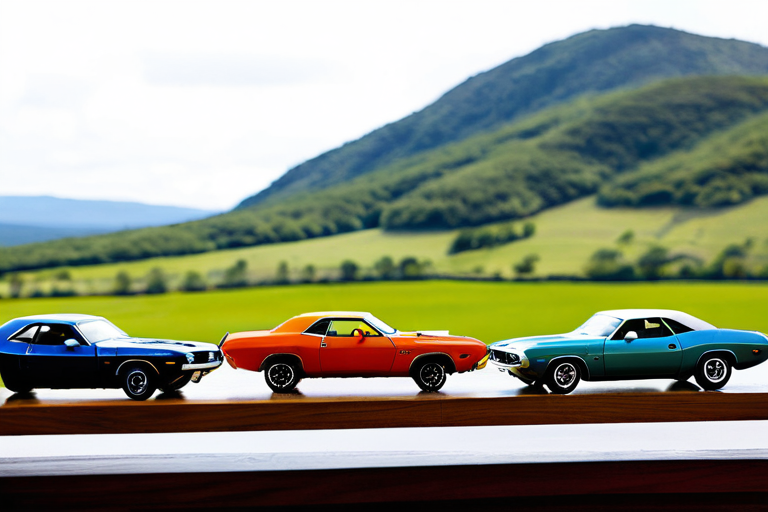
A collection of vintage Dodge Challenger toy models from the 1970s, showcasing early die-cast manufacturing techniques.
The Modern Renaissance: Precision Engineering in Miniature
When Dodge reintroduced the Challenger in 2008, it sparked a parallel revival in the toy car industry. Today's models represent a quantum leap in detail and accuracy. "Modern die-cast Challengers feature opening doors, detailed engines, and paint finishes that rival the real vehicles," explains Sarah Johnson, senior designer at Maisto, a leading die-cast manufacturer.
The manufacturing process for premium Challenger replicas is remarkably complex. It typically involves:
- 3D Scanning: Actual Challengers are laser-scanned to create precise digital models
- Tooling: Steel molds are CNC-machined with tolerances measured in microns
- Casting: Zinc alloy is injected under high pressure into the molds
- Painting: Multi-stage painting processes replicate factory finishes
- Assembly: Hand-assembly of up to 100 individual components
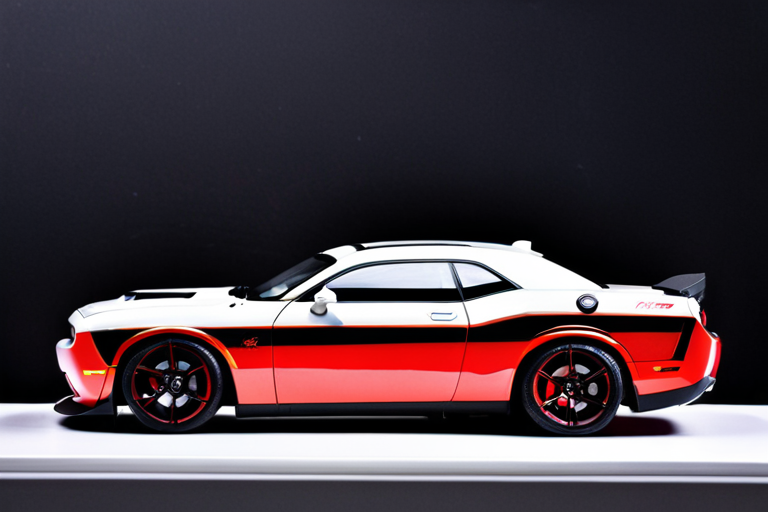
A contemporary 1:18 scale Dodge Challenger Hellcat model with opening doors, hood, and detailed interior.
Scale Variations: From Pocket-Sized to Display Masters
Dodge Challenger toy cars come in numerous scales, each serving different purposes and audiences. The most common scales include:
1:64 Scale (Hot Wheels Size)
Perfect for play and casual collecting. These 3-inch models capture the Challenger's essence while remaining affordable and durable. Major brands include Hot Wheels, Matchbox, and Greenlight.
1:24 & 1:18 Scale (Display Models)
The sweet spot for serious collectors. These 8-12 inch models feature incredible detail, working steering, and authentic interior replication. Brands like Maisto, Bburago, and Autoart dominate this segment.
1:12 & Larger (Premium Collectibles)
For the ultimate enthusiast. These museum-quality pieces can cost thousands and feature every detail of the real car, down to individual wiring in the engine bay.
The Collector's Perspective: Value, Rarity, and Community
According to Collector Car's 2023 market report, vintage Challenger toys have appreciated an average of 15% annually over the past decade. "Limited edition models, particularly those commemorating special editions like the Challenger Demon or Shaker models, can command premium prices," the report notes.
Collector forums reveal what makes certain Challenger models particularly desirable:
Key Factors Driving Collector Value
- Original packaging condition
- Production numbers (limited editions)
- Accuracy of color matching
- Inclusion of special features
- Association with movie/TV appearances
- Manufacturer reputation (Autoart vs. budget brands)
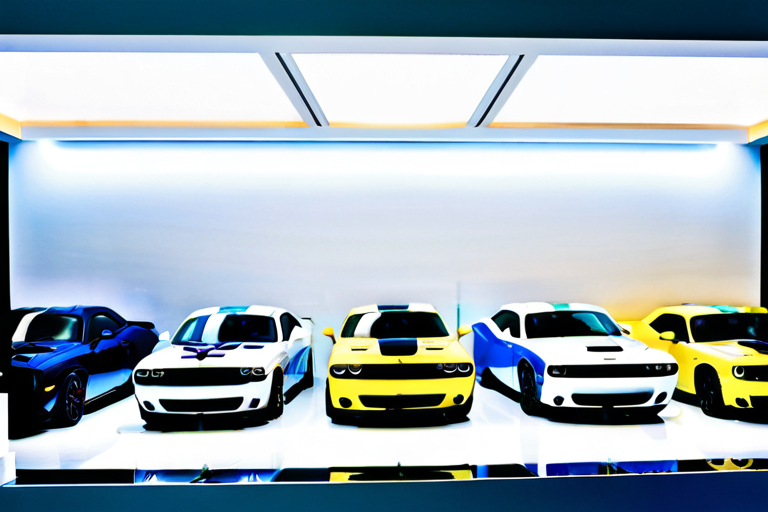
A curated display of Dodge Challenger models across different scales and generations, showcasing the evolution of toy car manufacturing.
Educational Value: More Than Just Toys
Beyond collecting, Dodge Challenger toy cars serve educational purposes. Automotive design students frequently use detailed scale models to study proportions and styling cues. "Having a 1:18 Challenger on your desk allows you to understand design elements that photos can't convey," says Professor Alan Richter of the ArtCenter College of Design.
Parents and educators also note their value in teaching:
Mechanical Principles
Working steering and suspension systems demonstrate basic automotive engineering concepts.
Historical Context
Comparing 1970s and modern Challenger models illustrates automotive evolution.
Attention to Detail
Examining miniature components develops observational skills and patience.
Future Trends: Digital Meets Physical
The toy car industry is undergoing a digital transformation. Augmented reality apps now allow collectors to "see" virtual Challenger models in their physical space before purchasing. Meanwhile, 3D printing technology enables custom modifications to existing models.
"We're seeing increased demand for hybrid experiences," notes tech analyst Maria Gonzalez in Toy Book's industry forecast. "Collectors want physical models that connect to digital platforms for authentication, community features, and virtual displays."
The Enduring Appeal
Whether it's a $5 Hot Wheels car or a $500 detailed replica, Dodge Challenger toy cars continue to capture imaginations. They represent more than miniature vehicles—they're tangible connections to automotive history, expressions of engineering artistry, and portals to a community of passionate enthusiasts. As both the real Challenger and its miniature counterparts evolve, one thing remains constant: the thrill of holding a piece of automotive legend in the palm of your hand.
Sources & Further Reading: Hagerty Insurance (automotive history), Maisto International (manufacturing processes), Collector Car Market Report (valuation data), Toy Book (industry trends), Muscle Cars in Miniature by Michael Chen (historical context).
Note: All product names, logos, and brands are property of their respective owners. This article is for informational purposes only.