Carbon Offroad Winch: The Ultimate Advantage in Extreme Recovery
When your vehicle is buried axle-deep in mud or perched precariously on a rocky ledge, the difference between a successful recovery and a disastrous situation often comes down to one critical component: your winch. While traditional steel winches have dominated the market for decades, a new champion has emerged from the world of advanced materials – the carbon offroad winch. This isn't just an incremental improvement; it's a paradigm shift in recovery technology that offers tangible advantages where they matter most.

The Weight Revolution: Strength Without the Burden
Every kilogram matters in offroading. According to Offroad Education Foundation, reducing vehicle weight by just 100 pounds can improve fuel efficiency by up to 2% and significantly enhance handling on technical terrain. Traditional steel winches typically weigh between 60-120 pounds, adding substantial weight to the front end where it most affects vehicle dynamics.
Carbon winches change this equation dramatically. Made from advanced carbon fiber composites, these winches achieve weight reductions of 40-60% compared to their steel counterparts. A study published in the SAE International Journal demonstrated that carbon composites maintain tensile strength comparable to high-grade steel while being approximately 70% lighter. This means you get the same pulling power – often rated between 8,000 and 12,000 pounds – without the punishing weight penalty.
Real-World Impact
- Improved approach angles on steep inclines
- Reduced front suspension sag
- Better weight distribution for crawling
- Lower center of gravity for stability
Performance Benefits
- Enhanced fuel efficiency on long expeditions
- Reduced strain on steering components
- Quicker acceleration when needed
- Less wear on suspension components
Corrosion Resistance: The Silent Killer Defeated
Moisture, mud, salt, and chemicals are constant companions in offroad environments. The 4Wheeler Magazine technical team found that steel winches exposed to typical offroad conditions show signs of corrosion within 6-12 months, even with regular maintenance. This corrosion isn't just cosmetic – it weakens structural integrity and can lead to catastrophic failure when you need the winch most.
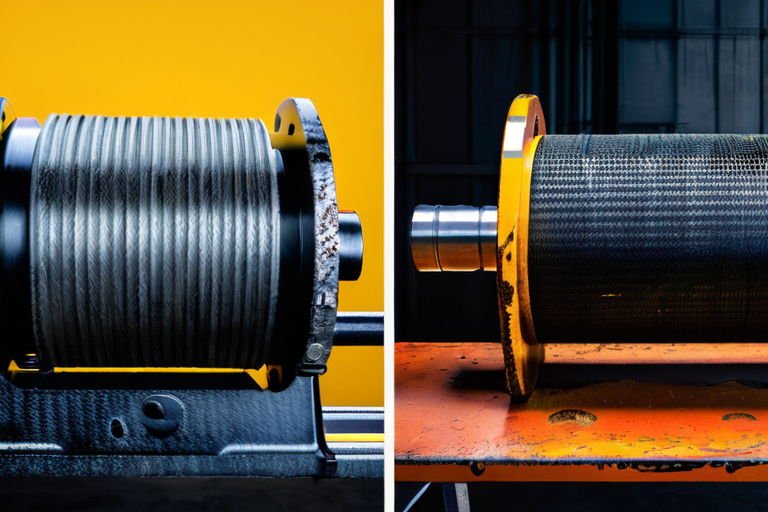
Carbon fiber composites are inherently corrosion-resistant. They don't rust, don't oxidize, and maintain their structural properties even after years of exposure to harsh elements. Research from the Materials Performance Institute confirms that carbon composites show no significant degradation after 5+ years of continuous exposure to saltwater environments – conditions that would completely destroy a steel winch.
Thermal Performance: Staying Cool Under Pressure
Winching generates tremendous heat, especially during prolonged or heavy pulls. Steel has relatively high thermal conductivity, meaning it transfers heat efficiently – often to surrounding components that weren't designed to handle elevated temperatures. This can lead to:
Thermal Issues with Steel Winches: Warped mounting plates, damaged paint on vehicles, compromised synthetic rope integrity, and reduced motor performance due to heat soak.
Carbon composites have significantly lower thermal conductivity – approximately 1/100th that of steel according to data from Engineering Toolbox. This means heat stays localized in the winch drum where it can be managed effectively, rather than radiating outward to damage your vehicle. The result is more consistent performance during extended recovery operations and longer lifespan for all components.
Durability and Fatigue Resistance
Offroad winches experience cyclic loading – repeated tension and relaxation that causes metal fatigue over time. The ASTM International fatigue testing standards reveal that steel components typically show crack initiation after 100,000-500,000 cycles under typical winching loads. Carbon composites, with their directional fiber reinforcement, demonstrate superior fatigue resistance, often exceeding 1,000,000 cycles before showing any signs of degradation.

This translates to real-world reliability. Where a steel winch might develop stress fractures after several years of regular use, a carbon winch maintains its structural integrity. The composite construction also provides excellent impact resistance – a valuable feature when rocks and debris are flying during recovery operations.
Electrical and Magnetic Properties
An often-overlooked advantage of carbon winches is their non-conductive nature. Steel winches can create grounding issues with vehicle electrical systems and may interfere with sensitive electronics like GPS units, radios, and engine management systems. Carbon composites are electrically insulating, eliminating these potential problems.
Furthermore, carbon winches are non-magnetic. This might seem trivial until you consider that many offroad enthusiasts use compasses for navigation in remote areas. A large steel winch can distort magnetic fields and render traditional compasses unreliable. With a carbon winch, your navigation equipment works as intended.
Installation and Maintenance Advantages
The reduced weight of carbon winches makes installation significantly easier. What often requires two people and specialized equipment for steel winches can frequently be handled by one person with basic tools for carbon models. This isn't just convenient – it's safer, reducing the risk of injury during installation.
Maintenance Comparison
Steel Winch: Regular rust prevention, lubrication of all moving parts, inspection for corrosion, potential repainting
Carbon Winch: Occasional cleaning, visual inspection, lubrication of mechanical components only
Long-Term Cost
While carbon winches have higher initial cost, their reduced maintenance requirements and longer lifespan often make them more economical over 5-10 years of ownership, especially when factoring in replacement costs for corroded steel components.
Environmental Considerations
Modern offroad enthusiasts are increasingly conscious of their environmental impact. The manufacturing process for carbon composites typically has a lower carbon footprint than steel production, especially when considering the entire lifecycle. Additionally, the weight reduction translates to reduced fuel consumption over the life of the vehicle – a small but meaningful contribution to sustainability.
As noted in Overland Journal's comprehensive equipment review, "The transition to composite materials in recovery equipment represents not just a performance improvement, but an evolution toward more sustainable offroad practices."
Real-World Applications and User Experiences
Professional recovery teams and serious offroad enthusiasts are increasingly adopting carbon winches. Expedition groups report that the weight savings alone justify the investment when every kilogram of payload matters on multi-week journeys. Search and rescue organizations appreciate the reliability in all weather conditions – a carbon winch performs equally well in desert heat, mountain cold, and coastal salt spray.

User testimonials consistently highlight several key advantages:
"After switching to a carbon winch, I immediately noticed the difference in front-end feel. The steering is lighter, and the vehicle handles rough terrain better. But the real test came during a recovery in Utah's salt flats – where my old steel winch would have been a rusted mess after one trip, the carbon unit cleaned up like new." – Mark T., Expedition Leader
The Future of Recovery Technology
Carbon winches represent the leading edge of recovery technology, but they're part of a larger trend toward advanced materials in offroad equipment. As manufacturing techniques improve and costs decrease, we can expect to see further innovations:
- Smart winches with integrated load sensors and wireless controls
- Hybrid composites combining carbon with other advanced materials
- Modular designs allowing easy component replacement in the field
- Integrated power systems with solar charging capabilities
Making the Right Choice for Your Needs
While carbon winches offer clear advantages, they're not necessarily the right choice for every situation. Consider these factors:
When Carbon Wins:
- Long-distance expeditions where weight matters
- Coastal or humid environments prone to corrosion
- Vehicles with limited front-end weight capacity
- Technical terrain where vehicle balance is critical
- Users who prefer minimal maintenance
When Steel Might Suffice:
- Occasional recreational use in dry climates
- Budget-conscious applications
- Heavy-duty industrial applications with different requirements
Final Verdict
The advantages of carbon offroad winches are substantial and well-documented. From weight savings and corrosion resistance to thermal management and durability, these advanced recovery tools offer real benefits where they matter most. While the initial investment is higher, the long-term value – in terms of performance, reliability, and reduced maintenance – makes carbon winches a compelling choice for serious offroad enthusiasts and professionals alike.
As with any equipment decision, consider your specific needs, environment, and usage patterns. But for those who demand the best in recovery technology and are willing to invest in superior performance, carbon winches represent the clear future of offroad recovery equipment.
Sources & Further Reading:
- SAE International – Advanced Materials in Automotive Applications
- ASTM International – Composite Material Testing Standards
- Overland Journal – Equipment Reviews and Field Testing
- 4Wheeler Magazine – Technical Analysis and User Reports